- Rotocast
- Nov 4, 2026
- Blogs, Shot Blasting, Steel Abrasives, Surface Preparation
- 0 Comments
A steel structure may look perfectly painted today, but what happens when the coating starts peeling just a few months later?
The problem isn’t always poor-quality paint. Sometimes, the real issue is hidden underneath: an improperly prepared metal surface.
In industrial applications, the durability of protective coatings depends heavily on what happens before the first layer of paint is applied. Rust, mill scale, dust, and insufficient surface roughness can weaken adhesion, leading to premature coating failure.
This is where Steel Grit becomes important.
By removing unwanted surface materials and creating a controlled surface profile, steel grit blasting prepares metal components for effective coating application.
Let’s explore the science behind this process and why it matters for industrial manufacturing.
Why Does Coating Adhesion Depend on Surface Preparation?
Imagine applying adhesive tape to two surfaces: one is clean and properly textured, while the other is dusty and contaminated.
Which one is more likely to hold securely?
Industrial coatings face a similar challenge.
For paint, epoxy, powder coatings, and other protective finishes to perform effectively, the underlying steel surface must meet specific cleanliness and roughness requirements.
Proper surface preparation serves two important purposes.
First, it removes materials that interfere with coating adhesion, including rust, mill scale, old paint, and loose contaminants.
Second, it establishes a controlled surface texture that supports mechanical bonding between the coating and the metal.
The objective is not simply to make steel rough. It is to create the correct surface condition for the coating system being used.
How Steel Grit Creates the Surface Grip That Holds Coatings
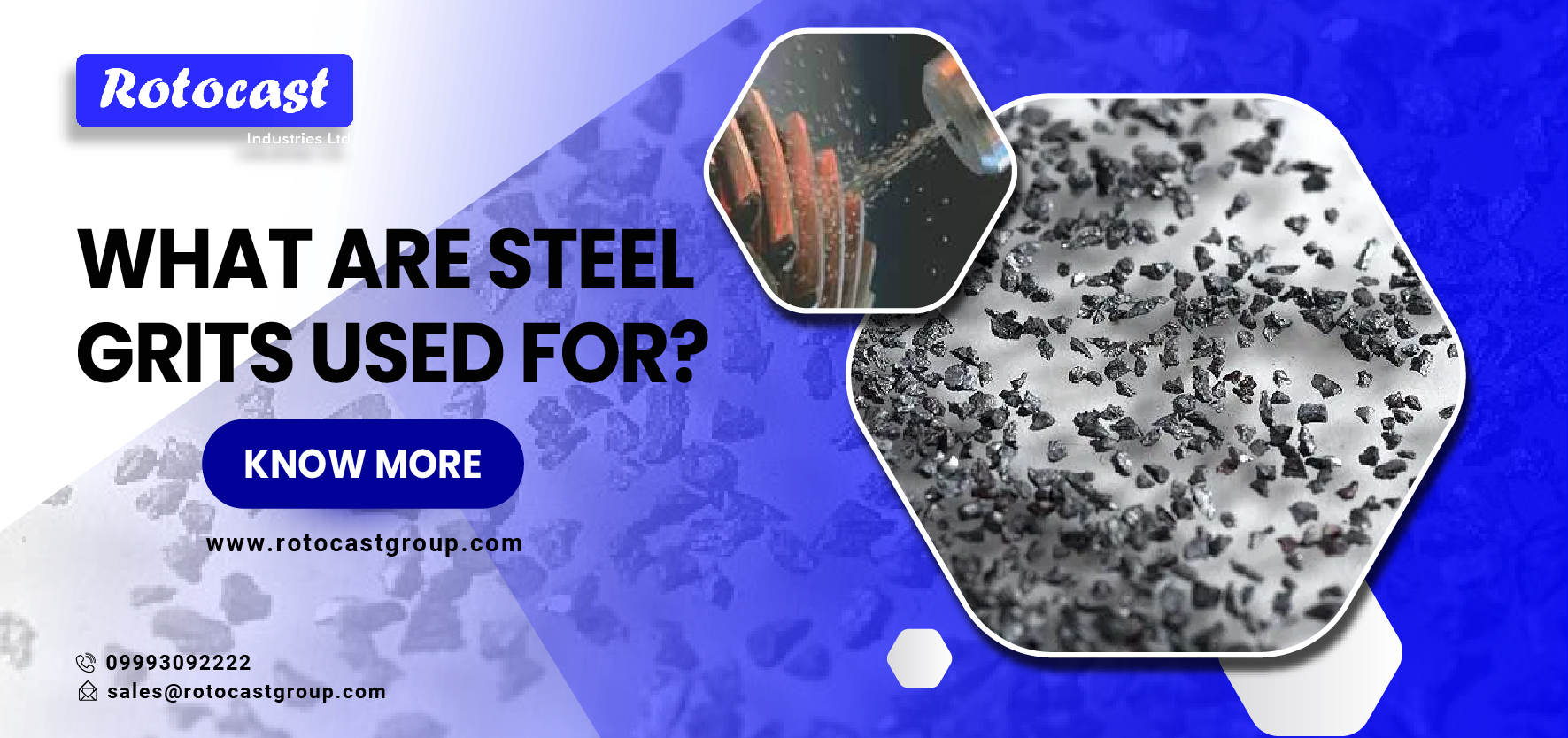
The effectiveness of Steel Grit comes from its angular particle shape and abrasive cutting action.
Unlike smooth, rounded media, steel grit particles have sharp edges that strike and cut into the metal surface during blasting.
This creates three important effects.
1. Removing Rust and Weak Surface Layers
Before coating, metal surfaces may contain oxidation, mill scale, and old protective finishes.
These layers can interfere with direct contact between the coating and the underlying steel.
Steel grit blasting helps remove these unwanted materials, exposing a more suitable substrate.
This is particularly important for structural steel, pipelines, fabricated components, and heavy industrial equipment.
A visually clean surface is an important starting point, but surface cleanliness alone does not guarantee successful coating adhesion.
2. Creating a Mechanical Anchor Profile
This is where the real science begins.
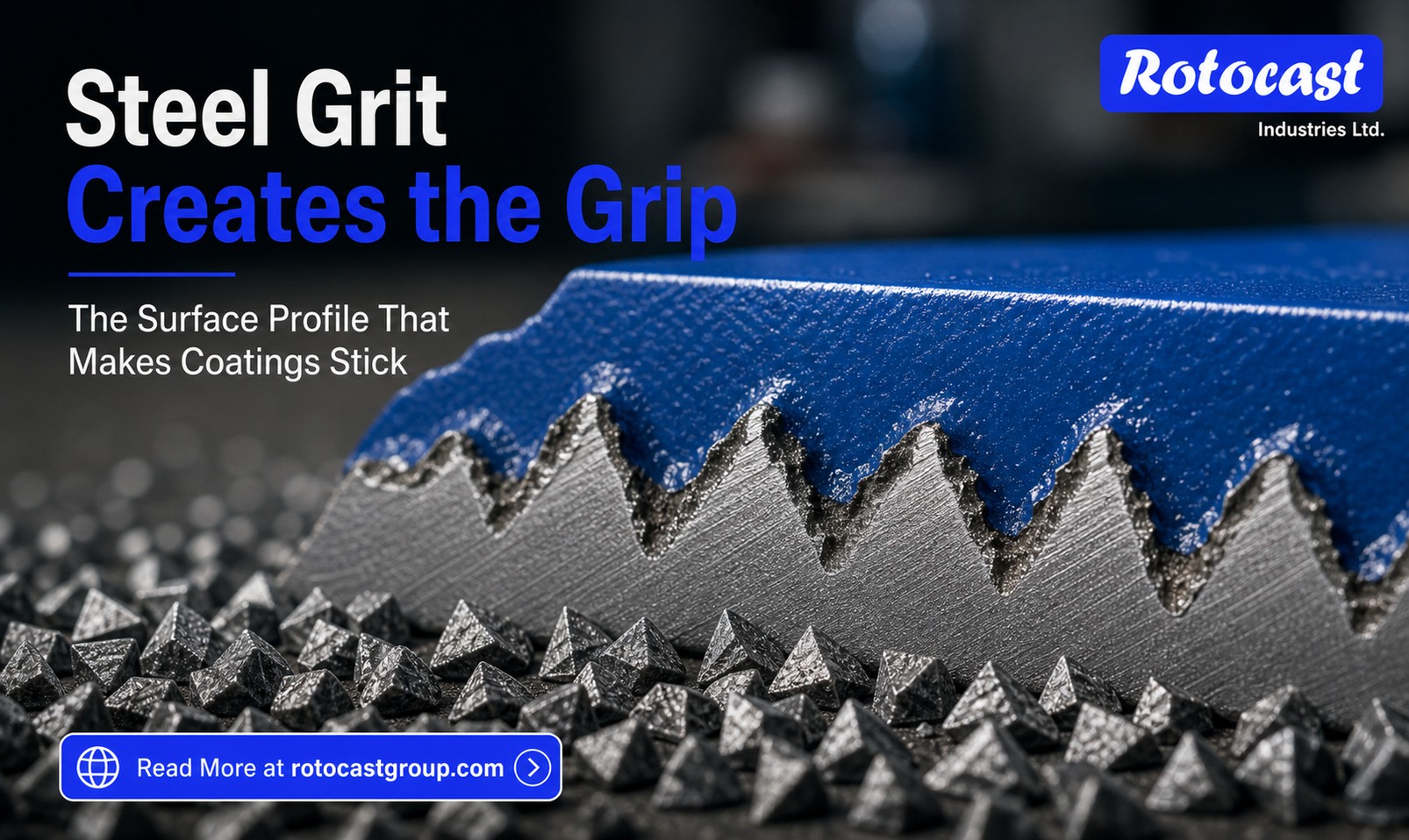
When angular grit particles strike steel at high velocity, they create microscopic peaks and valleys across the surface.
This textured pattern is known as the anchor profile.
Think of it as a microscopic landscape. When a compatible coating is applied, it flows around these tiny surface features, increasing contact with the substrate and supporting mechanical interlocking as the coating cures.
This can improve adhesion when surface cleanliness, coating chemistry, and application conditions are also correct.
The process is one of the practical applications of Steel Grit in industrial abrasive blasting.
3. Creating a More Consistent Coating Foundation
A controlled surface profile helps coating applicators achieve a more predictable foundation.
However, this requires appropriate abrasive selection and blasting conditions.
The goal is to create a profile that falls within the coating manufacturer’s recommended range.
When the surface profile is consistent, coating application and inspection become easier to control across multiple components.
Why More Surface Roughness Isn’t Always Better
One of the biggest misconceptions in industrial blasting is that a rougher surface automatically produces stronger coating adhesion.
That isn’t necessarily true.
If the surface profile is too shallow, the coating may lack sufficient mechanical anchoring.
If the profile is excessively deep, the coating may fail to cover the highest peaks adequately. These exposed or insufficiently protected areas can become vulnerable to corrosion.
Excessive roughness may also increase coating consumption.
The ideal surface profile depends on several factors, including the coating type, specified dry-film thickness, substrate condition, and exposure environment.
The right surface profile is more important than the deepest surface profile.
This distinction helps manufacturers avoid unnecessary blasting, wasted coating material, and preventable rework.
Steel Grit vs Steel Shot: Which Is Better Before Coating?
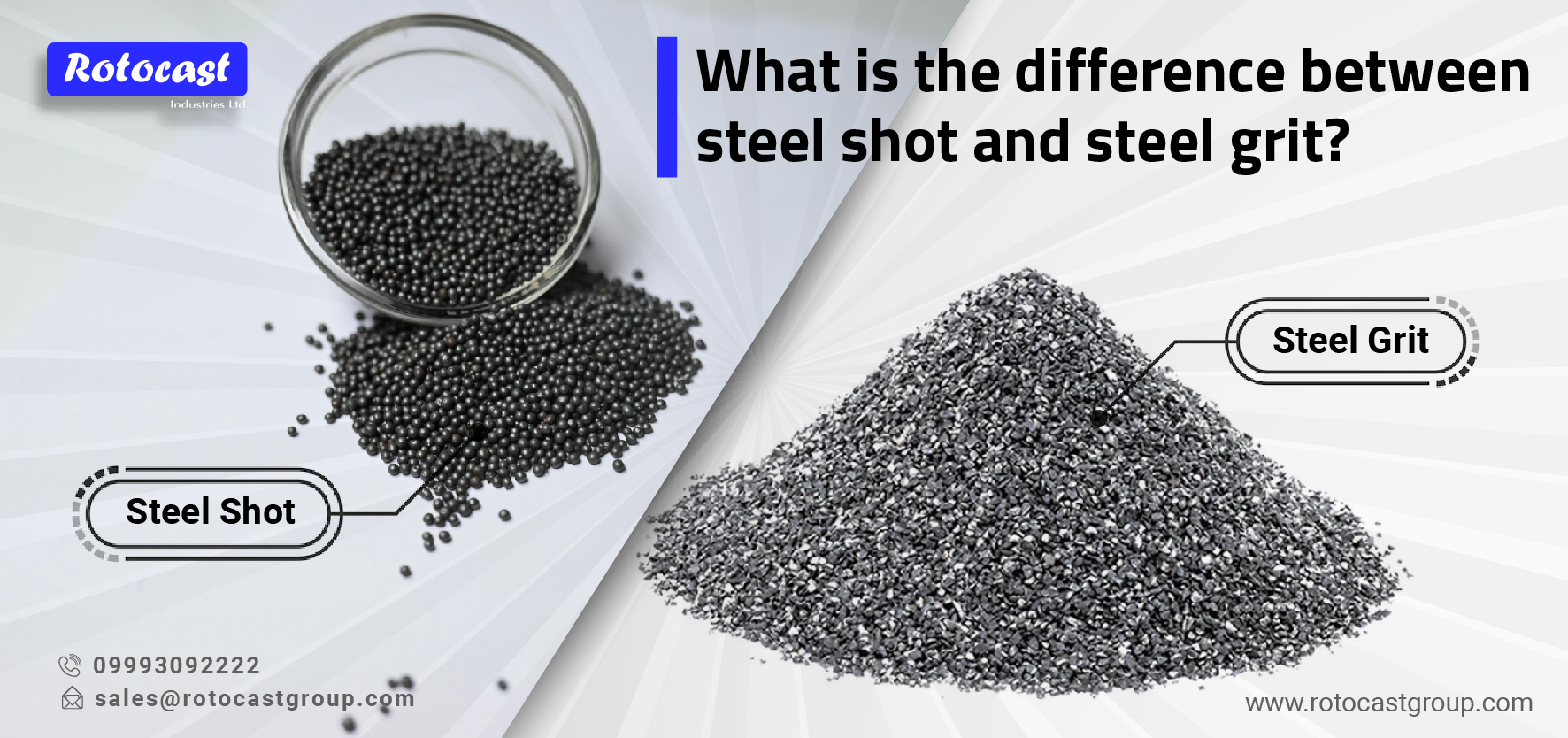
Both steel grit and steel shot are widely used in industrial surface treatment, but their particle shapes influence how they affect metal.
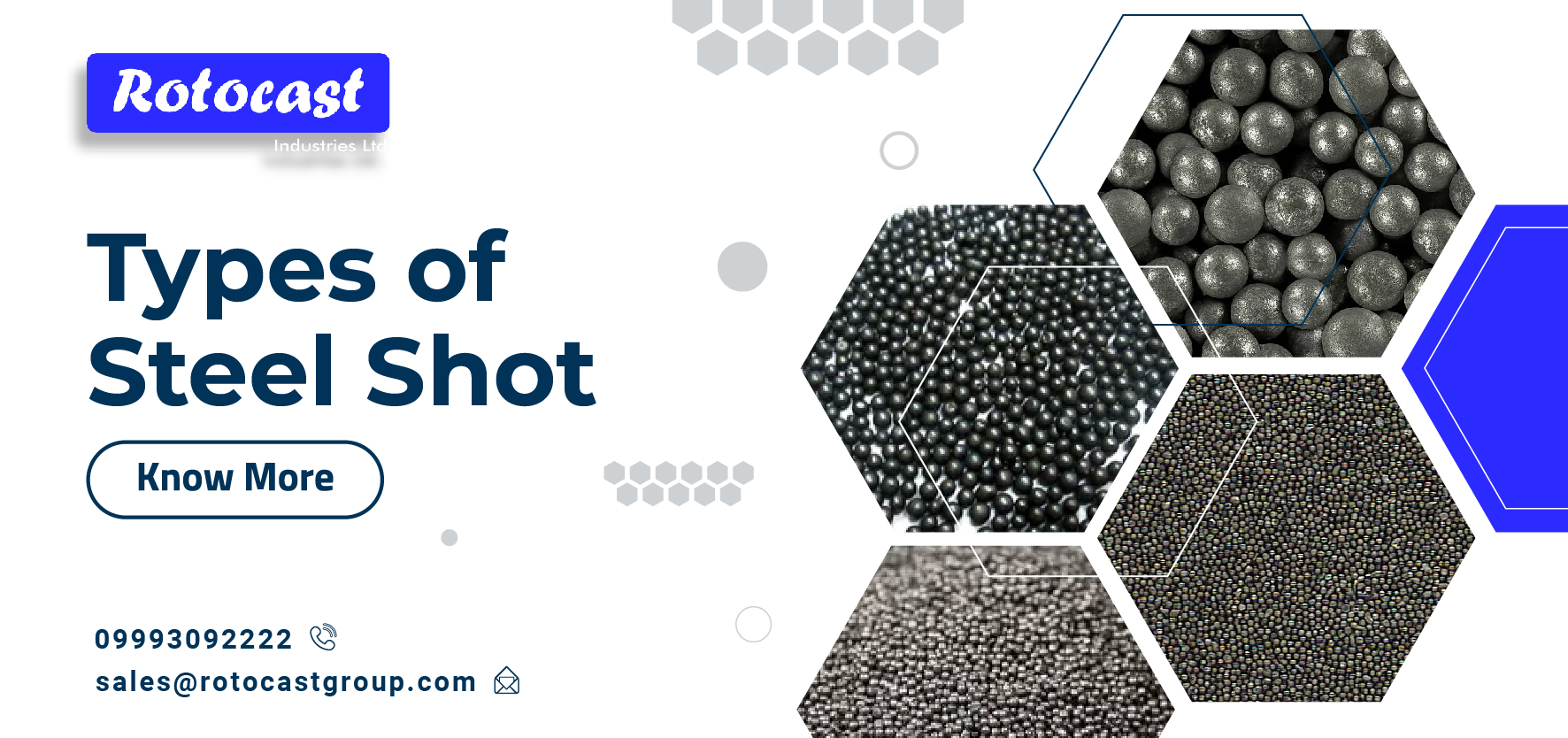
Steel Shot generally consists of rounded particles that produce a more uniform impact pattern.
This makes shot useful for applications such as casting cleaning, general surface finishing, and shot peening.
Rotocast’s Steel Shot products are designed for industrial blasting and surface-treatment applications.
Steel grit, in comparison, consists of angular particles that provide a more aggressive cutting action.
This makes it particularly useful for removing stubborn surface contamination and generating the roughness required by certain protective coating systems.
Neither abrasive is universally superior.
For example, a thin-film primer may require a finer profile than a high-build protective coating.
The correct abrasive should therefore be selected according to the desired surface finish, cleaning requirement, equipment, and coating specification.
What Determines the Quality of Steel Grit Blasting?
Even good-quality abrasive media cannot compensate for poorly controlled blasting conditions.
Several factors influence the final result.
Abrasive Size and Hardness
Different grit sizes and hardness levels create different impact characteristics.
Larger or more aggressive particles may produce deeper surface profiles, while finer grades can support more controlled preparation.
The appropriate grade should be selected after considering the substrate and coating requirements.
Rotocast provides a range of Steel Grits for various industrial applications.
Blasting Pressure and Particle Velocity
The energy with which abrasive particles strike the surface influences cleaning and profiling.
Insufficient impact energy may leave the surface inadequately prepared, while excessive energy can produce an unsuitable profile or unnecessary wear.
Blasting Angle and Coverage
The angle of impact and uniformity of abrasive exposure also matter.
Irregular blasting patterns can create variations in cleanliness and roughness, especially around corners, welds, and complex fabricated structures.
Abrasive Condition and Contamination
Worn, fragmented, or contaminated blasting media can affect surface preparation.
Maintaining an appropriate working mix, monitoring abrasive condition, and controlling dust are important for repeatable results.
How to Check Whether Steel Is Ready for Coating
A freshly blasted surface may look clean, but visual appearance alone cannot confirm that it is ready for painting.
A practical coating-readiness inspection should consider three separate conditions.
Surface cleanliness: Verify that rust, mill scale, old coatings, and visible contamination have been removed to the specified standard.
Surface profile: Use appropriate instruments, such as surface profile gauges or replica tape, to check whether the profile falls within the required range.
Environmental and contamination conditions: Check for residual dust, soluble salts where applicable, moisture, and environmental conditions that could affect coating application.
The coating should be applied within the preparation-to-coating interval and environmental limits specified for the project.
This combination of blasting and inspection helps reduce coating defects before they become expensive repairs.
Where Is Steel Grit Surface Preparation Most Valuable?
Steel grit blasting supports several industries where coating performance and corrosion protection are important.
Pre-engineered buildings and structural steel: Preparing beams, columns, and fabricated sections before protective painting.
Pipelines and industrial equipment: Removing oxidation and creating suitable surface profiles before applying protective coating systems.
Shipbuilding and heavy engineering: Preparing steel components exposed to demanding operational environments.
Automotive and manufacturing: Cleaning selected metal components before subsequent finishing operations.
Steel Casting Foundry applications: Removing scale and other surface residues from cast components before further processing or finishing.
In each application, the surface preparation requirement should guide the selection of abrasive media.
How Rotocast Industries Ltd. Supports Better Surface Preparation
Rotocast Industries Ltd. manufactures steel abrasives for industrial surface treatment, including steel shot and steel grit used in cleaning, blasting, and coating preparation.
As an established Steel Grit Manufacturer in India, Rotocast focuses on abrasive characteristics such as particle size, shape, hardness, and consistency.
Its product portfolio serves industries including foundries, forging units, heavy engineering, structural fabrication, and other manufacturing applications.
Rotocast Steel Grit is produced through the crushing, screening, and treatment of hardened steel shot to achieve the desired abrasive properties.
Different grit grades enable manufacturers to select suitable blasting media for specific surface preparation requirements.
Rather than treating blasting as a routine cleaning operation, manufacturers can approach it as an important part of their overall coating-quality process.
Frequently Asked Questions
Does Steel Grit Improve Paint Adhesion?
Steel grit can improve the conditions required for coating adhesion by removing unwanted surface materials and creating an appropriate anchor profile. Actual adhesion also depends on surface cleanliness, coating compatibility, application, and curing.
Is Steel Grit Suitable for All Industrial Coatings?
Not necessarily. The required abrasive type and surface profile depend on the coating system, substrate, and project specification. Some coatings require finer preparation than others.
Can Poor Surface Preparation Cause Coating Failure?
Yes. Remaining contamination, an unsuitable surface profile, moisture, and improper coating application can contribute to premature peeling, blistering, and corrosion.
Final Thoughts: Strong Coatings Begin Before Painting
A successful protective coating is not simply about choosing the right paint. It begins with preparing the metal surface correctly.
Steel grit plays an important role by removing unwanted surface layers and creating the controlled texture needed for effective coating adhesion.
For manufacturers, understanding this process can help reduce avoidable coating defects, improve surface-treatment consistency, and support better long-term product performance.
Looking for dependable steel abrasives for your surface preparation process?
Connect with Rotocast Industries Ltd. to discuss steel grit selection, industrial blasting requirements, and suitable abrasive solutions.