- Rotocast
- Oct 3, 2026
- Blogs, Shot Blasting, Steel Abrasives, Surface Preparation
- 0 Comments
PEB structures can look perfect at fabrication yet suffer early coating failure if rust, mill scale, salts, or the wrong surface profile remain. The right steel grit selection turns blasting from a cleaning step into controlled surface engineering that supports stronger, longer-lasting protective coatings.
What This Article Covers
- Why PEB coating life starts with surface preparation
- How steel grit size, hardness, and operating mix affect profile
- A practical media-selection framework for fabrication lines
- Common blasting mistakes that increase coating risk
- Five procurement and process FAQs
What is steel grit used for in PEB surface preparation?
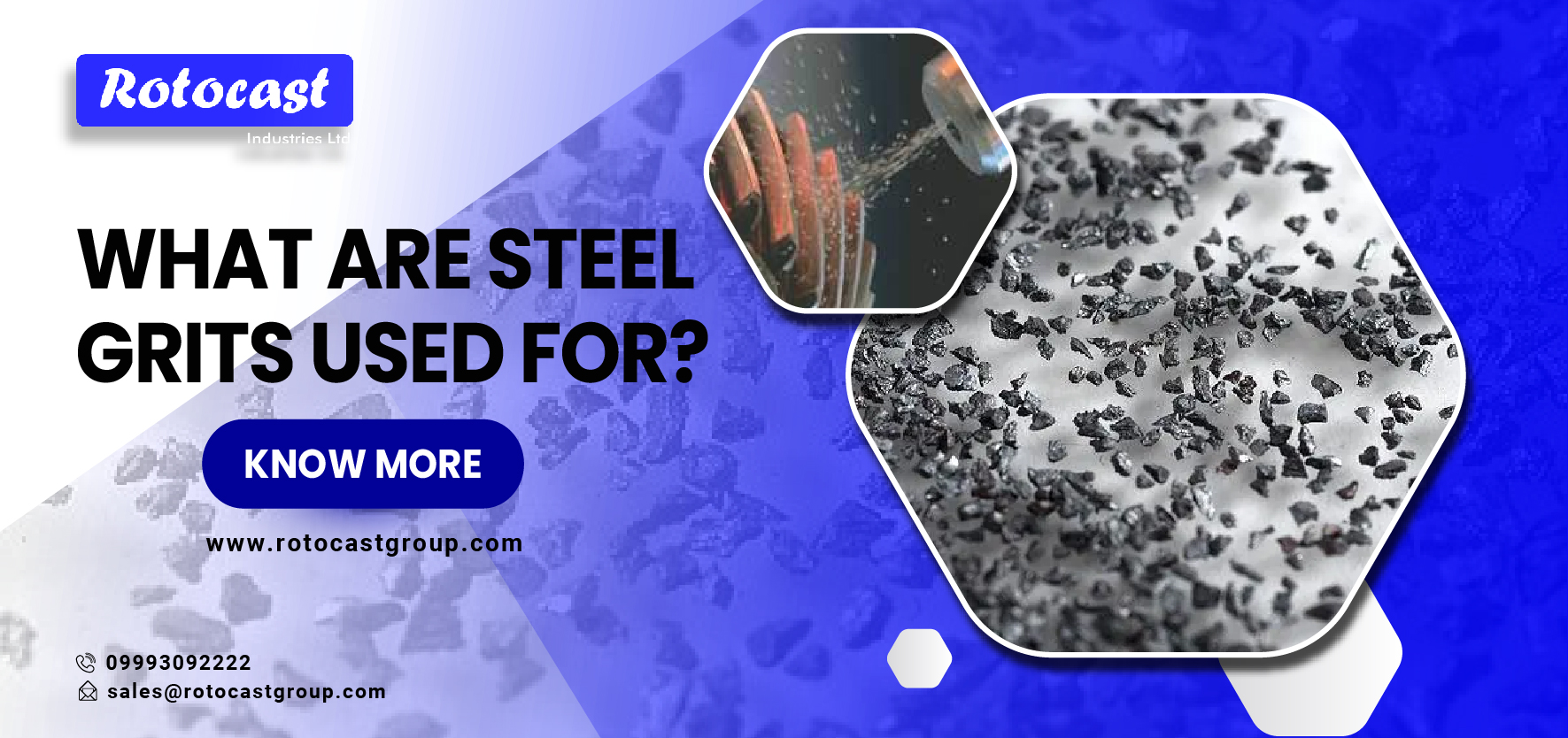
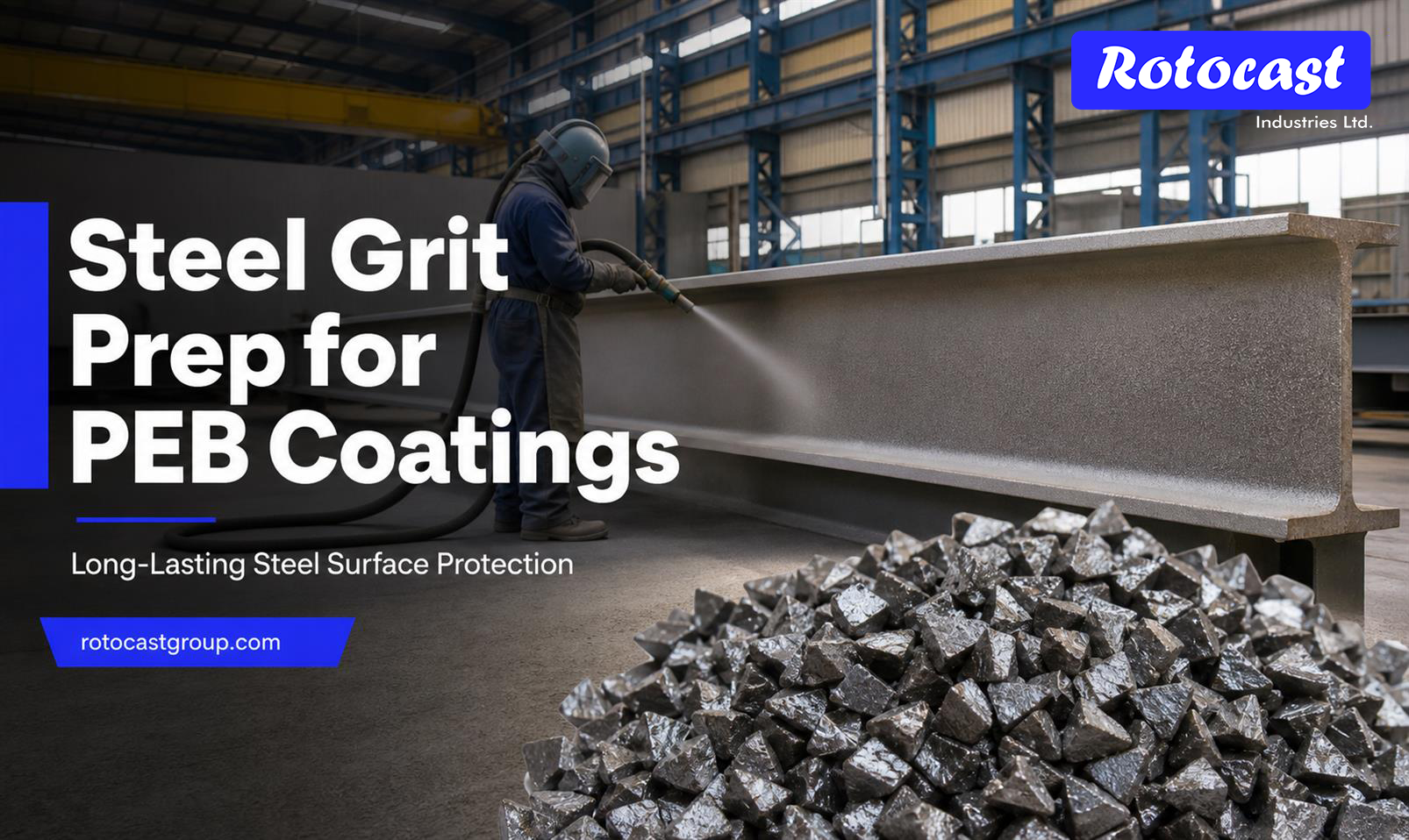
Steel grit is an angular metallic abrasive used to remove mill scale, rust, old coating, and tightly bonded contaminants while creating a controlled anchor profile on structural steel. In PEB fabrication, that profile gives primers and protective coatings the mechanical key they need to bond consistently and perform over time.
Why PEB Structures Need More Than a Visually Clean Surface
Pre-engineered building members move quickly through fabrication, blasting, painting, handling, transport, and erection. That speed makes surface preparation a production-critical operation. A beam can appear bright after blasting and still be unsuitable for coating if the profile is too shallow, too sharp, contaminated, or inconsistent across webs, flanges, weld zones, and cut edges.
Coating systems depend on both cleanliness and roughness. The blast process must remove corrosion products and mill scale while developing the profile specified by the paint supplier or project specification. ISO 8503 recognizes that shot- and grit-blasted steel create measurable surface roughness characteristics, which is why profile control should be treated as a quality parameter rather than a visual judgment.
How Steel Grit Builds the Surface Profile Coatings Need
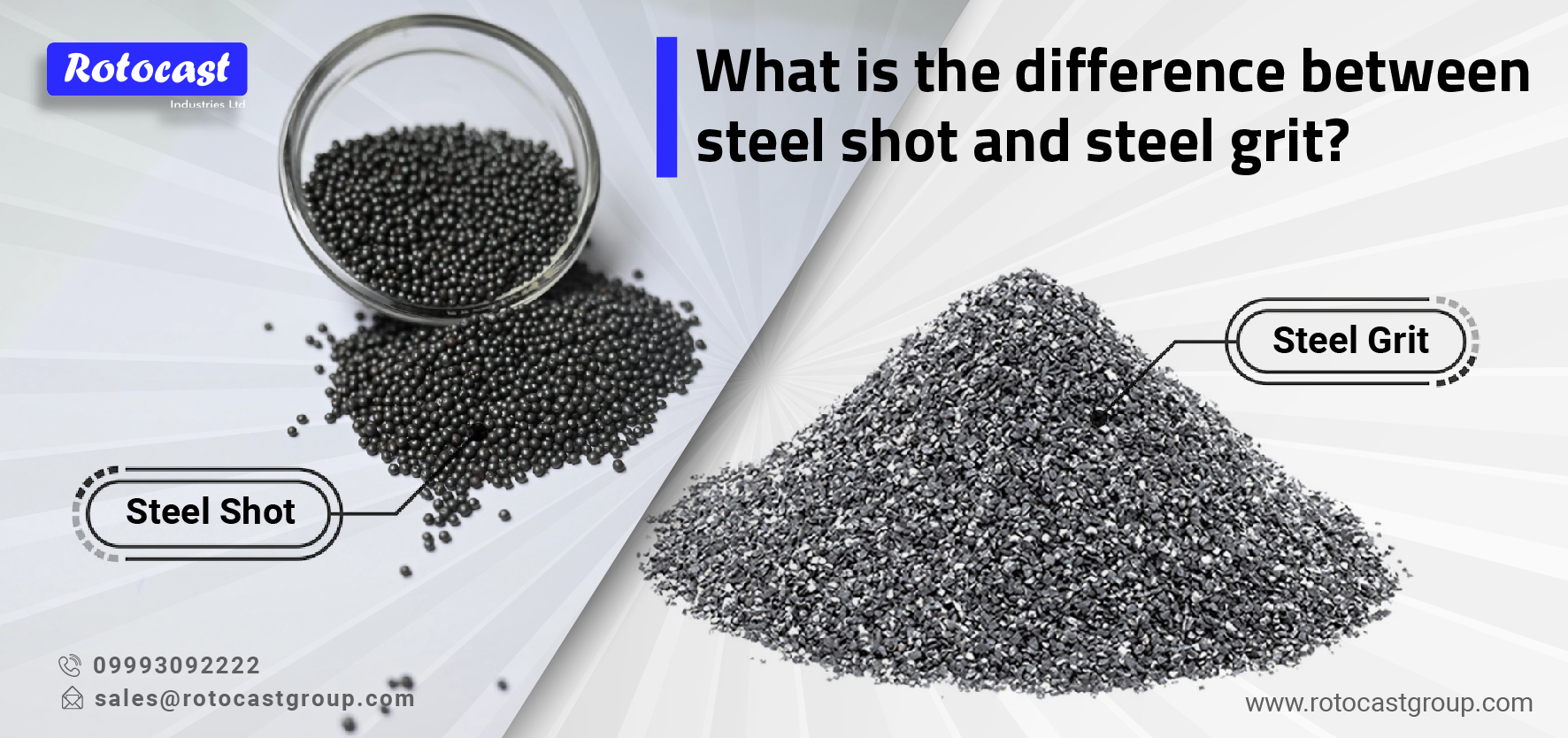
Angular Steel Grit cuts into the substrate rather than mainly peening it. The impact creates peaks and valleys that increase real contact area and provide mechanical anchoring for the primer. Coarser grit generally drives a deeper profile, while finer grit creates a tighter texture and can improve coverage in complex geometry. The correct choice depends on coating thickness, steel condition, blast equipment, target cleanliness, and required production rate.
Hardness also matters. A harder grit retains cutting edges longer but can be more aggressive on thin or sensitive sections. A softer grade may round more quickly and shift the operating mix toward less cutting action. Plant teams therefore need to manage not only the new abrasive specification but also the working mix inside the machine.
Decision Framework: Choosing Steel Grit for PEB Fabrication
| Process condition | What to prioritize | Why it matters |
| Heavy mill scale / rust | Angular, suitably coarse Steel Grit | Higher cutting action speeds contaminant removal and profile creation. |
| Thin PEB sections | Controlled size and hardness | Avoids excessive aggression while still producing coating grip. |
| High-build coating | Profile matched to paint system | Too shallow can reduce adhesion; too deep can leave peaks insufficiently covered. |
| High-throughput line | Stable operating mix and low breakdown | Supports repeatable cleaning, profile, and media cost. |
Control the Working Mix, Not Just the Purchase Specification
Fresh abrasive is only one part of blast performance. Inside a wheel-blast or air-blast system, new grit mixes with worn particles, fines, scale, dust, and carryout. If separator settings, replenishment rate, or dust extraction drift, the surface profile can change even though the purchase grade has not changed.
A disciplined PEB line should track abrasive consumption per tonne, sieve distribution, dust load, wheel amperage or blast pressure, visual cleanliness, and measured profile. Profile can be checked with recognized comparators or replica-tape methods where appropriate. Trending these values makes it easier to distinguish a media problem from an equipment, separator, or process-control problem.
Common Mistakes That Shorten Coating Life
| Mistake | What happens | Plant-floor correction |
| Judging only by “looks clean” | Profile or embedded contamination gets missed | Measure cleanliness/profile against the project specification. |
| Letting fines build up | Cutting efficiency and coating cleanliness decline | Tune separator and dust collection; check sieve distribution. |
| Overusing one grit grade | Different sections/coatings may need different profiles | Validate grade against steel thickness and coating system. |
| Ignoring abrasive consumption | High breakdown hides behind acceptable finish | Track kg/tonne and inspect working mix regularly. |
Where a Technical Abrasive Manufacturer Adds Value
For procurement teams, the cheapest abrasive per kilogram is rarely the lowest-cost choice. Media that fractures too quickly, varies in hardness, contains excessive fines, or loses angularity can increase consumption and reduce profile consistency. The real cost sits in kilograms consumed per tonne blasted, reblasting, paint failures, booth cleaning, wheel wear, and production stoppages.
With 40+ years of excellence, 1000+ customers served and 30,000 T annual capacity, Rotocast Industries Ltd. manufactures steel shot and steel grit for PEB, foundry, forging, automotive and heavy-engineering users. The useful conversation is not simply “Which grit size?” but “What profile, throughput, consumption, and coating outcome must the blasting line deliver?” That process-first approach helps turn abrasive selection into a controlled manufacturing decision.
PEB Blast-Line Release Checklist
Before a blasted PEB member moves to coating, confirm four things: specified visual cleanliness, required surface profile, loose-dust removal, and acceptable blast-to-paint timing. Sample welds, edges and web-flange junctions because flat-face readings can miss local variation.
For repeat orders, retain a process record with abrasive grade, working-mix sieve distribution, separator status, machine settings, profile readings, and consumption. It gives quality and procurement a baseline when coating performance or media cost changes.
Final Words
Long-lasting coatings start before the paint booth. For PEB structures, consistent steel cleanliness and a controlled anchor profile are the foundation for adhesion, corrosion resistance, and fewer touch-ups after erection. Treat Steel Grit India selection as part of the coating system—not as a commodity purchase.
Explore products to understand the available steel abrasive options, or connect for customized abrasive solutions matched to your PEB blasting equipment, coating specification, and production target.
FAQs
- Which steel grit is best for PEB structures?
There is no universal grade. Select grit size and hardness from the required coating profile, steel condition, equipment type, section thickness, and throughput target.
- What surface profile should steel grit create before painting?
Use the profile range specified by the coating manufacturer or project standard. The target must suit primer thickness so the peaks are fully protected.
- Is steel shot suitable for PEB surface preparation?
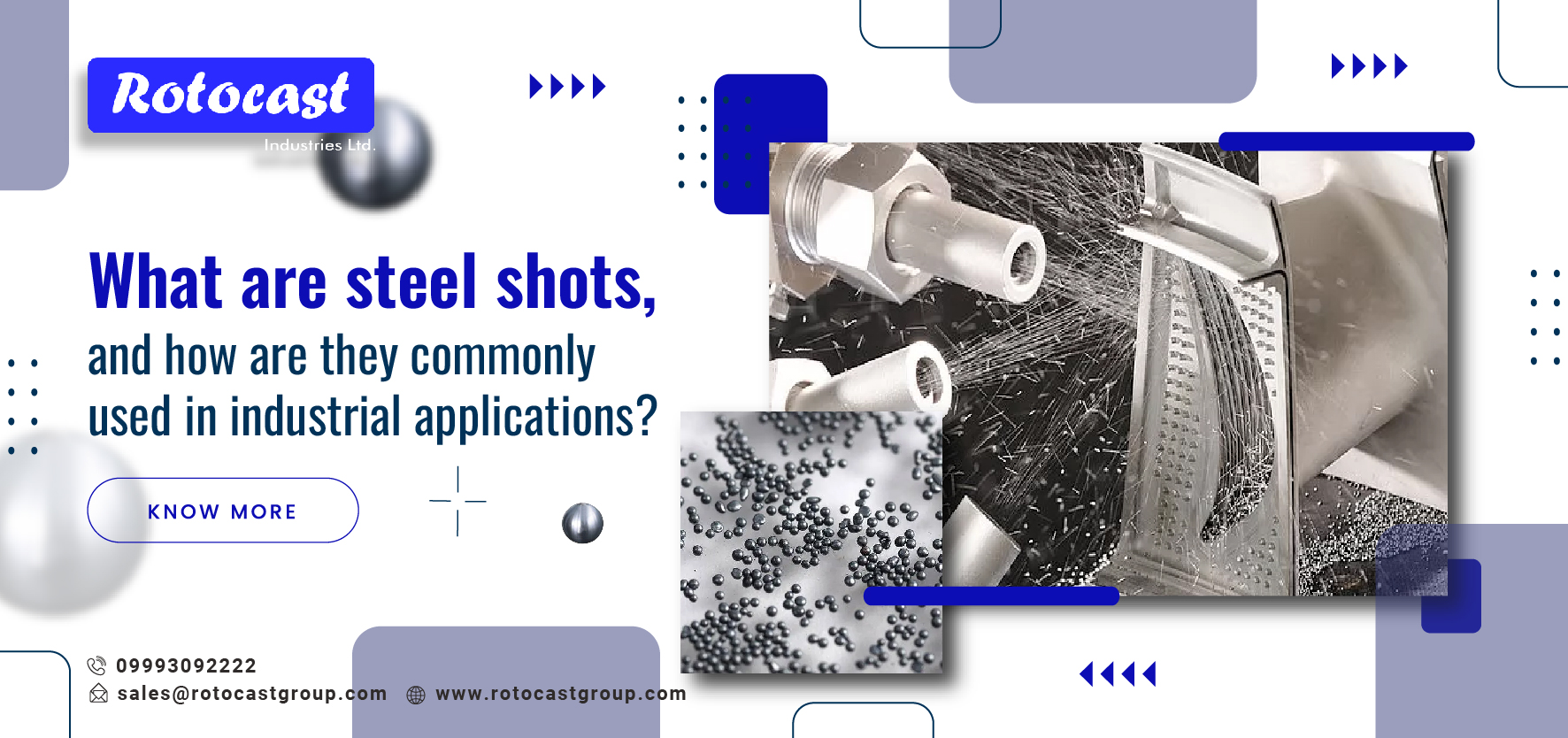
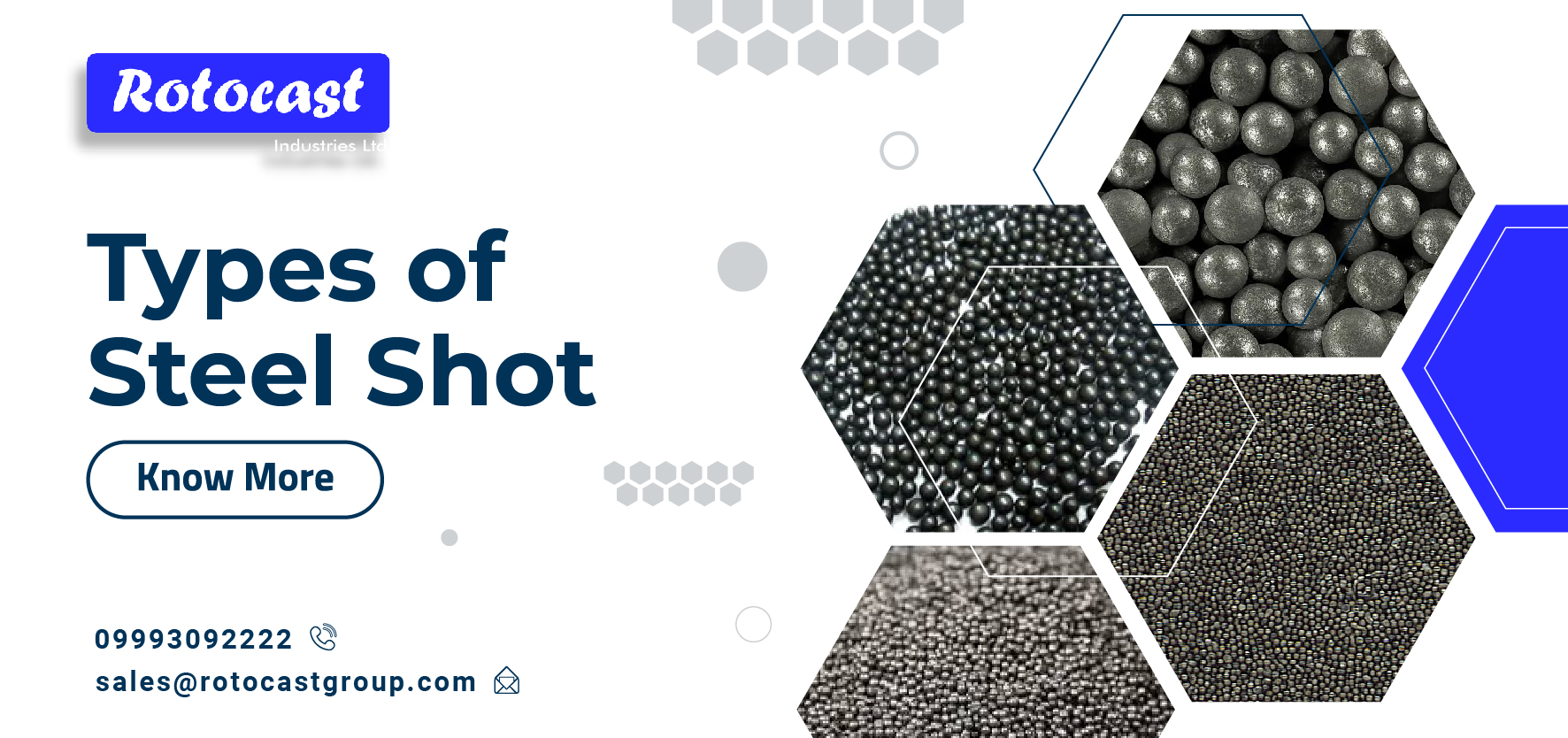
Steel Shot can clean and smooth surfaces efficiently, but angular Steel Grit is generally preferred when a sharper anchor profile is required for coating adhesion.
- How often should the blasting media be checked?
Monitor the working mix routinely through sieve checks, visual inspection, consumption trends, separator performance, and measured surface profile rather than waiting for coating defects.
- Why choose a Steel Grit Manufacturer in India instead of spot buying?
A consistent manufacturer can support repeatable size, hardness, durability, documentation, supply continuity, and process troubleshooting—factors that directly affect blasting economics and coating quality.