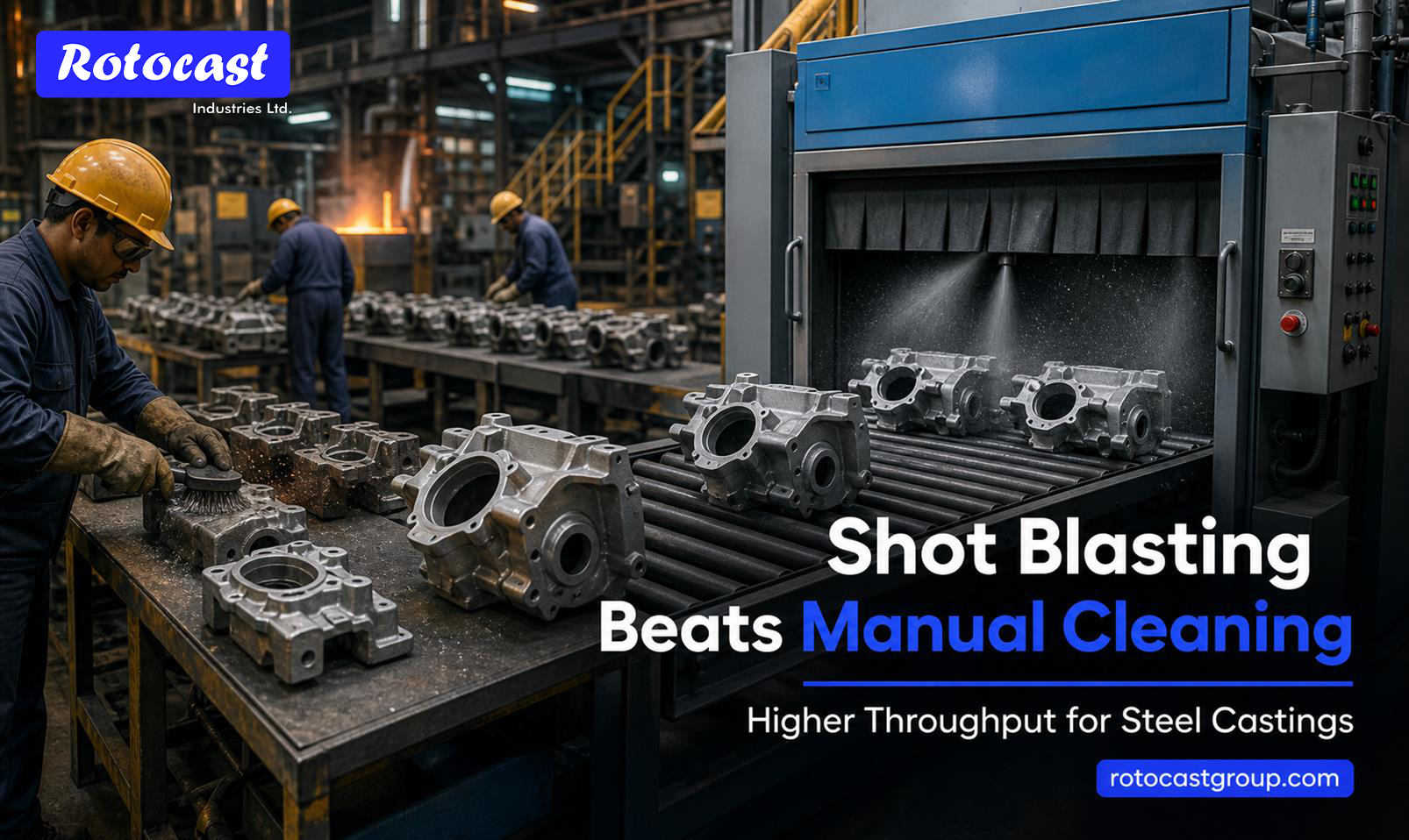
Every steel casting leaving a mould carries evidence of the manufacturing process—adhered sand, scale, oxidation, burnt-on residue, fins, or other surface contaminants. Before inspection, machining, coating, painting, or dispatch, these contaminants must be removed.
The important question for a modern Steel Casting Foundry is no longer simply how to clean a casting. It is:
Which cleaning method can deliver the required surface quality without slowing production?
Manual cleaning techniques such as wire brushing, chipping, scraping, and grinding still have a place in foundries. However, as production volumes increase, manufacturers often require a faster and more repeatable method.
That is where steel casting shot blasting becomes important.
According to the general principle of abrasive blasting, abrasive media is propelled against a surface to remove contaminants or modify the surface condition. Metallic abrasives such as steel abrasives are widely used for industrial cleaning and surface preparation.
But does shot blasting actually improve throughput compared with manual cleaning?
The answer depends on production volume, casting geometry, abrasive selection, machine condition, and the surface finish required.
What Is Manual Cleaning in a Steel Casting Foundry?
Manual casting cleaning involves operators physically removing unwanted surface material using tools such as:
- Wire brushes
- Chipping hammers
- Scrapers
- Hand grinders
- Pneumatic tools
- Cutting tools
- Portable grinding equipment
For low-volume production or isolated areas that blasting cannot reach effectively, manual cleaning can still be useful.
The difficulty arises when manual cleaning becomes the primary method for hundreds or thousands of repetitive castings.
Cleaning time then becomes strongly dependent on operator speed, fatigue, experience, component geometry, and the amount of contamination present.
As production increases, these variations can create a bottleneck between casting and downstream processes.
What Is Steel Casting Shot Blasting?
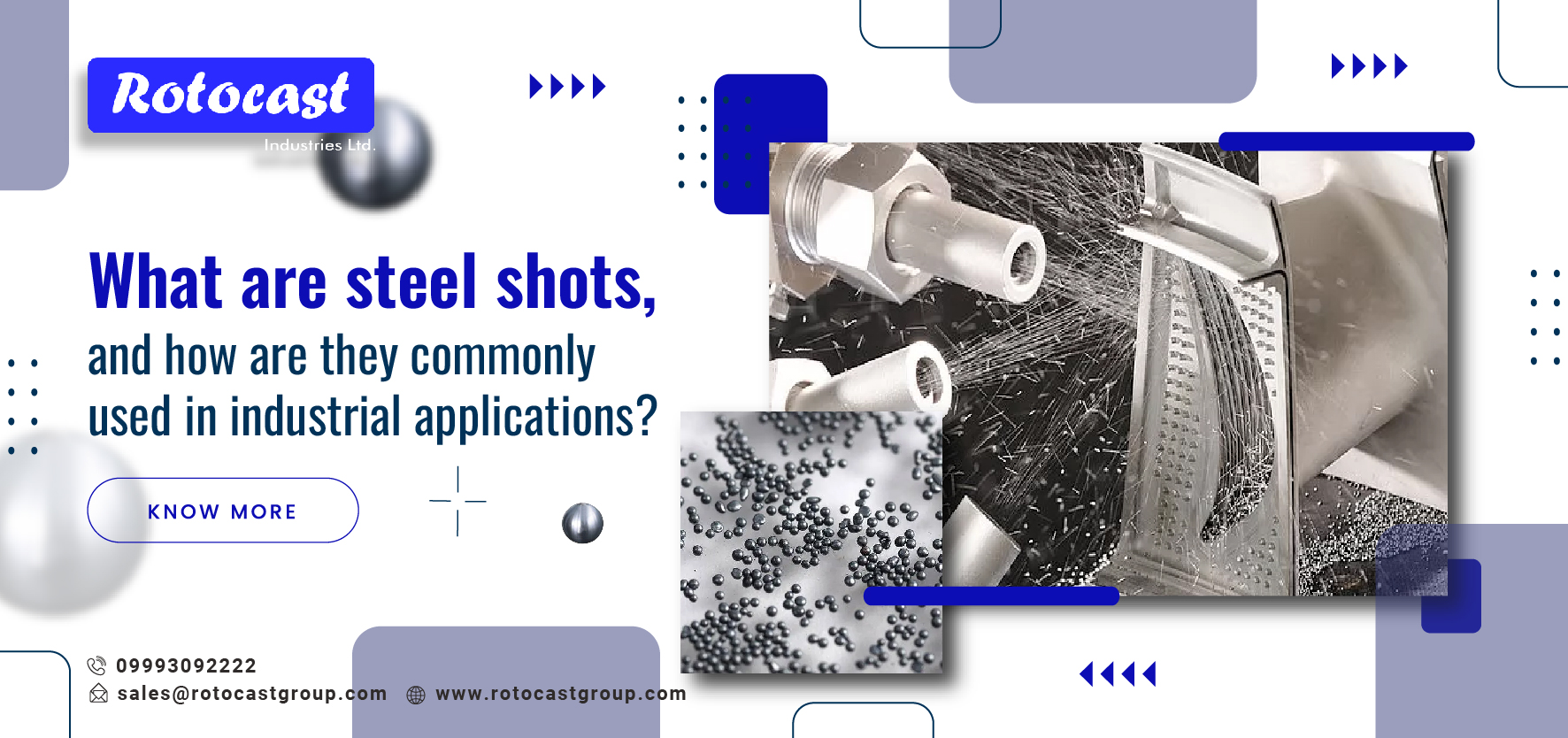
Steel casting shot blasting is a mechanical cleaning process in which metallic abrasive media is accelerated toward the casting surface.
Depending on the equipment, the abrasive may be propelled through blast wheels or compressed-air systems.
The repeated impact removes:
- Moulding sand
- Loose scale
- Oxidation
- Surface residue
- Minor contaminants
- Rust
- Heat-treatment deposits
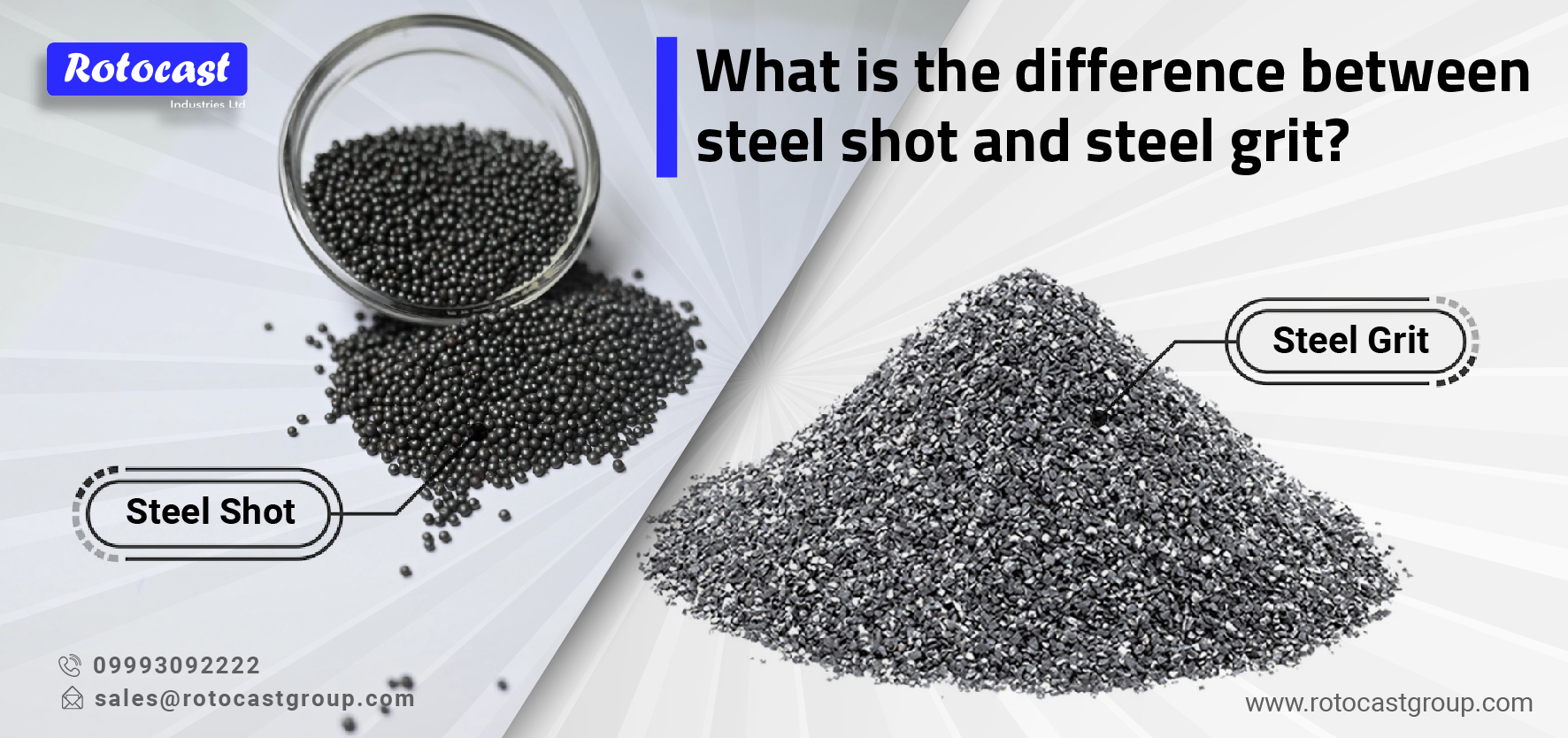
High-quality Steel Shot is commonly preferred where cleaning and a comparatively uniform surface finish are required.
For more aggressive cutting, descaling, or surface profiling requirements, Steel Grit may be selected.
The correct abrasive depends on the casting material, desired surface condition, machine configuration, contaminant level, and downstream requirement.
Shot Blasting vs Manual Cleaning: A Throughput Comparison
| Parameter | Shot Blasting | Manual Cleaning |
|---|---|---|
| Processing speed | High for repetitive production | Dependent on operator |
| Batch handling | Suitable for multiple components | Usually component-by-component |
| Surface consistency | More repeatable when controlled | Can vary by operator |
| Labor dependency | Lower per component | Higher |
| Complex areas | May require supplementary cleaning | Useful for localized areas |
| Scalability | Strong for increasing volumes | Requires additional manpower |
| Process control | Machine and media parameters can be controlled | Depends heavily on technique |
| Surface uniformity | Generally more consistent | More variable |
| Production planning | Easier to standardize | Difficult when cleaning time fluctuates |
For high-volume foundry production, these differences become increasingly important.
1. Shot Blasting Can Reduce Cleaning Cycle Time
Throughput is strongly influenced by cycle time.
If an operator requires several minutes to manually clean one casting, the same process repeated across hundreds of components consumes a substantial number of labor hours.
Shot blasting allows multiple surfaces—or multiple components depending on the machine—to receive abrasive impact during the same controlled cycle.
The result is a more production-oriented process.
Rather than asking:
“How quickly can one worker clean this component?”
a foundry can begin asking:
“How many castings can this blasting cycle process consistently per hour?”
That change in thinking is essential when scaling manufacturing operations.
2. Repeatability Helps Production Move Faster
Speed alone does not improve real throughput.
A casting cleaned quickly but sent back for additional grinding or re-blasting still consumes production capacity.
Manual cleaning can produce different outcomes depending on:
- Operator skill
- Applied pressure
- Tool condition
- Shift
- Cleaning duration
- Accessibility of the surface
Shot blasting can provide greater repeatability when abrasive flow, exposure time, wheel speed, media condition, and machine parameters are maintained properly.
Consistent surfaces reduce the likelihood of unnecessary touch-up and help downstream teams receive castings in a predictable condition.
Learn more about how controlled blasting influences cleaning and finishing in Rotocast’s guide to steel shot blasting and final product quality.
3. Lower Labor Dependency Supports Higher Output
Manual cleaning is labor intensive.
As production volume increases, output may require a proportional increase in operators, tools, workstations, supervision, and material handling.
Shot blasting changes this relationship.
Operators are still essential for loading, unloading, inspection, equipment monitoring, media management, and maintenance, but mechanical blasting can handle much of the repetitive surface-cleaning work.
This allows skilled personnel to focus on:
- Quality inspection
- Finishing critical areas
- Machine operation
- Process monitoring
- Defect identification
- Production control
The objective is not simply replacing manual labor. It is using skilled labor where it creates greater value.
4. Steel Shot Supports Uniform Cleaning
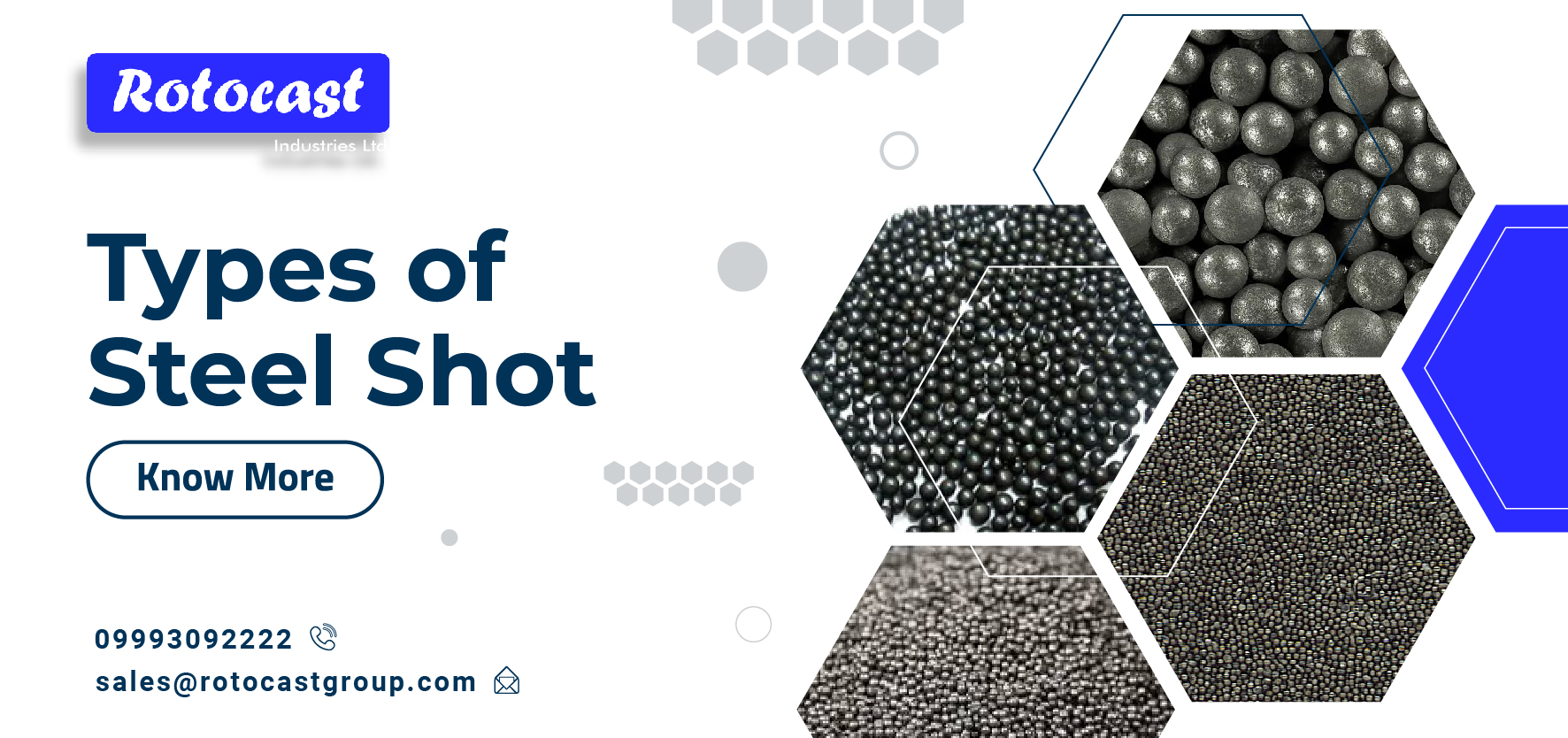
Steel Shot consists of predominantly spherical metallic particles.
Its impact action makes it valuable for applications where manufacturers need effective cleaning together with a comparatively uniform finish.
Reliable Steel Shots can be used in applications including:
- Casting cleaning
- Forging cleaning
- Descaling
- Surface preparation
- Shot blasting
- Shot peening
However, abrasive quality matters.
Poorly controlled particle size, excessive broken particles, contamination, or an incorrect operating mix can reduce cleaning efficiency and increase unnecessary abrasive consumption.
That is why choosing the correct Steel Shot Manufacturer is part of optimizing the blasting process—not merely a purchasing decision.
5. Steel Grit Handles More Aggressive Cleaning Requirements
Not every casting requires the same cleaning action.
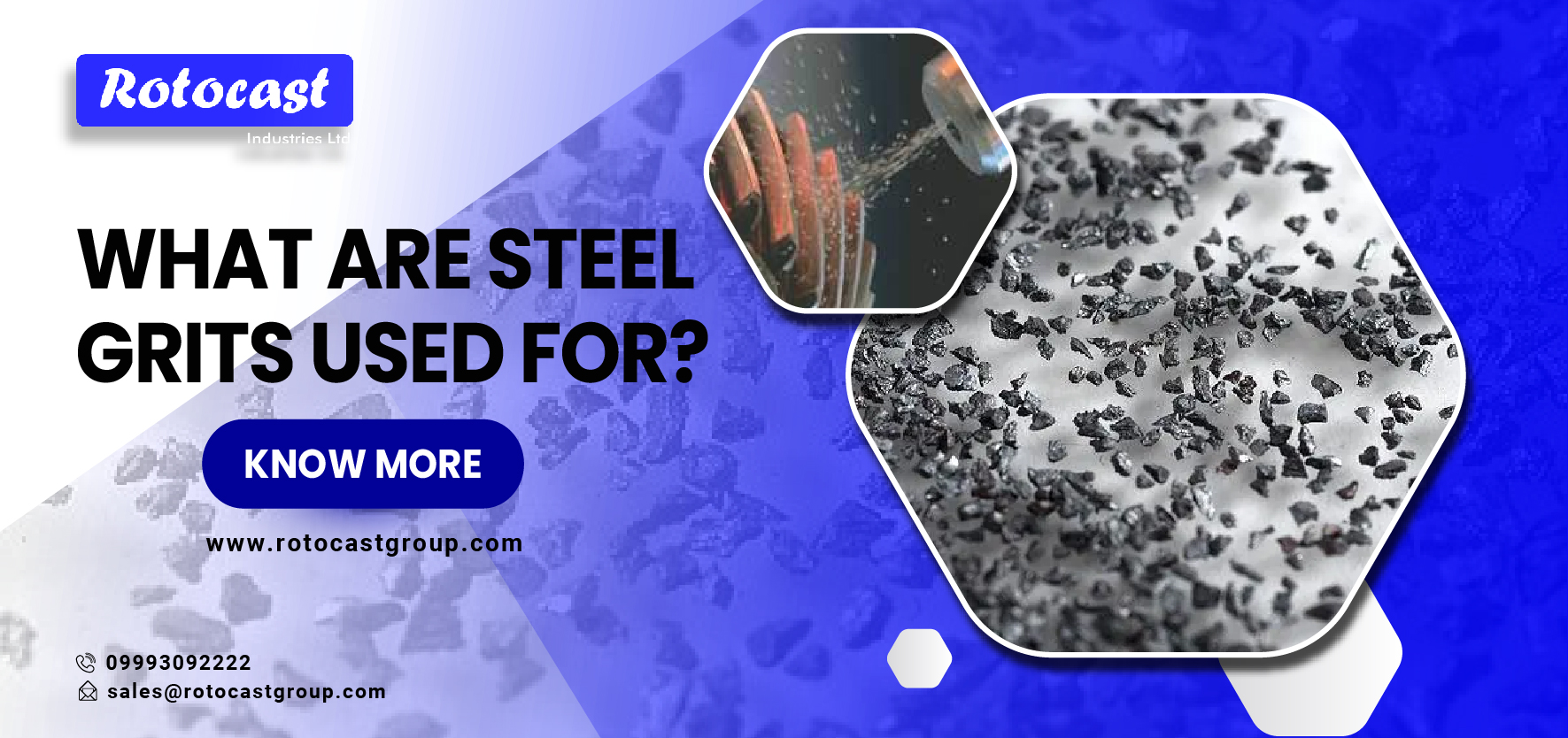
Where heavy scale, stubborn contaminants, rust, or a stronger cutting action must be addressed, Steel Grit can provide a more aggressive surface interaction.
Unlike round Steel Shots, Steel Grits have angular characteristics that increase cutting action.
This makes grit useful for demanding surface-preparation applications.
A dependable Steel Grit Manufacturer should therefore be able to help customers evaluate factors such as:
- Grit size
- Hardness
- Operating mix
- Casting material
- Machine type
- Required surface profile
- Contamination level
Manufacturers can also explore Rotocast’s wider product and surface preparation range when selecting abrasives for different blasting applications.
6. Less Rework Means Better Effective Throughput
A production line can appear fast while still operating inefficiently.
For example:
- A casting is cleaned.
- Inspection identifies patches of residual scale.
- The casting returns for manual grinding.
- It is inspected again.
- Production scheduling is disrupted.
Every repeat operation increases effective cycle time.
A properly controlled blasting process can improve consistency across batches and reduce reliance on repeated manual touch-ups.
This is particularly valuable for a Steel Casting Foundry producing similar components in large volumes.
Higher throughput is therefore not only about processing components faster—it is about reducing the number of times each component must be handled.
7. Shot Blasting Integrates Better With High-Volume Production
Foundries increasingly focus on process flow rather than isolated manufacturing operations.
Casting cleaning must fit efficiently between:
Casting → Knockout → Cleaning → Inspection → Machining → Coating → Dispatch
If cleaning cannot keep pace with upstream production, work-in-progress begins accumulating.
Mechanical blasting systems can be designed around repetitive workflows and predictable cycle times, making capacity planning easier.
Manual cleaning is usually more difficult to scale because increasing throughput generally means increasing manpower, tools, or workstations.
Steel Shot or Steel Grit: Which Improves Cleaning Productivity?
Neither abrasive is universally better.
The correct selection depends on the target surface.
Choose Steel Shot when you need:
- Uniform cleaning
- Smoother surface appearance
- Controlled impact
- Foundry casting cleaning
- Shot peening
- Reduced aggressive cutting action
Choose Steel Grit when you need:
- Aggressive cleaning
- Heavy scale removal
- Rust removal
- Surface profiling
- Coating preparation
- Stronger cutting action
Some industrial operations may even use an engineered operating mix depending on the required cleaning performance.
Why Abrasive Quality Directly Affects Throughput
A shot-blasting machine cannot compensate indefinitely for unsuitable abrasive media.
Cleaning productivity depends on factors including:
- Particle size distribution
- Hardness
- Shape
- Density
- Durability
- Contamination level
- Operating mix
- Abrasive replenishment
- Separator efficiency
If abrasive breaks down excessively, the machine may contain too many fines and insufficient effective working particles.
If the media is too large, too small, too hard, or too soft for the application, cleaning time can increase.
For this reason, partnering with an experienced Steel Abrasives Manufacturer is important for plants looking to improve long-term blasting efficiency.
Choosing a Shot Manufacturer in India
Indian foundries operate across automotive, railway, forging, heavy engineering, infrastructure, fabrication, mining, and general manufacturing sectors.
Their blasting requirements vary considerably.
When selecting a Shot Manufacturer in India or Steel Grit Manufacturer in India, procurement teams should evaluate more than the initial price per kilogram.
Important factors include:
- Abrasive consistency
- Grade availability
- Technical support
- Quality control
- Batch repeatability
- Consumption rate
- Cleaning effectiveness
- Supply reliability
- Compatibility with the blasting machine
Search terms such as Steel Shot India, Steel Grit India, Steel Shots India, and Steel Grits India may identify multiple suppliers, but the lowest abrasive purchase price does not necessarily produce the lowest cleaning cost.
Plants should evaluate the total cost per cleaned component.
Manual Cleaning Still Has a Role
Shot blasting does not make every manual process unnecessary.
Manual tools remain valuable for:
- Internal cavities
- Difficult-to-access locations
- Localized defects
- Gates and risers
- Heavy flash
- Final touch-up
- Components unsuitable for the available blasting machine
The most efficient foundry workflow may therefore be a hybrid process:
Shot blasting for primary cleaning + targeted manual finishing only where required.
This approach avoids spending skilled operator time manually cleaning every square centimetre of every casting.
So, Which Method Improves Throughput?
For repetitive, medium- to high-volume steel casting production, shot blasting generally provides stronger throughput potential than fully manual cleaning.
Its primary advantages are:
- Faster repetitive processing
- Greater cleaning consistency
- Reduced dependence on operator speed
- Easier production planning
- Better scalability
- Reduced repetitive manual work
- More predictable downstream surface condition
Manual cleaning remains valuable as a supplementary process, particularly for localized finishing and inaccessible areas.
The best results occur when the foundry combines the right blasting machine with the right Steel Shot or Steel Grit, maintains a healthy operating mix, monitors abrasive condition, and uses manual cleaning only where it adds real value.
Final Takeaway
The real comparison is not simply machine versus manpower.
It is:
Repeatable process control versus variable cleaning effort.
For a Steel Casting Foundry looking to increase output without compromising surface quality, controlled shot blasting can create a more scalable cleaning process.
Selecting reliable Steel Shots and Steel Grits from an experienced Steel Shot Manufacturer, Steel Grit Manufacturer, or Steel Abrasives Manufacturer can further support cleaning consistency, abrasive efficiency, and long-term productivity.
For manufacturers evaluating their current shot-blasting process, Rotocast Industries can help identify suitable Steel Shot and Steel Grit grades for specific surface preparation and casting-cleaning requirements.
FAQs
1. Is shot blasting faster than manual cleaning for steel castings?
For repetitive and high-volume production, shot blasting generally provides higher throughput because the cleaning action is mechanically controlled and can process casting surfaces more consistently than component-by-component manual cleaning.
2. Which is better for steel casting cleaning: Steel Shot or Steel Grit?
Steel Shot is commonly preferred for uniform cleaning and smoother finishing, while Steel Grit provides more aggressive cutting action for heavy scale, rust, and demanding surface preparation.
3. Can shot blasting completely replace manual cleaning?
Not always. Manual grinding, chipping, or finishing may still be required for localized defects, internal areas, heavy flash, gates, risers, or surfaces the blasting process cannot reach effectively.
4. Why does abrasive quality affect throughput?
Consistent abrasive size, shape, hardness, and durability help maintain predictable cleaning action. Poor media condition can increase cycle time, abrasive consumption, dust, and rework.
5. What should buyers consider when selecting a Steel Shot Manufacturer in India?
Buyers should evaluate abrasive quality, consistency, technical support, grade availability, supply reliability, consumption performance, and total cleaning cost rather than comparing only the purchase price per kilogram.