What This Article Covers
- What steel grit blasting means
- Why ordinary cleaning cannot remove all rust and mill scale
- How steel grit removes contamination and creates a surface profile
- Steel Shot versus Steel Grit for surface preparation
- How to select grit size, hardness and operating parameters
- A step-by-step rust and scale removal process
- Common blasting mistakes and corrective actions
- Quality checks before coating or fabrication
- Cost and productivity considerations
- Frequently asked questions
What Is Steel Grit Used for in Rust and Scale Removal?
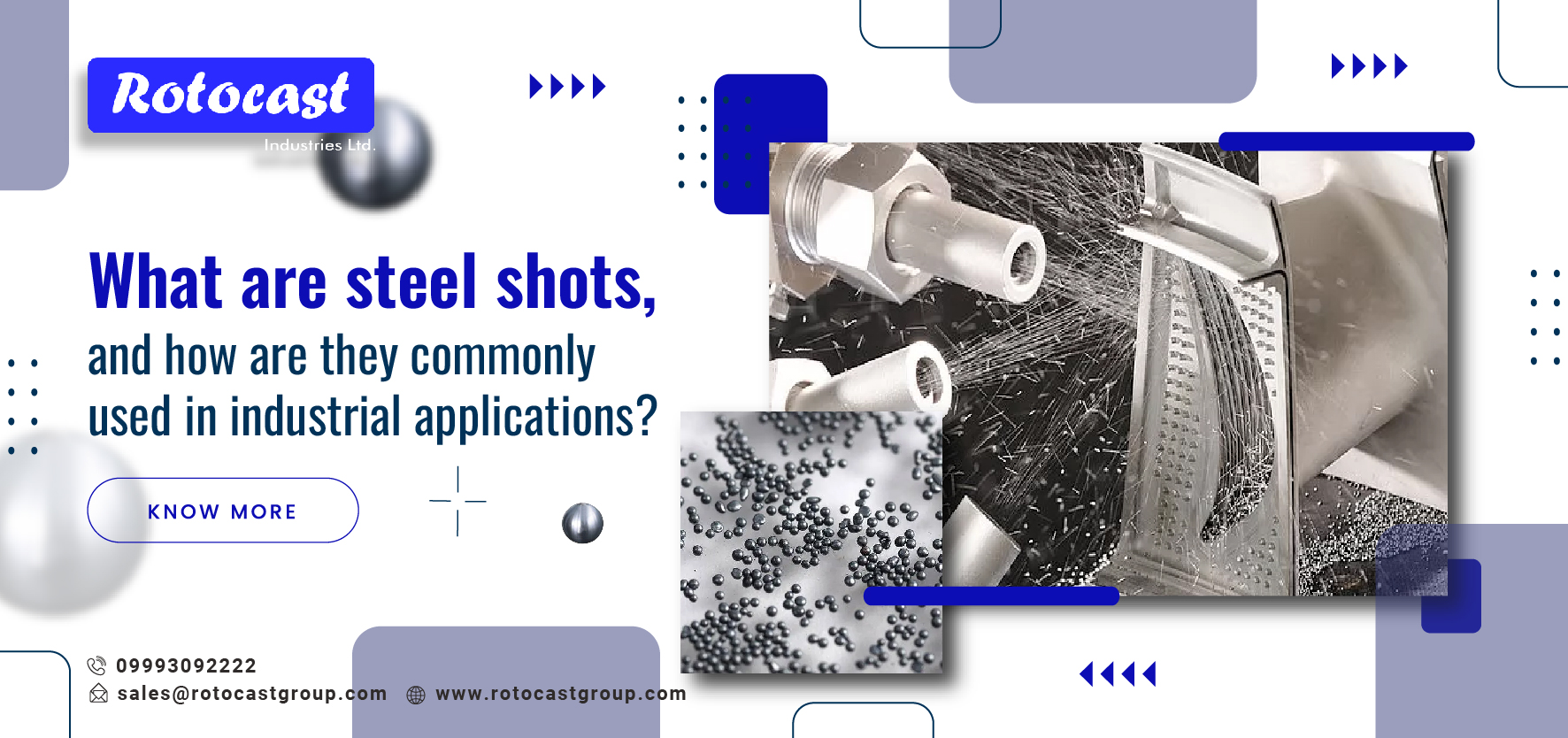
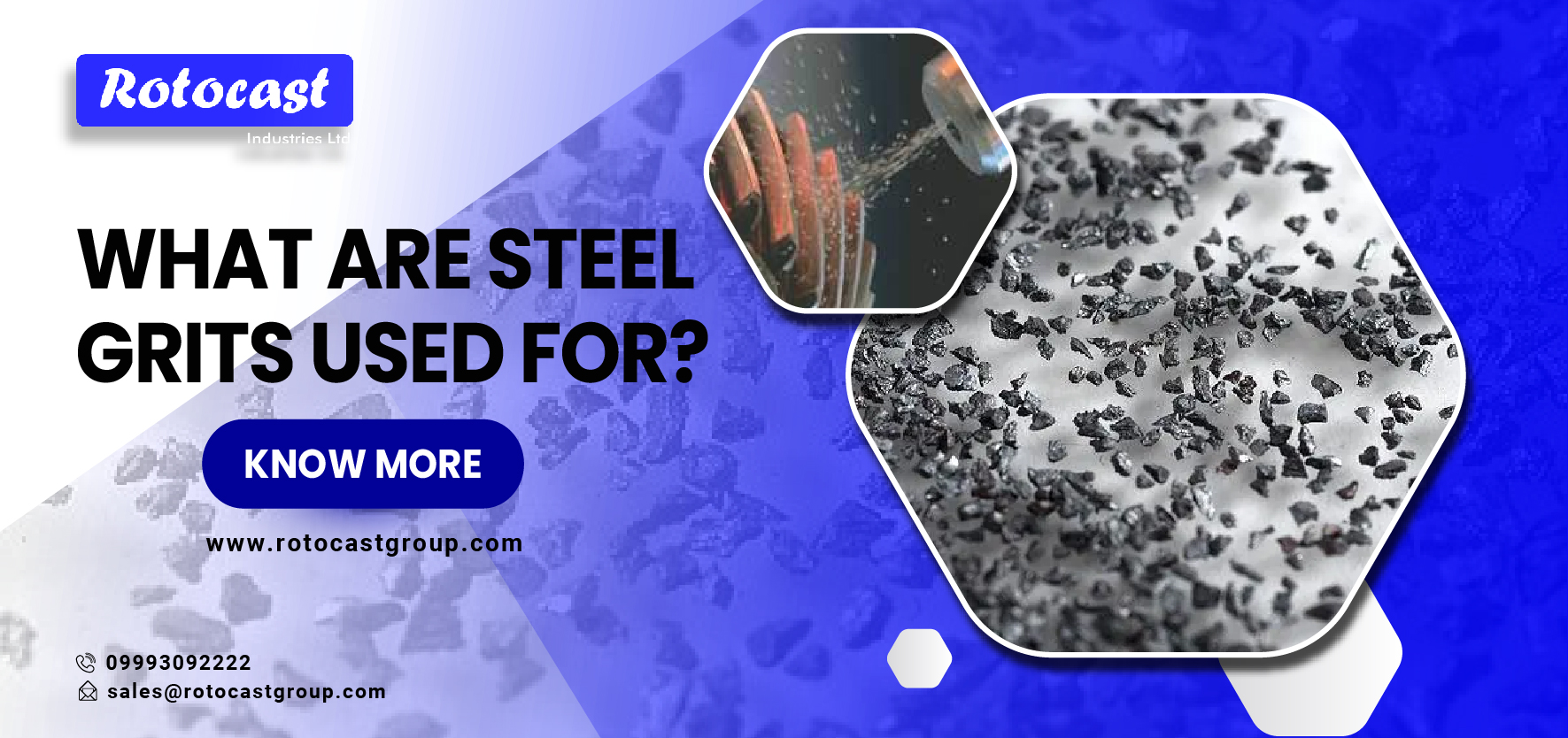
Steel grit blasting for rust and scale removal is a mechanical surface-preparation process in which angular cast-steel particles strike the substrate at high velocity. The impact cuts away corrosion, mill scale and old coatings while generating a controlled anchor profile that supports the adhesion of the next coating system.
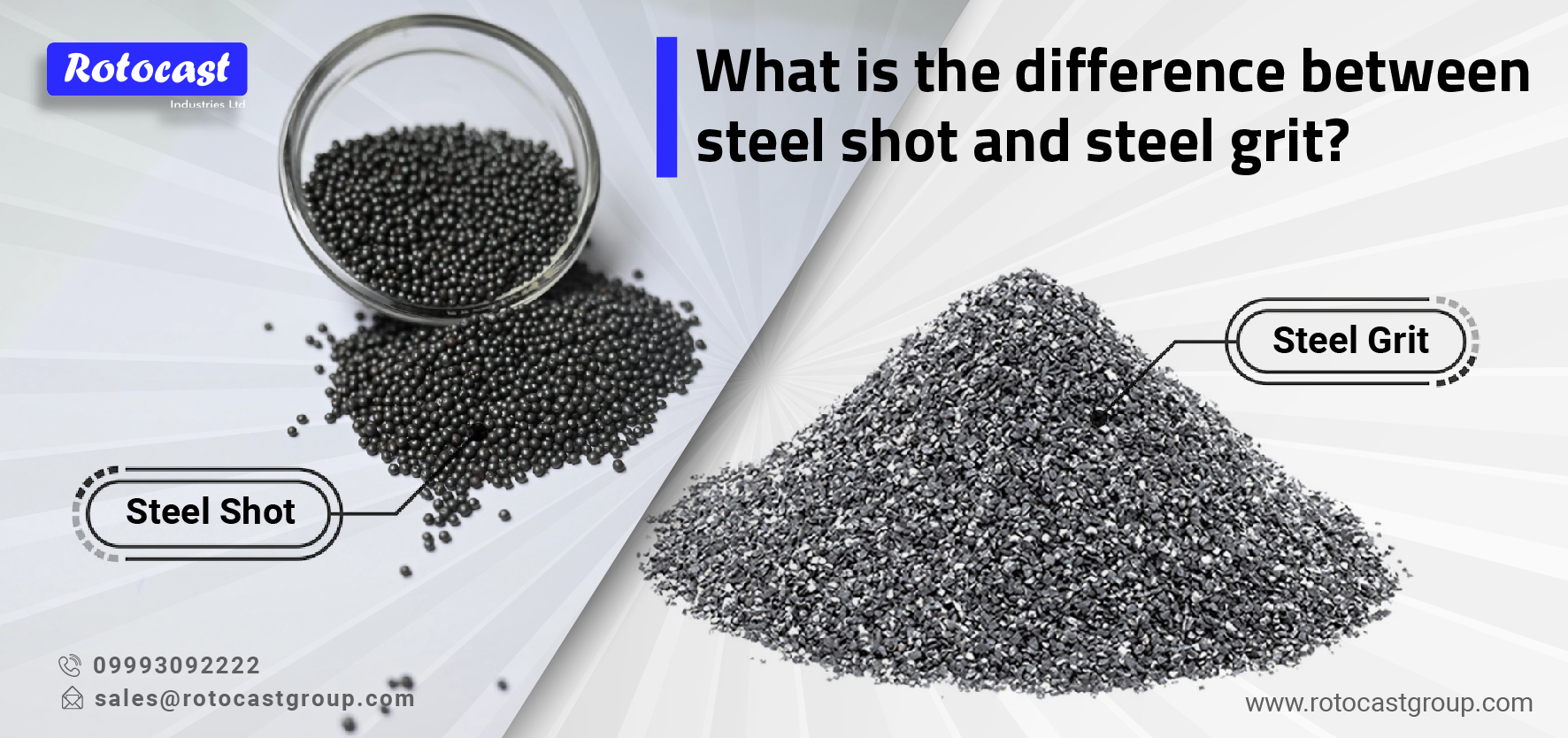
Unlike round Steel Shot, grit has angular edges that produce a cutting and etching action.
This makes Steel Grit particularly suitable for:
- Removing heavy rust
- Breaking tightly bonded mill scale
- Stripping old coatings
- Preparing fabricated steel before painting
- Producing a defined anchor profile
- Cleaning forgings and heat-treated components
- Descaling steel plates and structural sections
- Preparing pipelines, tanks and PEB structures
- Roughening surfaces before thermal spray or protective coating
ISO 11124-3 specifies requirements for high-carbon cast-steel shot and grit used in blast-cleaning processes, including requirements related to hardness, density, structure, defects and chemical composition. The current 2018 edition was reviewed and confirmed in 2024.
Why “Clean-Looking” Steel May Still Be Unfit for Coating
A steel surface can appear visually improved while remaining technically unsuitable for coating.
Washing Removes Dirt, Not Bonded Scale
Water washing can remove:
- Loose dirt
- Water-soluble contamination
- Some salts
- Process residues
- Dust
It does not normally remove tightly adherent mill scale or create an anchor profile.
AMPP specifically notes that waterjetting can clean steel effectively but does not create the surface profile or anchor pattern required for good coating adhesion.
Solvent Cleaning Removes Oil, Not Rust
Solvent or alkaline cleaning is important where the steel carries:
- Oil
- Grease
- Cutting fluids
- Drawing compounds
- Handling contamination
However, degreasing does not replace abrasive blasting. Oil must be removed before blasting because blasting an oily surface can spread contamination and embed it more deeply into the profile.
Wire Brushing Usually Removes Only Loose Material
Hand and power tools can remove loose rust, loose paint and loose mill scale.
They may be appropriate for:
- Local repairs
- Small inaccessible areas
- Maintenance where blasting is impractical
- Low-demand coating systems
- Touch-up work
They may leave tightly adherent corrosion and mill scale behind.
AMPP’s summary of surface-preparation standards distinguishes hand and power-tool cleaning from abrasive blast cleaning. Hand and power tools generally target loose contamination, whereas higher blast-cleaning grades require much more extensive removal of rust, scale and coating residues.
Visual Brightness Is Not Surface Profile
A polished or bright surface is not automatically coating-ready.
A coating needs a profile suited to its:
- Chemistry
- Viscosity
- Dry-film thickness
- Application method
- Service environment
- Adhesion mechanism
If the profile is too shallow, the coating may have insufficient mechanical key.
If it is too deep, the coating may fail to cover profile peaks adequately, increasing the risk of premature corrosion at exposed high points.
Rust, Mill Scale and Surface Contamination Are Different Problems
What Is Rust?
Rust is a corrosion product formed when iron or steel reacts with oxygen and moisture.
It may appear as:
- Light surface oxidation
- Flaky rust
- Pitting corrosion
- Layered corrosion
- Deeply embedded rust in irregular surfaces
Loose rust may be easily removed. Deep corrosion products inside pits require more aggressive and correctly directed blasting.
What Is Mill Scale?
Mill scale is the oxide layer formed on hot-rolled steel during manufacturing.
Unlike loose dirt, fresh mill scale can be strongly bonded to the underlying steel. It may eventually crack or detach because its behaviour differs from the base metal.
Applying a protective coating over unstable scale creates a weak interface. The coating may adhere to the scale while the scale later separates from the substrate.
What Other Contaminants Must Be Controlled?
Abrasive blasting may remove visible rust and scale but cannot be expected to solve every contamination problem.
The process must also consider:
- Oil and grease
- Chlorides
- Sulphates
- Dust
- Welding smoke
- Cutting residues
- Moisture
- Old coating remnants
- Embedded abrasive
- Flash rust
- Shop contamination
Surface cleanliness and surface profile must therefore be managed separately.
Why Steel Grit Is More Than a Cleaning Medium
Steel grit performs two related but distinct functions.
1. It Removes Tightly Adherent Material
Angular particles strike the steel with concentrated impact.
Their cutting action helps remove:
- Rust
- Mill scale
- Heat-treatment scale
- Old paint
- Oxide layers
- Foundry residues
- Surface irregularities
2. It Creates an Anchor Profile
As the angular particles impact the substrate, they create microscopic peaks and valleys.
This surface profile increases the effective area available for the coating and provides mechanical anchoring.
Rotocast defines surface preparation as a combination of cleaning and controlled roughening to support coating adhesion. Its technical guidance also notes that abrasive type should be selected according to the required roughness or surface-profile values.
This is the central reason ordinary cleaning is not enough:
Rust removal addresses what must come off the surface. Surface profiling prepares what must remain.
Steel Shot vs Steel Grit for Rust and Scale Removal
Steel Shot and Steel Grit are both reusable metallic abrasives, but their shapes produce different results.
| Selection factor | Steel Shot | Steel Grit |
|---|---|---|
| Particle shape | Predominantly spherical | Angular and irregular |
| Primary action | Impact and hammering | Cutting and etching |
| Typical finish | Smoother and more uniform | Rougher, sharper profile |
| Rust removal | Effective for light-to-moderate cleaning | Better suited to heavy or tightly adherent rust |
| Mill-scale removal | Suitable in many wheel-blast operations | More aggressive on bonded scale |
| Profile generation | Rounded or shallower profile | Angular, deeper anchor profile |
| Shot peening | Preferred controlled medium | Generally not selected for precision peening |
| Coating preparation | Useful where a moderate finish is needed | Preferred where pronounced profiling is required |
| Equipment wear potential | Normally lower than aggressive grit | Can be higher if hardness and size are excessive |
| Breakdown behaviour | Gradually wears and rounds | Fractures or wears into smaller cutting particles |
| Common applications | Castings, forgings, cleaning and peening | Structural steel, plates, coating prep and descaling |
Rotocast describes Steel Shots as suitable for smooth, uniform finishing and Steel Grits as more aggressive media for painting, coating and texturing preparation.
Does Every Rusted Surface Require Steel Grit?
No.
The correct abrasive depends on:
- Rust severity
- Scale adhesion
- Steel thickness
- Existing profile
- Required coating
- Blast-machine design
- Desired production rate
- Equipment wear limits
- Whether the abrasive can be recovered
- Surface-finish requirements
Steel Shot may be appropriate for lighter cleaning, foundry applications or where a smoother finish is required.
Steel Grit becomes more valuable when the objective includes aggressive descaling and the creation of a coating profile.
Many wheel-blast systems operate with a controlled working mix containing particles of different sizes and shapes. In some applications, a carefully managed shot–grit blend can balance cleaning speed, coverage, profile and equipment life.
How to Select the Correct Steel Grit
Abrasive selection should begin with the required finished surface—not with the lowest media price.
Decision Framework for Steel Grit Selection
| Process condition | Likely requirement | Selection direction |
| Thick, tightly bonded mill scale | High cutting force | Coarser or more aggressive grit, subject to profile limits |
| Light rust on thin components | Controlled cleaning | Finer grit or a balanced working mix |
| High-build protective coating | Defined deeper profile | Grit capable of producing the coating-specified anchor pattern |
| Thin primer system | Restricted profile depth | Finer grit and controlled blast energy |
| Complex geometry | Penetration into recesses | Smaller particles with sufficient velocity |
| Heavy steel plate | High production cleaning | Larger grit where equipment and profile specification permit |
| Sensitive machined surface | Minimal dimensional change | Less aggressive medium or lower energy |
| Reusable blast system | Stable circulating mix | Durable steel abrasive with effective separator control |
| Air-blast cabinet | Precise local treatment | Size matched to nozzle, pressure and target area |
| Turbine wheel machine | High-volume processing | Abrasive compatible with wheel, separator and wear parts |
1. Select the Required Cleanliness Standard
The required cleanliness should be defined by:
- Coating specification
- Customer requirement
- Fabrication standard
- Inspection plan
- Service environment
- Applicable ISO or AMPP specification
ISO 8501-1 defines visual rust grades and preparation grades for steel surfaces prepared by blast-cleaning, hand-tool cleaning, power-tool cleaning and related methods.
Do not specify “rust-free” without defining:
- The inspection standard
- Acceptable staining
- The area assessed
- Lighting conditions
- Required visual reference
- Inspector responsibility
2. Match the Surface Profile to the Coating
The coating manufacturer’s technical data sheet should define or guide the required profile range.
Profile requirements can vary significantly between:
- Shop primers
- Epoxy coatings
- Polyurethane systems
- Fusion-bonded epoxy
- Zinc-rich primers
- Thermal spray coatings
- Marine coating systems
- Pipeline coatings
AMPP guidance for thermal-spray zinc, for example, describes a sharp angular profile and specifically identifies grit abrasive as a means of producing it. The profile range cited for that application should not be applied automatically to ordinary paint systems.
Do Not Use One Profile Target for Every Coating
The correct profile is the profile specified for the actual coating system.
A deeper profile is not automatically better.
3. Choose the Correct Grit Size
Grit size influences:
- Impact energy
- Cutting depth
- Surface profile
- Coverage rate
- Cleaning speed
- Ability to enter recesses
- Abrasive consumption
- Dust generation
- Equipment wear
Coarser Steel Grit Generally Provides:
- Greater impact energy
- Deeper profiling
- Stronger scale-breaking action
- Lower particle count per kilogram
- Lower coverage on complex surfaces
- Greater risk of excessive roughness
Finer Steel Grit Generally Provides:
- More particles per kilogram
- Better coverage
- Improved access to detailed geometry
- Shallower profile
- Lower impact per particle
- Potentially slower removal of heavy scale
SAE J444 establishes standard size designations for cast shot and grit used in cleaning and peening. The current revision is J444_202306.
Rotocast’s published Steel Grit range includes grades from G-10 through G-50. Individual product information should be matched to the required process rather than selected solely by grade number.
4. Select Hardness According to Cutting Requirement
Hardness affects how grit behaves during impact and repeated circulation.
Harder grit generally:
- Cuts more aggressively
- Retains or renews angular edges
- Produces a sharper profile
- May break down more quickly in some systems
- May accelerate wear on turbines, nozzles and liners
Less-hard grit generally:
- Becomes less angular with use
- Produces a less aggressive profile
- May provide longer useful circulation
- Can be suitable where excessive cutting must be avoided
Rotocast publishes Steel Grit options in hardness ranges including approximately 56–60 HRC and 63–67 HRC, with custom hardness available for selected requirements.
The correct hardness is therefore a process decision involving:
- Substrate hardness
- Required profile
- Blast-machine type
- Recirculation cycles
- Wear cost
- Removal rate
- Surface specification
5. Confirm Equipment Compatibility
The abrasive must match the equipment.
Check:
- Wheel-blast turbine design
- Nozzle bore
- Hose diameter
- Air pressure
- Separator settings
- Elevator capacity
- Dust-collector loading
- Cabinet lining
- Reclaim system
- Abrasive flow controls
- Maximum permitted particle size
An abrasive that works well in an air-blast room may not produce the same result in a turbine wheel machine.
Step-by-Step Process for Removing Rust and Scale
Step 1: Identify the Surface Condition
Inspect the substrate for:
- Rust severity
- Mill-scale coverage
- Existing coating
- Pitting
- Oil and grease
- Soluble salts
- Weld spatter
- Sharp edges
- Laminations
- Surface defects
Record representative photographs and divide large components into inspection zones.
Step 2: Confirm the Required End Condition
Define:
- Cleanliness grade
- Profile range
- Maximum acceptable contamination
- Coating interval
- Inspection method
- Hold points
- Acceptance authority
The blasting team should know the target before the first abrasive enters the machine.
Step 3: Remove Oil, Grease and Soluble Contamination
Pre-cleaning may involve:
- Approved solvent cleaning
- Detergent or alkaline washing
- Fresh-water washing
- Salt-removal treatment
- Drying
Do not blast over grease or oil.
Abrasive blasting may spread oily contamination across the surface and contaminate the circulating media.
Step 4: Protect Sensitive Areas
Mask or isolate:
- Machined surfaces
- Threads
- Bearing seats
- Sealing faces
- Nameplates
- Electrical interfaces
- Precision holes
- Areas not requiring profile
Step 5: Establish the Initial Abrasive Mix
Set:
- Grit grade
- Hardness
- Abrasive flow rate
- Blast pressure or wheel speed
- Nozzle distance
- Nozzle angle
- Conveyor speed
- Exposure time
Begin with a controlled trial on representative steel.
Step 6: Blast the Surface Systematically
Maintain consistent:
- Travel speed
- Nozzle overlap
- Stand-off distance
- Impact angle
- Wheel loading
- Abrasive flow
- Component orientation
Random blasting patterns produce uneven cleanliness and profile.
Step 7: Inspect Cleanliness
Inspect under the specified lighting and visual standard.
Pay particular attention to:
- Welds
- Corners
- Pits
- Recesses
- Heat-affected zones
- Undersides
- Edges
- Areas shielded from direct impact
Step 8: Measure Surface Profile
Depending on the specification, profile may be measured using:
- Replica tape
- Depth micrometre
- Stylus equipment
- Surface comparators
- Digital profile instruments
Rotocast notes that surface roughness may be expressed through parameters such as Ra, Rmax, Rz or Rt, although coating specifications commonly use peak-to-valley profile measurements rather than a general machined-surface roughness value.
Step 9: Remove Residual Dust
After blasting:
- Blow down with clean, dry air.
- Vacuum where specified.
- Check dust levels.
- Avoid touching the cleaned surface with bare hands.
- Prevent contamination from nearby fabrication activities.
Step 10: Apply the Coating Within the Approved Window
Freshly blasted steel is highly reactive.
Control:
- Relative humidity
- Steel temperature
- Dew point
- Condensation
- Flash rust
- Time before priming
- Nearby water or chemical exposure
The coating should be applied before the prepared surface deteriorates beyond the specified condition.
Process Variables That Determine the Final Result
Abrasive Flow Rate
Too little abrasive reduces productivity and may create incomplete cleaning.
Too much abrasive can overload:
- Turbine wheels
- Air systems
- Separators
- Elevators
- Dust collectors
It may also increase wear without producing a proportional improvement.
Blast Velocity
Velocity is influenced by wheel speed or air pressure.
Insufficient velocity may leave scale behind.
Excessive velocity may:
- Increase abrasive breakdown
- Deepen the profile
- Increase equipment wear
- Damage thin components
- Distort sensitive parts
Impact Angle
A more direct angle generally increases impact.
A shallower angle increases cutting or sweeping action and may help with coating removal, depending on equipment and substrate geometry.
Exposure Time
Insufficient exposure produces incomplete cleaning.
Excessive exposure can:
- Waste abrasive
- Increase wear
- Create excessive profile
- Reduce throughput
- Damage edges
Working Mix
A recirculating blast machine should not be managed as though it contains only the originally purchased grit grade.
During production, the media population changes because particles:
- Wear
- Fracture
- Become smaller
- Leave through the separator
- Are replenished with new abrasive
The resulting working mix determines actual cleaning performance.
A stable process requires controlled additions rather than irregular large top-ups.
Why Abrasive Quality Consistency Matters
Two batches carrying the same nominal grit designation may behave differently if they vary in:
- Size distribution
- Hardness
- Density
- Angularity
- Microstructure
- Internal defects
- Chemical composition
- Durability
- Contamination
- Moisture content
ISO 11124-3 includes requirements for hardness, density, structure, defects and chemical composition for new high-carbon cast-steel shot and grit. SAE J1993 addresses chemical-composition and physical-characteristic requirements for high-carbon cast-steel grit used in blast cleaning and etching.
Inconsistent abrasive quality can cause:
- Variable profile
- Unpredictable removal rates
- Higher consumption
- Increased dust
- Separator instability
- Premature wheel or nozzle wear
- Coating rework
- Unplanned downtime
Consistent abrasive quality is not merely a purchasing specification. It is the foundation of a repeatable surface-preparation process.
Common Mistakes in Rust and Scale Removal
| Common mistake | Why it happens | Process consequence | Better approach |
| Treating degreasing as complete preparation | The steel looks visibly cleaner | Rust, scale and inadequate profile remain | Separate contamination removal from abrasive preparation |
| Selecting grit only by price per kilogram | Purchase cost is easy to compare | Consumption and wear costs increase | Compare cost per cleaned square metre |
| Using one grit size for every component | Procurement prefers standardisation | Profile and cleaning vary across products | Qualify grades by component and coating |
| Using grit that is too coarse | Heavy scale encourages aggressive selection | Excessive profile and lower coverage | Match size to required profile |
| Using grit that is too fine | Fine media appears safer | Heavy scale removal becomes slow | Increase cutting capability within profile limits |
| Ignoring abrasive hardness | Only nominal size is specified | Finish and breakdown become inconsistent | Control size and hardness together |
| Blasting oily steel | Pre-cleaning is skipped | Media and substrate become contaminated | Degrease before blasting |
| Measuring only visual cleanliness | The surface looks bright | Profile may remain incorrect | Inspect cleanliness and profile separately |
| Allowing uncontrolled working mix | Abrasive additions are irregular | Process performance drifts | Monitor media size distribution and replenishment |
| Poor separator adjustment | Fines are not removed correctly | Dust, low energy and high consumption | Tune separator airflow and screens |
| Excessive blast time | Operators try to ensure cleanliness | Wear and profile increase unnecessarily | Establish validated cycle times |
| Ignoring humidity and dew point | Coating is delayed after blasting | Flash rust or condensation forms | Monitor environmental conditions |
| Using peening controls for cleaning | Terminology is confused | Wrong process variables are monitored | Use cleanliness and profile controls for blasting |
| Skipping nozzle and wheel inspections | Output decline appears gradual | Uneven coverage and higher cycle time | Use preventive maintenance limits |
| Reusing contaminated abrasive | Media cost is prioritised | Contamination is transferred to new work | Test, clean or replace the working mix |
Shot Blasting Is Not Shot Peening
These processes are often confused.
Shot Blasting or Grit Blasting
The primary objectives are:
- Cleaning
- Descaling
- Coating removal
- Deburring
- Profiling
- Surface finishing
Typical controls include:
- Surface cleanliness
- Surface profile
- Cycle time
- Abrasive flow
- Media condition
- Coverage of the target surface
Shot Peening
The primary objective is to introduce beneficial compressive residual stress and improve fatigue performance.
Typical controls include:
- Almen intensity
- Saturation
- Coverage
- Media size and shape
- Media hardness
- Process repeatability
Almen intensity should not be used as the main acceptance criterion for ordinary rust and scale removal.
For coating preparation, the critical outcomes are the specified cleanliness and surface profile.
How to Monitor Steel Grit Performance
A plant should monitor performance using operational and quality metrics.
Recommended KPIs
- Abrasive consumption per tonne of component
- Abrasive consumption per square metre
- Cleaning cycle time
- First-pass acceptance rate
- Reblast percentage
- Surface-profile variation
- Residual scale defects
- Dust generation
- Fines-removal rate
- Wheel-blade or nozzle life
- Cabinet-liner life
- Separator efficiency
- Coating adhesion failures
- Coating rework
- Machine downtime
Calculating the Real Cost of Steel Grit
The cheapest abrasive per kilogram may not deliver the lowest blasting cost.
A more useful calculation is:
Total Blasting Cost per Unit = Abrasive Cost + Energy + Labour + Equipment Wear + Maintenance + Rework + Downtime
Cost Comparison Framework
| Cost area | Low-quality or unsuitable media | Correctly selected, consistent Steel Grit |
| Abrasive consumption | May be high because of rapid breakdown | More predictable with controlled replenishment |
| Cycle time | Longer when cutting performance is poor | Optimised for the actual surface condition |
| Reblasting | More frequent | Reduced through stable cleaning performance |
| Equipment wear | Can rise from uncontrolled hardness or oversize particles | Managed through application-specific selection |
| Dust load | Higher when breakdown is excessive | Better controlled with durable media and separation |
| Coating rework | Higher when profile or cleanliness varies | Lower when preparation remains within specification |
| Downtime | More frequent process adjustments | More stable production |
| Inspection effort | High because results vary | More predictable acceptance |
A plant should compare abrasives using a controlled trial with the same:
- Component type
- Machine settings
- Surface condition
- Inspection standard
- Production volume
- Measurement method
When Should Steel Grit Be Replaced or Replenished?
In a recirculating blast system, abrasive is normally replenished continuously rather than replaced according to a fixed calendar.
Replenishment is required when:
- The working mix becomes too fine.
- Cleaning time increases.
- Surface profile declines.
- Abrasive carry-out creates losses.
- Fines are removed by the separator.
- The media becomes contaminated.
- Dust generation rises.
- Particle shape no longer supports the required cut.
- Test sieving shows unacceptable distribution.
A complete replacement may be necessary when the working mix is contaminated by:
- Oil
- Grease
- Non-compatible abrasive
- Excessive moisture
- Foreign metal
- Paint debris
- Chemicals
- Severe rust contamination
Where Steel Grit Delivers the Most Value
Foundries and Steel Casting Foundries
Steel Grit can support:
- Scale removal
- Sand removal
- Surface preparation
- Fettling support
- Cleaning before inspection
- Coating preparation
A Steel Casting Foundry may use Steel Shot, Steel Grit or a controlled blend depending on casting hardness, geometry, surface defects and required finish.
Forging Units
Forged components often carry:
- Heat-treatment scale
- Oxides
- Lubricant residues
- Surface irregularities
Grit selection should consider component hardness and dimensional sensitivity.
PEB and Structural Fabrication
Steel Grit is widely relevant to:
- Plates
- Beams
- Columns
- Welded assemblies
- Structural sections
The objective is generally to create a clean, profiled surface before primer or protective coating.
Shipbuilding and Heavy Engineering
Large steel structures require:
- High removal rates
- Uniform profile
- Reliable coating preparation
- Control of salt contamination
- Consistent inspection
Automotive and Component Manufacturing
Applications may include:
- Forging descaling
- Cleaning before coating
- Surface conditioning
- Preparation for bonding or finishing
The process must avoid dimensional damage to precision parts.
How to Evaluate a Steel Grit Manufacturer in India
Procurement teams searching for a Steel Grit Manufacturer in India, Steel Abrasives Manufacturer or Shot Manufacturer in India should evaluate more than availability and price.
Ask the manufacturer for:
- Size-distribution specification
- Hardness range
- Chemical composition
- Density and microstructure controls
- Durability or breakdown information
- Lot traceability
- Standards compliance
- Batch test documentation
- Application recommendations
- Pilot-trial support
- Supply capacity
- Technical support for working-mix optimisation
Rotocast Industries Ltd. reports four decades of manufacturing experience, more than 1,000 customers served and annual capacity of 30,000 tonnes. The company lists ISO 9001, ISO 11124, BIS, SAE J444, SAE J445, SAE J827 and SAE J1993 among its quality credentials and product standards.
For buyers comparing Steel Grit India, Steel Grits India, Steel Shot India or Steel Shots India sources, repeatable batch performance and process support generally create more long-term value than nominal grade equivalence alone.
Frequently Asked Questions
1. What is the difference between Steel Shot and Steel Grit?
Steel Shot is predominantly spherical and produces an impact or hammering action. It is commonly used for cleaning, uniform finishing and shot peening. Steel Grit is angular and produces a stronger cutting action, making it more suitable for aggressive rust removal, mill-scale removal and creation of a coating anchor profile.
2. What Steel Grit size is best for removing heavy rust and mill scale?
The best size depends on substrate thickness, scale severity, blast equipment and the required surface profile. Coarser grit generally removes heavy scale more aggressively, while finer grit offers better coverage and a shallower profile. A representative blasting trial should confirm the correct grade.
3. Can Steel Grit be used in both air-blast and wheel-blast machines?
Yes, high-carbon cast-steel grit can be used in static and site blasting equipment where the system is designed to recover and reuse metallic abrasive. Equipment compatibility, maximum media size, hardness, separator settings and wear components must be checked before use.
4. How often should Steel Grit be replaced?
There is no universal replacement interval. In recirculating systems, grit is normally replenished according to consumption, breakdown, carry-out and working-mix condition. Complete replacement is usually required only when the media becomes severely contaminated or can no longer maintain the specified cleaning and profile results.
5. Does Steel Grit blasting guarantee coating adhesion?
No abrasive alone can guarantee coating performance. Steel Grit can remove rust and scale and create an anchor profile, but the final result also depends on oil and salt removal, dust control, environmental conditions, coating selection, application thickness, curing and inspection. The prepared profile must match the coating manufacturer’s specification.
Conclusion: Rust Removal Is Only Half the Job
A surface that looks clean is not necessarily ready for painting, coating or further fabrication.
Effective rust and scale removal requires control of two outcomes:
- Surface cleanliness: removing rust, mill scale, old coating and harmful contamination
- Surface profile: creating the correct texture for the next coating or finishing operation
Steel Grit is valuable because its angular particles perform both functions. They cut through tightly adherent contamination and create the controlled anchor pattern that ordinary washing, solvent cleaning or wire brushing cannot provide on their own.
However, Steel Grit must still be selected scientifically.
Plant teams should evaluate:
- Grit size
- Hardness
- Surface condition
- Required cleanliness
- Coating profile
- Blast velocity
- Working mix
- Equipment compatibility
- Abrasive consumption
- Equipment wear
- Quality consistency
Rotocast Industries Ltd. combines more than 40 years of steel-abrasive manufacturing experience with an annual capacity of 30,000 tonnes and application support across foundries, forging units, PEB manufacturers, automotive operations and heavy engineering. The objective is not simply to supply a G-grade—it is to help the blasting process achieve a repeatable surface at a predictable operating cost.