What This Article Covers
- What steel shot blasting is and why it affects product quality
- How blasting improves cleaning, finish, and coating readiness
- Steel Shot vs Steel Grit: when to use each
- Factors that influence blasting consistency
- Common abrasive and machine-maintenance mistakes
- A practical selection framework for plant teams
- FAQs for procurement and quality teams
What Is Steel Shot Blasting?
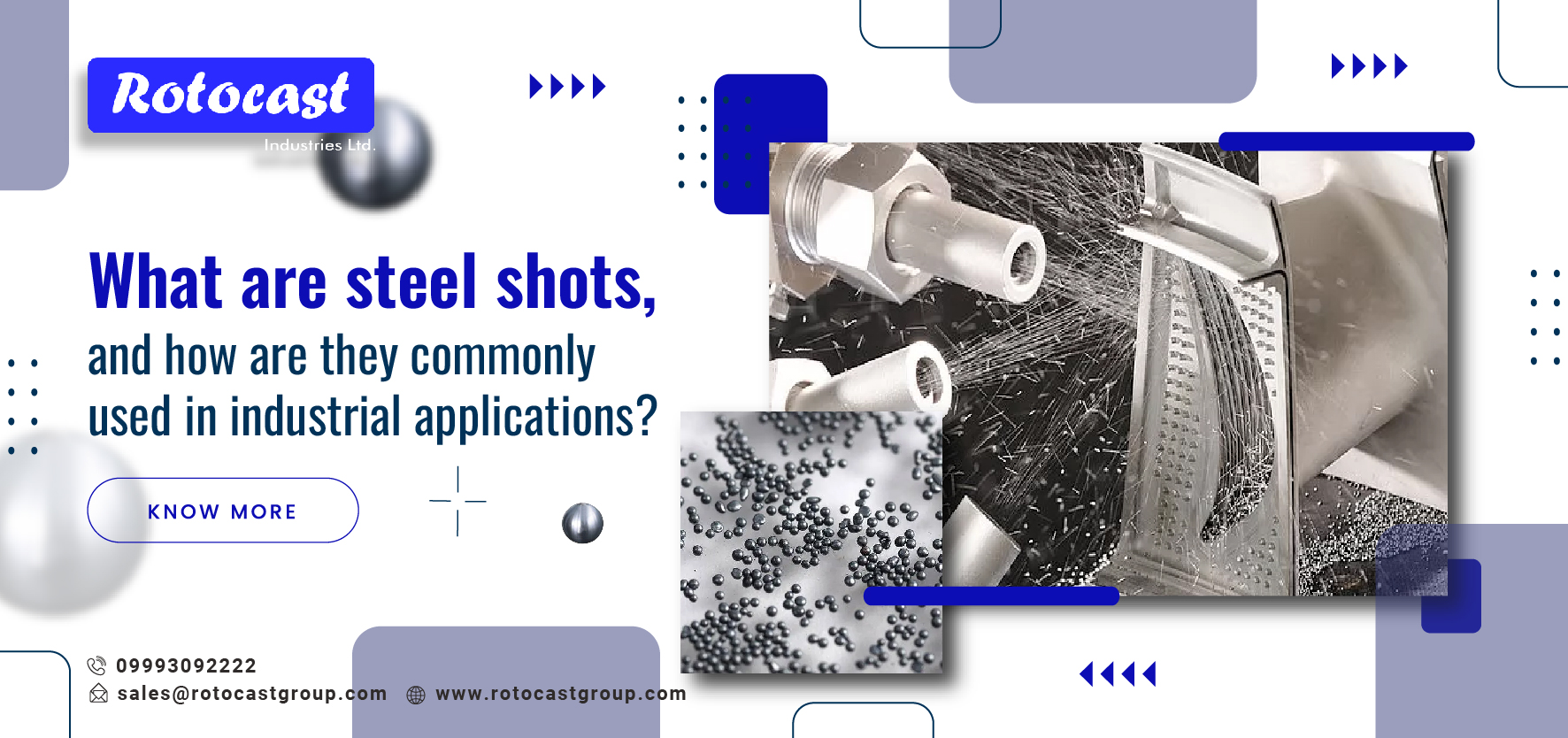
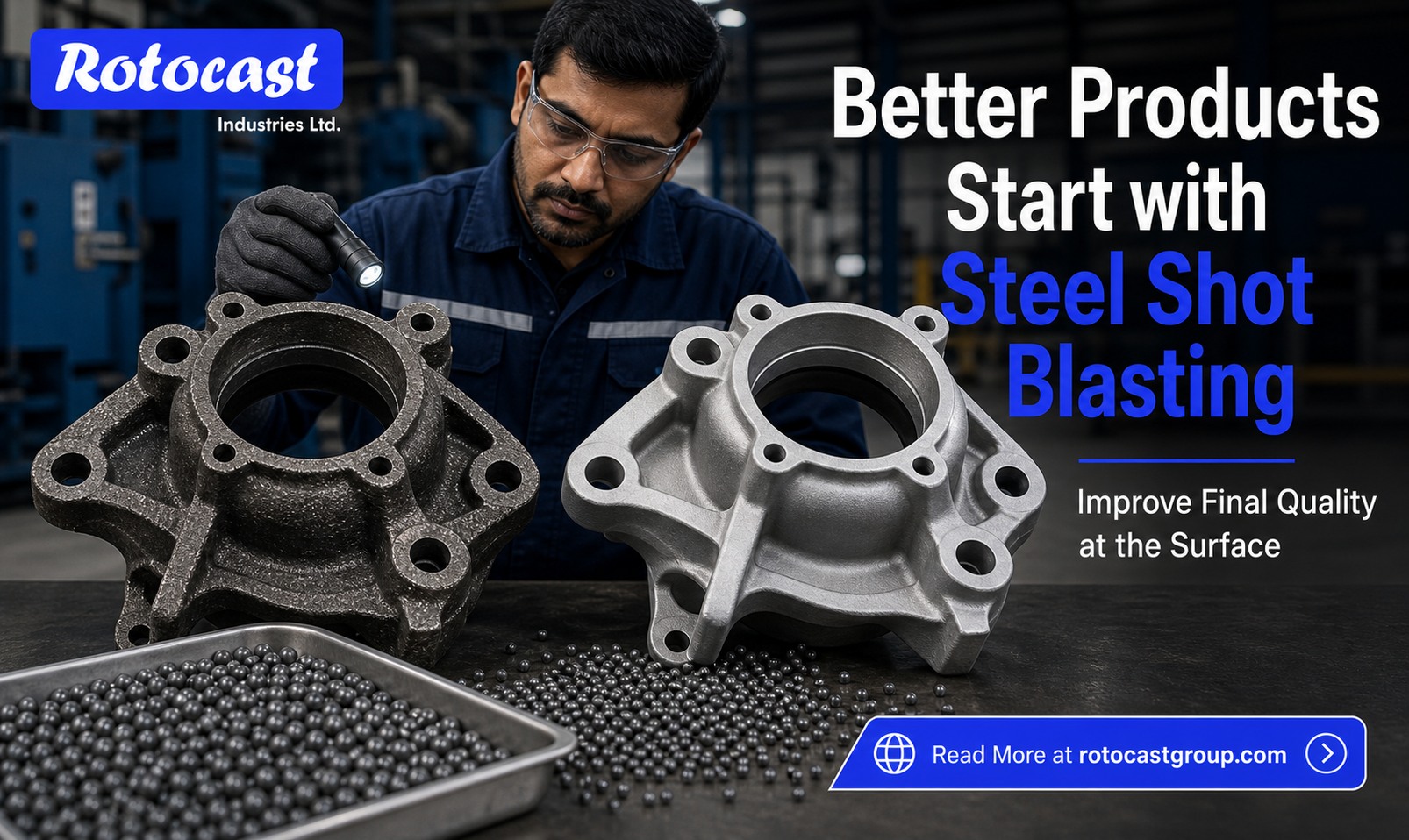
Steel shot blasting is a mechanical surface-treatment process in which metallic abrasives are propelled at high velocity to remove rust, mill scale, moulding sand, oxidation, old coatings, burrs, and surface contaminants. It is commonly used in steel casting, forging, fabrication, automotive components, shipbuilding, and PEB applications to prepare surfaces for inspection, machining, painting, coating, or further processing.
The process is not only about making a component look clean. A controlled blast-cleaning operation can influence surface uniformity, coating adhesion, dimensional appearance, defect visibility, and repeatability across batches. ISO 11124-3 specifies quality requirements for high-carbon cast-steel shot and grit, including particle size, hardness, density, chemical composition, and structural characteristics.
Why Final Product Quality Often Starts Before Painting or Machining
Many manufacturing defects become visible only after a component reaches the next process stage. A casting may appear acceptable before painting but later show poor coating adhesion. A forging may carry scale that affects visual inspection. A fabricated structure may have contamination that creates uneven paint coverage.
The real issue is often not the final coating or machining operation. It is the condition of the substrate before that operation begins.
A controlled steel abrasive blasting process helps create a more predictable starting surface by:
- Removing loose rust, oxidation, scale, and residual sand
- Reducing visual inconsistency across components
- Improving access to surface defects during inspection
- Creating an appropriate surface condition for coating or painting
- Supporting more consistent downstream processing
- Reducing dependence on manual cleaning methods
For plant teams, the goal should not be “maximum blasting.” The goal should be the right cleaning intensity, abrasive type, and media mix for the component and its next process.
How Steel Shot Blasting Improves Final Product Quality
1. Creates Cleaner, More Inspectable Surfaces
Castings and forgings often leave production with scale, sand residue, flash fragments, oxidation, or heat-treatment deposits. These materials can hide porosity, cracks, laps, inclusions, or incomplete filling.
Steel shot blasting removes loose surface contamination and makes the component easier to inspect visually or through downstream quality checks.
For a quality engineer, this means defects are more likely to be detected before painting, dispatch, or assembly.
2. Improves Surface Uniformity
An inconsistent surface can make the same component appear different from one batch to another. Variation may result from uneven cleaning, worn abrasives, contamination in the media mix, poor separator performance, or improper blast-wheel condition.
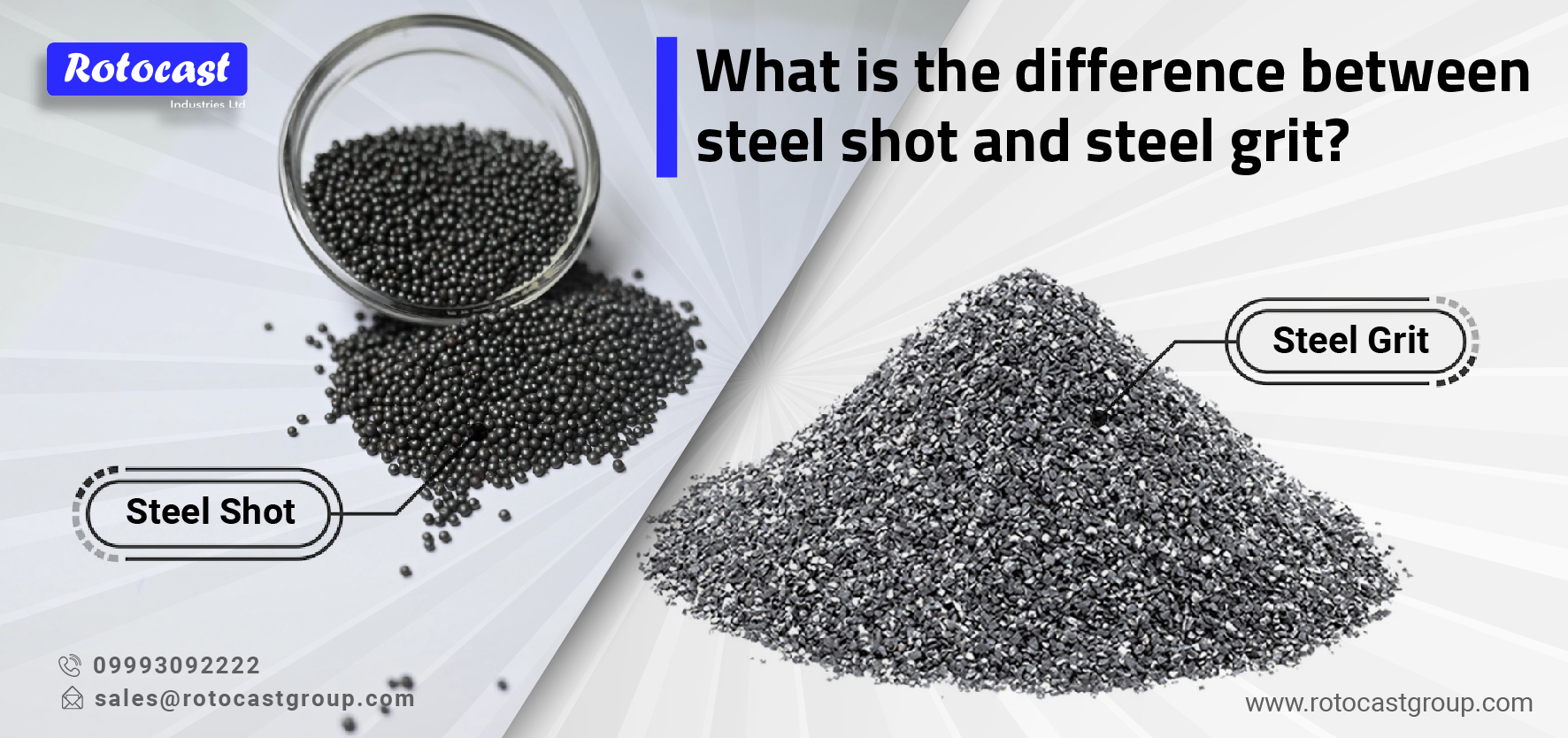
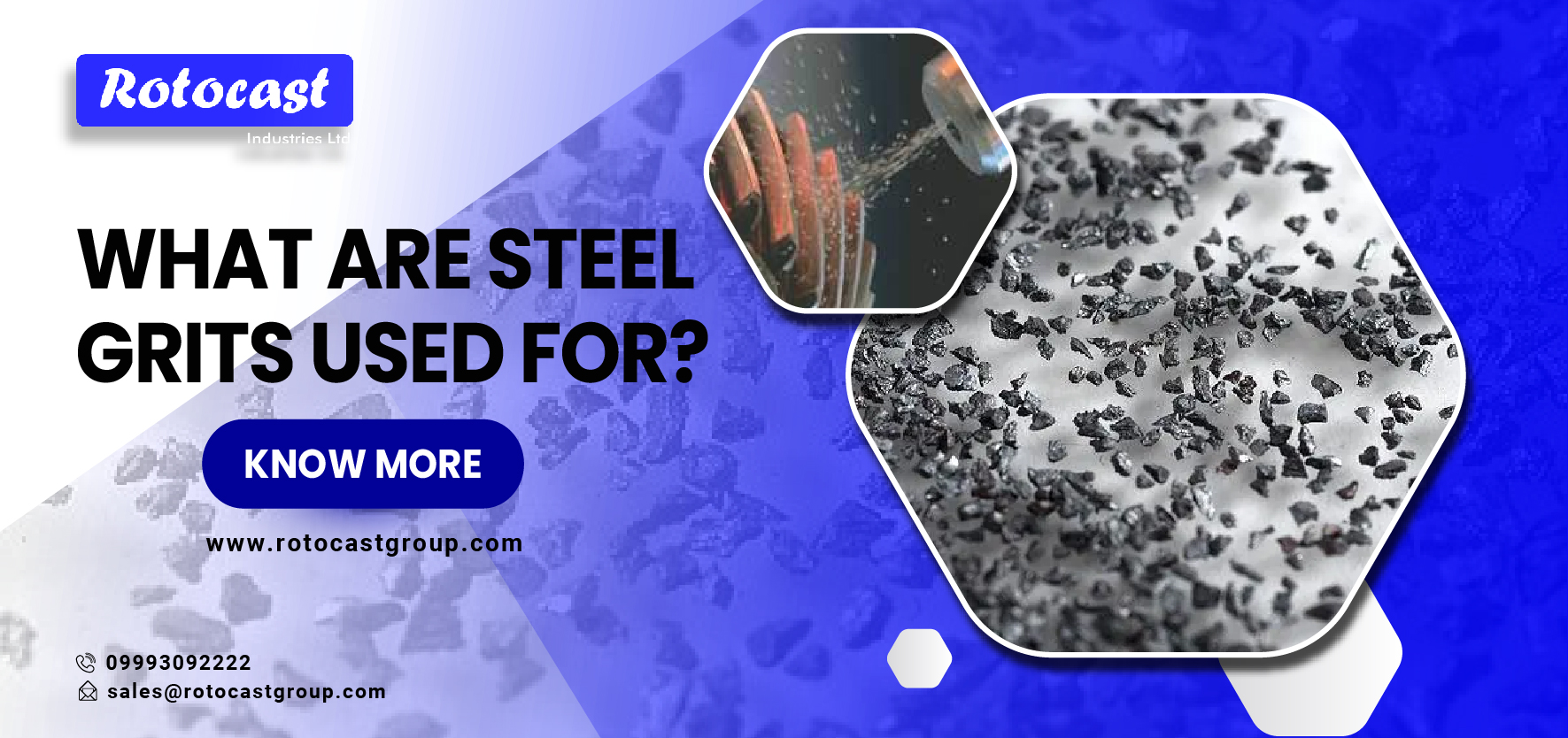
Rounded Steel Shot generally supports a smoother and more even finish, especially where cleaning and surface uniformity are important. Angular Steel Grit is usually selected when stronger cutting action and a more pronounced anchor profile are needed.
The correct choice depends on the component material, desired finish, coating system, and production objective.
3. Supports Better Coating and Paint Adhesion
Paint, powder coating, galvanizing, and protective coatings depend on a properly prepared surface. If rust, oil, scale, dust, or weak surface layers remain, the coating may not bond consistently.
Shot blasting can help prepare a cleaner, more stable substrate before coating. However, abrasive blasting alone does not guarantee coating performance. Surface cleanliness, profile requirement, ambient conditions, coating specification, and post-blast handling must all be controlled.
For example, a blast-cleaned component left exposed in a humid environment may develop flash rust before painting. This is why blasting should be treated as part of a complete surface-preparation system rather than an isolated activity.
4. Helps Reveal Surface Defects Earlier
A smooth, scale-free surface makes defects easier to identify. Depending on the part and production process, blasting may help reveal:
- Surface cracks
- Sand inclusion marks
- Blowholes and porosity
- Cold shuts
- Shrinkage-related surface indications
- Scale patches
- Weld spatter or fabrication residue
Early visibility is valuable because correcting a process issue before painting, machining, or dispatch is generally easier than managing rejection after final finishing.
5. Reduces Manual Cleaning Dependency
Manual chipping, wire brushing, grinding, and hand cleaning may still be required for specific areas. However, relying heavily on manual cleaning can create variation between operators and shifts.
A properly managed blasting process supports repeatability by applying a controlled mechanical cleaning action over large production volumes. This is particularly useful for steel casting foundries, forging units, automotive suppliers, and fabrication shops handling recurring component geometries.
6. Supports More Consistent Downstream Operations
Surface condition can affect multiple production stages, including:
- Paint application
- Powder coating
- Welding preparation
- Machining setup
- Visual inspection
- Assembly appearance
- Corrosion-protection processes
When the blasting process is stable, downstream teams receive components in a more predictable condition. That reduces avoidable variation and helps production departments troubleshoot quality issues more efficiently.
Steel Shot vs Steel Grit: Which One Supports Your Quality Goal?
| Parameter | Steel Shot | Steel Grit |
|---|---|---|
| Particle shape | Rounded or spherical | Angular and sharp-edged |
| Primary action | Peening, cleaning, smoothing | Cutting, descaling, aggressive preparation |
| Typical finish | More uniform and smoother | More textured and profiled |
| Common applications | Castings, forgings, shot peening, cleaning | Paint preparation, rust removal, heavy scale removal |
| Coating preparation | Suitable where controlled cleaning is needed | Often preferred where stronger anchor profile is required |
| Abrasive behaviour | Tends to retain rounded shape during use | Gradually breaks into smaller angular particles |
| Suitable for | Surface finishing and fatigue-related peening applications | Heavy-duty surface preparation and descaling |
Steel shot and steel grit are both used in blast-cleaning operations, but they serve different purposes. The selection should be based on the desired surface result, component geometry, coating requirement, machine capability, and media-recovery system.
SAE J444 provides standard cast shot and grit size designations used for blast cleaning and shot peening applications.
A Practical Framework for Selecting Steel Abrasives
Before choosing a media size or abrasive type, plant teams should review the following questions.
Step 1: Define the Surface Condition Before Blasting
Ask:
- Is the surface covered with rust, heavy scale, sand, paint, or oxidation?
- Is the component a casting, forging, fabricated part, or heat-treated product?
- Are there delicate edges, thin sections, or complex internal profiles?
- Is the objective cleaning, roughening, peening, or cosmetic finish improvement?
Step 2: Define the Required Surface After Blasting
Clarify whether the next stage requires:
- A visually uniform finish
- Removal of moulding sand and scale
- A stronger profile for coating adhesion
- Preparation for machining or inspection
- A specific roughness or cleanliness level
- Controlled peening coverage and intensity
Step 3: Match the Abrasive to the Process
Consider:
- Steel shot for rounded impact and uniform cleaning
- Steel grit for stronger cutting action and scale removal
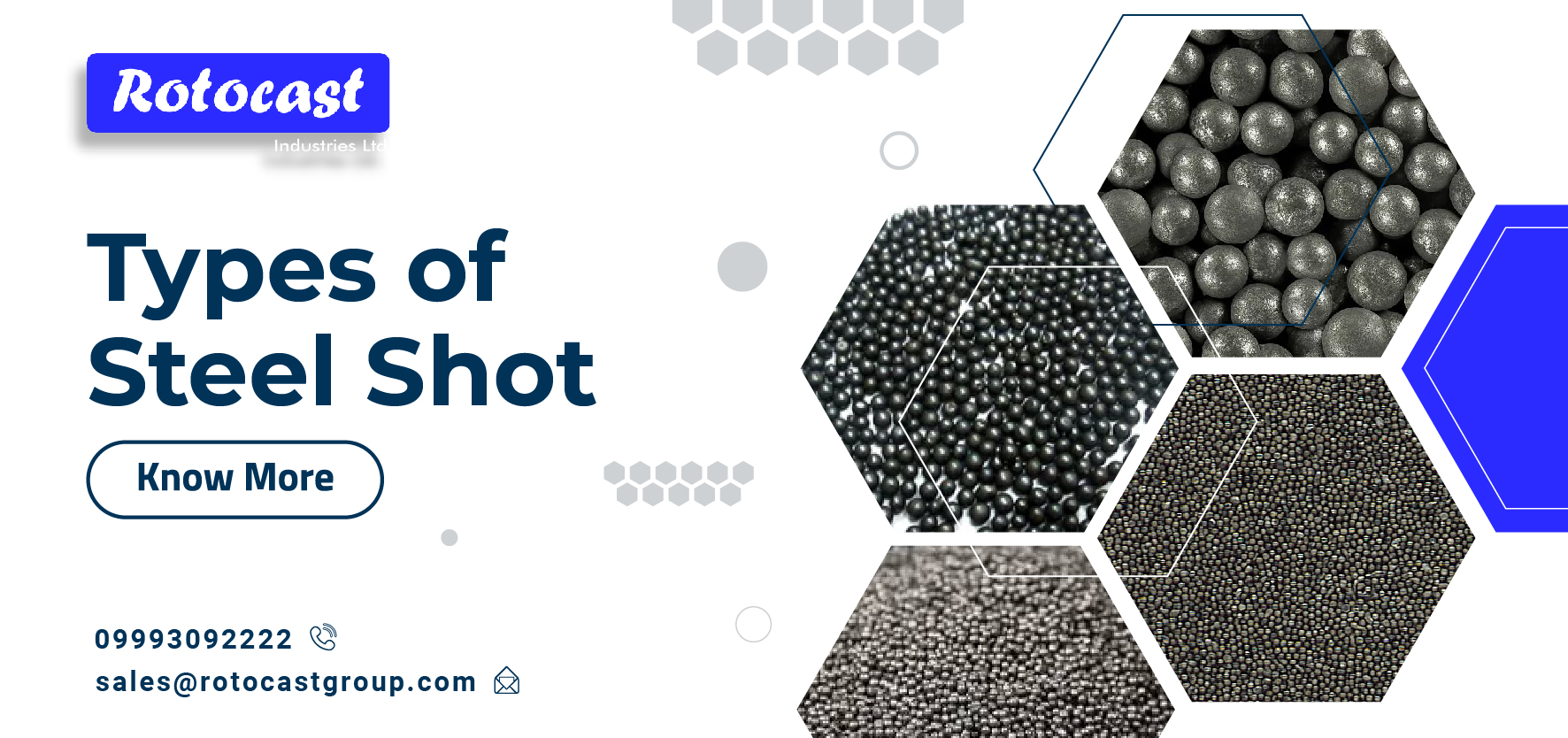
- Cut wire shot where high consistency and durability are required
- Mixed media only where the process and recovery system can control it properly
Step 4: Check the Blast Machine and Recovery System
Abrasive performance is strongly influenced by the machine. Review:
- Blast-wheel condition
- Wheel speed and throwing pattern
- Separator performance
- Airwash settings
- Dust collector function
- Elevator and reclaim system condition
- Screen condition
- Media contamination level
Even a high-quality abrasive may perform inconsistently if the separator is not removing fines, broken particles, dust, or contaminants.
Key Abrasive Characteristics That Influence Surface Quality
Particle Size Distribution
Abrasive size affects impact energy, coverage, surface profile, and cleaning speed. Oversized particles may create an unnecessarily aggressive finish, while excessive fines may reduce cleaning efficiency and increase dust loading.
A stable operating mix is usually more important than simply selecting the largest available media.
Shape Retention
Rounded steel shots typically become smaller through gradual wear, while angular grits fracture during use. The shape distribution inside the machine changes over time, which can influence finish quality.
Monitoring the working mix helps prevent excessive variation between shifts or batches.
Hardness
Hardness affects abrasive durability, fracture behaviour, cutting action, and machine wear. A harder media is not automatically the best option for every application. The right hardness depends on the component, desired finish, machine setup, and recovery system.
Cleanliness and Contamination Control
Oil, moisture, sand, dust, tramp metal, and excessive fines can interfere with blasting consistency. Contaminated media may produce uneven finish quality and increase dust-related maintenance issues.
Standards and Traceability
For procurement teams, standards are useful because they create a common quality language between buyer and supplier. ISO 11124-3 includes requirements related to hardness, density, defects, structure, and chemical composition for new high-carbon cast-steel abrasives.
Rotocast Industries Ltd. lists ISO 9001, ISO 11124, BIS certification, and IS 4606 compliance among its quality credentials for steel abrasives.
Common Mistakes That Reduce Blasting Quality
| Common Mistake | Likely Impact | Better Practice |
| Selecting media only by lowest purchase price | Higher consumption, inconsistent finish, more downtime | Evaluate cost per cleaned component, not just cost per kg |
| Using the same abrasive for every application | Surface profile may not match coating or finishing need | Match shot, grit, size, and hardness to the component |
| Ignoring media contamination | Dust, poor finish, abrasive carryover | Maintain separator, airwash, screens, and dust collection |
| Allowing excess fines in the working mix | Reduced cutting efficiency and unstable finish | Monitor operating mix through regular sieve analysis |
| Replacing only when blasting visibly deteriorates | Quality drift before the issue becomes obvious | Track finish quality, media mix, and machine performance routinely |
| Neglecting blast-wheel wear | Uneven throw pattern and inconsistent coverage | Inspect wheel, blades, control cage, and liners regularly |
| Treating blasting as cosmetic only | Hidden downstream coating and inspection issues | Link blasting controls to final quality requirements |
Why Procurement Teams Should Look Beyond Abrasive Price
Abrasive procurement should not be evaluated only by rate per tonne or bag. The more meaningful question is: what does the abrasive contribute to total process cost?
A practical procurement review should include:
- Consumption per component or per tonne of production
- Cleaning cycle time
- Rework and rejection rates
- Machine wear and maintenance frequency
- Dust generation and media carryover
- Consistency of surface finish
- Supplier documentation and batch traceability
- Availability of technical support for application matching
An experienced Steel Abrasives Manufacturer understands that the most appropriate abrasive is not always the most aggressive one. It is the one that helps deliver the required finish with predictable consumption and stable machine performance.
Rotocast Industries Ltd., with over four decades of industry experience, supports industrial users with steel shots, steel grits, cut wire shots, and application-oriented abrasive solutions for surface treatment operations.
How to Improve Blasting Quality Without Revealing Sensitive Process Settings
Plant teams can improve process consistency without disclosing confidential machine parameters or production practices by focusing on routine control points:
- Define an approved finish standard using sample panels or reference components.
- Monitor abrasive size distribution at planned intervals.
- Check separator efficiency and dust removal performance.
- Inspect blast-wheel wear and throwing pattern regularly.
- Keep media storage dry and protected from contamination.
- Verify that components are not waiting too long between blasting and coating.
- Record rework reasons linked to surface condition.
- Review abrasive consumption against output volume, not only monthly purchase quantity.
These controls create a more stable blast-cleaning process while keeping proprietary plant settings confidential.
FAQ: Steel Shot Blasting and Product Quality
1. What is steel shot blasting used for?
Steel shot blasting is used to remove rust, scale, sand, old coatings, oxidation, and surface contaminants from metal components. It is widely used before painting, coating, inspection, machining, and assembly.
2. What is the difference between steel shot and steel grit?
Steel shot is generally rounded and produces a more uniform cleaning and peening effect. Steel grit is angular and usually provides stronger cutting action for heavy scale removal and coating preparation.
3. Can steel shot blasting improve paint adhesion?
Steel shot blasting can help create a cleaner and more suitable surface before painting. Final coating adhesion also depends on cleanliness, surface profile, paint specification, humidity, handling, and coating application controls.
4. How often should blast media be replaced?
Blast media should not be replaced only on a fixed calendar basis. Replacement depends on the working mix, contamination level, abrasive breakdown, machine condition, finish requirement, and consumption trend.
5. What should a buyer check before choosing a Steel Shot Manufacturer in India?
Buyers should review abrasive consistency, standards compliance, batch traceability, size distribution, hardness range, packaging, delivery reliability, technical support, and suitability for their blast machine and final surface requirement.
Final Takeaway
Steel shot blasting is not simply a cleaning step. It is a quality-control stage that influences how a component looks, performs, accepts coatings, and moves through downstream production.
The best results come from treating abrasive selection, machine maintenance, recovery control, and finish requirements as one connected system. Whether the application involves steel casting, forging, fabrication, automotive components, or surface preparation, consistent abrasive quality remains the foundation of predictable finishing performance.
For steel shots, steel grits, cut wire shot, and customised abrasive guidance, explore Rotocast Industries Ltd.’s product range or connect with the team for a bulk-order or application enquiry.