What This Article Covers
- What inconsistent blasting media means
- How media inconsistency increases rework costs
- Effects on surface finish, coverage, and equipment
- Steel Shot versus Steel Grit selection
- Common abrasive-management mistakes
- How to evaluate blasting media quality
- Frequently asked procurement questions
What Is Inconsistent Blasting Media?
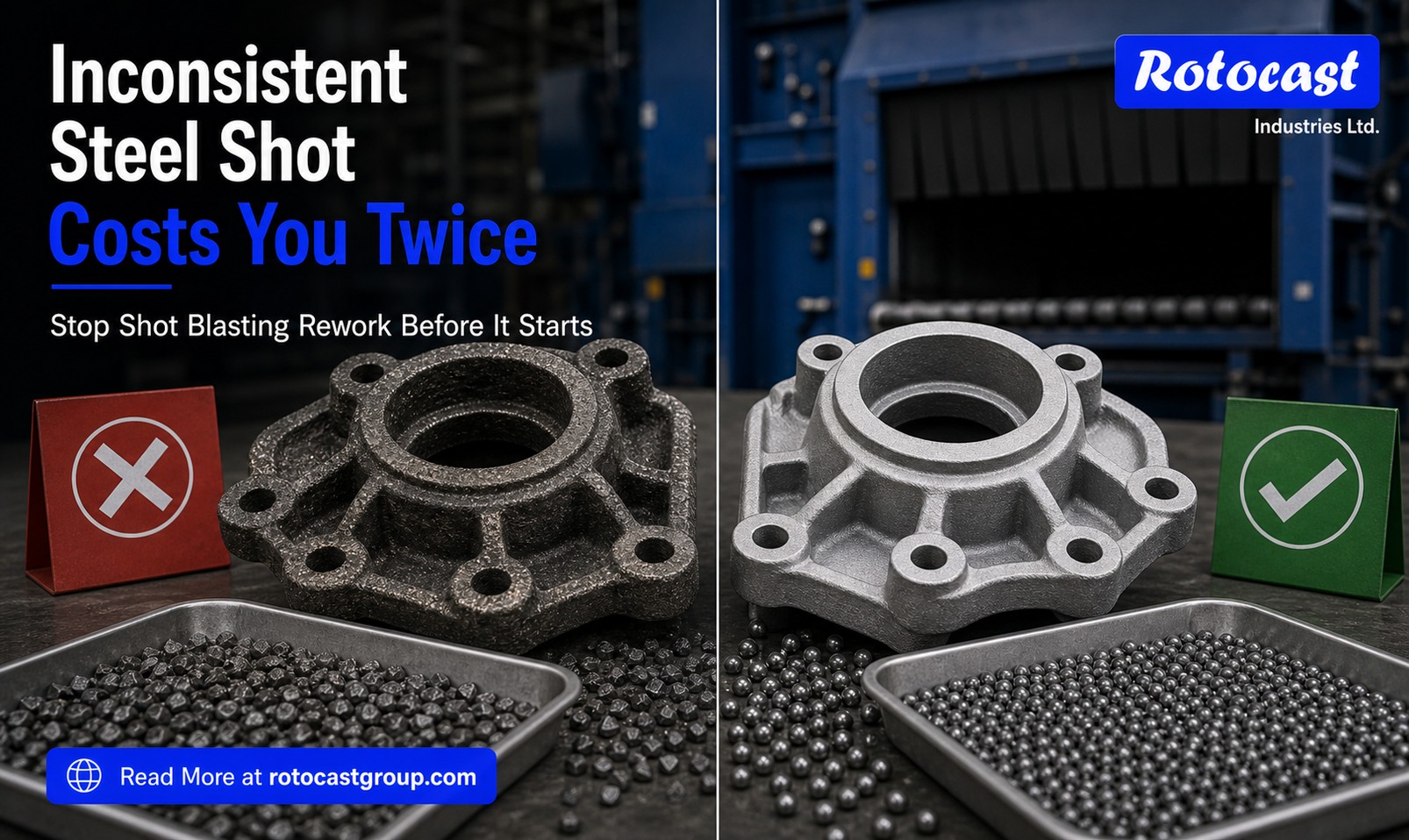
Inconsistent blasting media is abrasive material that varies beyond acceptable limits in particle size, hardness, shape, density, durability, or cleanliness. These variations create uneven impact energy and unpredictable surface coverage, resulting in poor cleaning, irregular profiles, high abrasive consumption, equipment wear, coating problems, and repeated blasting cycles.
A blast machine can be mechanically sound and correctly operated, yet still produce inconsistent results when the abrasive itself is unstable.
For plant managers and quality teams, the real cost is not limited to the purchase price of the media. It appears in longer cycle times, rejected components, coating failures, excessive dust generation, separator overload, machine-part wear, and lost production capacity.
Why Inconsistent Blasting Media Creates Expensive Rework
Shot blasting performance depends on millions of abrasive particles repeatedly striking a component at controlled velocity.
Each particle contributes to:
- Removing sand, scale, rust, paint, or contaminants
- Creating the required surface profile
- Achieving complete and uniform coverage
- Preparing the substrate for coating or painting
- Improving fatigue strength in shot-peening applications
When particle characteristics vary considerably, the energy transferred to the surface also varies.
Some particles may be too small to clean effectively. Others may be too large or hard, creating excessive roughness or damaging the component. Broken particles may generate dust instead of productive impact.
The result is a process that looks operational but delivers unstable output.
Where the Hidden Cost of Rework Appears
1. Longer Blast-Cycle Time
Operators often compensate for weak or inconsistent cleaning by increasing the blasting duration.
This may temporarily improve the visible finish, but it also:
- Reduces throughput
- Increases power consumption
- Raises abrasive circulation
- Accelerates wear on turbines and liners
- Creates production bottlenecks
Instead of correcting the abrasive mix, the plant ends up consuming more machine time per component.
2. Incomplete or Uneven Surface Coverage
Coverage refers to the percentage of the component surface that has been impacted by abrasive media.
Inconsistent particle size or flow can leave:
- Uncleaned recesses
- Dark or patchy areas
- Residual mill scale
- Embedded contaminants
- Unevenly prepared surfaces
Parts may then require a second blasting pass, manual grinding, or complete rejection.
3. Uncontrolled Surface Profile
Coatings require an appropriate and consistent anchor profile. A profile that is too shallow may reduce coating adhesion, while excessive roughness can increase coating consumption or create premature peaks that remain insufficiently covered.
Poorly controlled Steel Grit size, hardness, or angularity can make surface-profile results difficult to repeat from one batch to another.
4. Excessive Abrasive Consumption
High-quality metallic abrasive is designed for repeated use within a controlled blasting system. However, media with excessive internal defects, unstable hardness, or weak structural integrity may fracture prematurely.
This creates:
- Higher top-up requirements
- More fines and dust
- Increased separator load
- Lower productive abrasive volume
- Greater waste-disposal requirements
A lower abrasive purchase price can therefore produce a higher cost per blasted component.
5. Accelerated Equipment Wear
Incorrect or inconsistent media can increase wear on:
- Blast wheels
- Control cages
- Impellers
- Wheel liners
- Elevator buckets
- Screw conveyors
- Ducting and dust collectors
Oversized or excessively hard particles can produce aggressive wear, while excessive fines may reduce cleaning efficiency and increase dust-system loading.
Which Media Variables Affect Blasting Consistency?
Particle Size Distribution
Blast media should not be evaluated only by its nominal size. The actual distribution of particles within the operating mix determines the cleaning pattern, impact intensity, and coverage.
The SAE J444 standard establishes standard size designations for cast shot and grit used in cleaning and peening applications.
A stable operating mix generally combines larger particles for impact energy with smaller particles for coverage. However, uncontrolled proportions can make the process inconsistent.
Hardness
Hardness affects how an abrasive behaves when it strikes the workpiece.
- Softer media may round off gradually and provide longer service life.
- Harder media may cut more aggressively but can fracture faster.
- Excessive variation creates unpredictable cleaning and wear.
The right hardness should be selected according to the substrate, desired finish, equipment, and application.
Particle Shape
Shape directly affects the surface result.
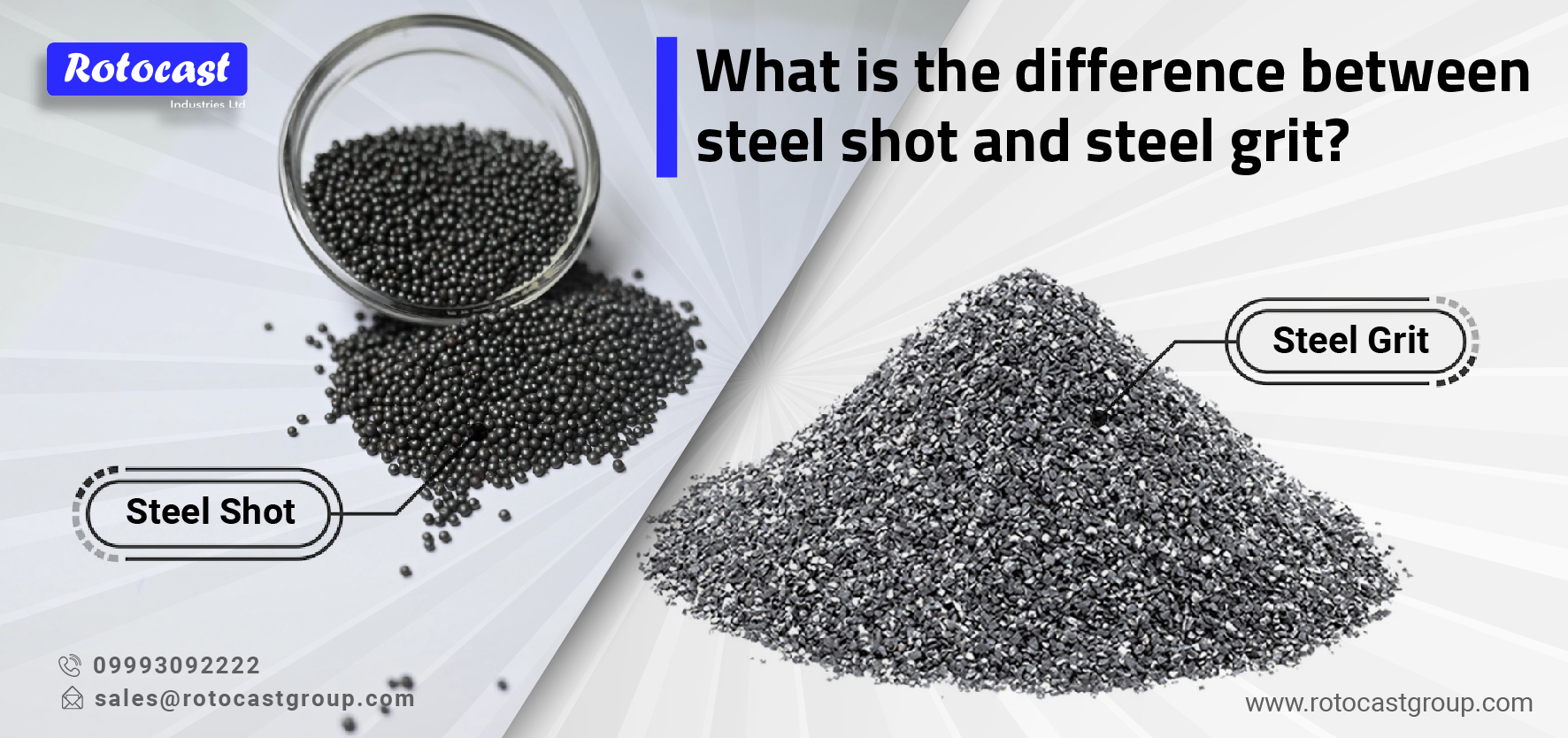
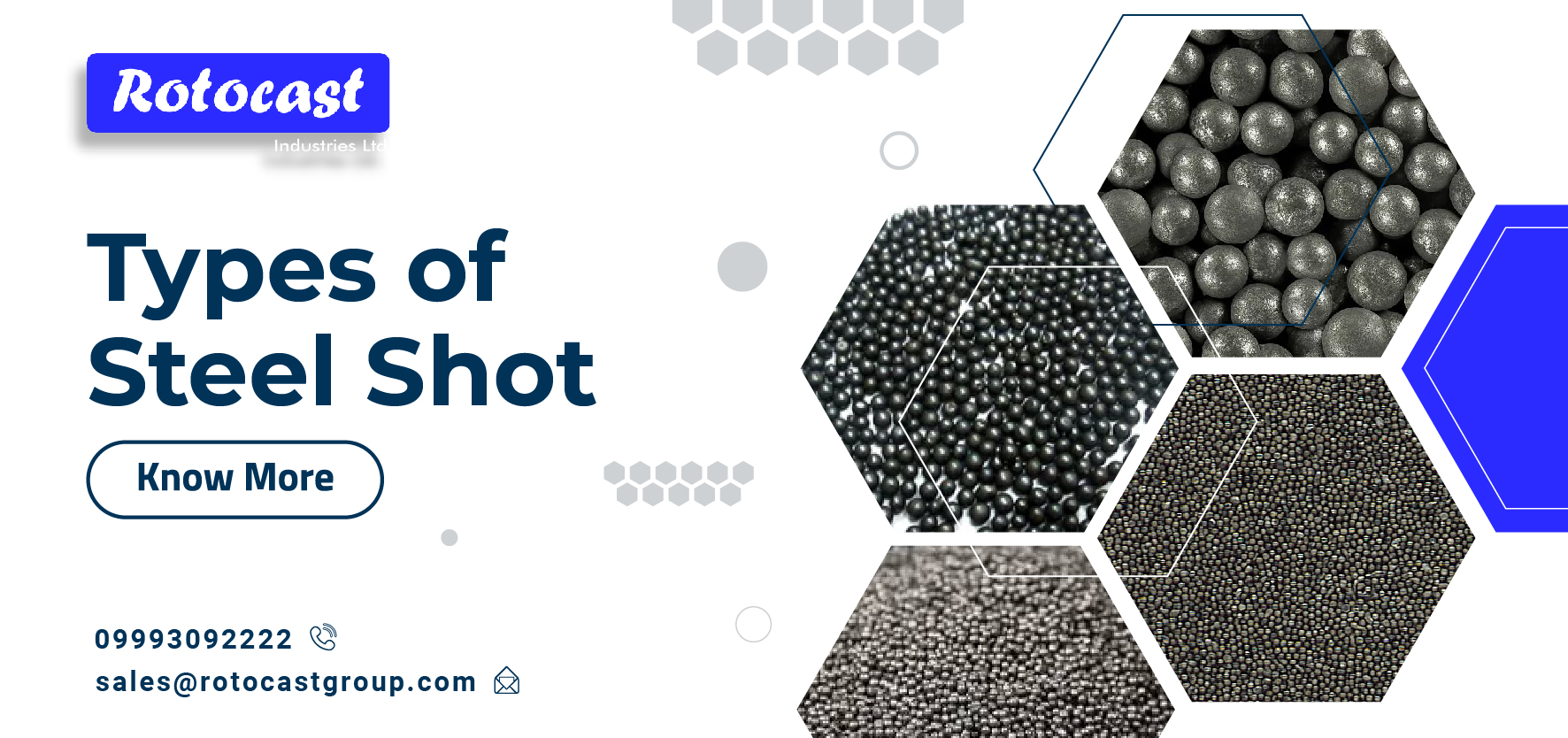
- Rounded Steel Shot creates a hammering or peening action.
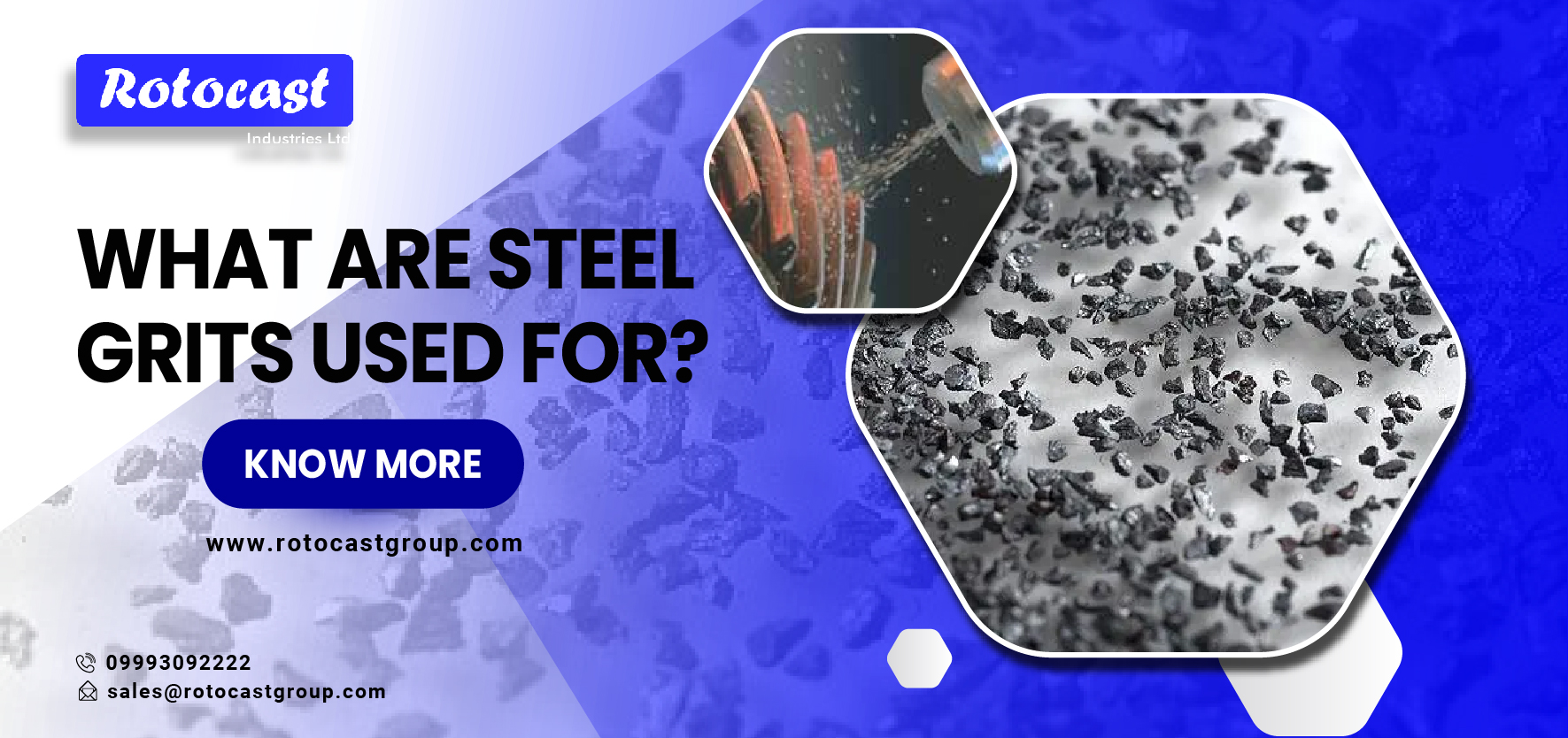
- Angular Steel Grit creates a cutting and etching action.
- Broken or irregularly degraded media creates unpredictable impact.
High-quality Steel Shots should maintain useful shape and structural integrity through repeated circulation.
Density and Internal Structure
Higher-density particles generally retain more impact energy than porous or defective particles of a similar size.
Voids, cracks, shrinkage cavities, or irregular metallurgical structures may cause premature breakage. This reduces useful life and increases the percentage of fines in the system.
Contamination
Blast media may become contaminated by:
- Sand from castings
- Scale and rust
- Oil or moisture
- Foreign metallic particles
- Broken equipment components
- Mixed abrasive grades
Contaminated media can cause poor surface cleanliness, dust generation, separator problems, and coating defects.
Steel Shot vs Steel Grit: Which Is Better for the Process?
Neither abrasive is universally better. The correct choice depends on the required surface outcome.
| Decision Factor | Steel Shot | Steel Grit |
|---|---|---|
| Particle shape | Rounded or spherical | Angular |
| Primary action | Hammering and peening | Cutting and etching |
| Typical finish | Smoother, uniform finish | Rougher, angular profile |
| Common applications | Desanding, descaling, shot peening | Coating preparation, rust removal, profiling |
| Coverage characteristics | Strong overall coverage | Strong cutting action |
| Equipment wear | Usually comparatively moderate | Can be more aggressive |
| Selection priority | Finish and peening effect | Cleaning speed and profile |
Rotocast’s Steel Shot solutions are designed for applications such as casting and forging cleaning, while Steel Grit is suited to more aggressive surface preparation and profiling requirements.
In some processes, a controlled blend may be used to balance impact, cutting action, coverage, and operating cost.
Common Blasting Media Mistakes That Increase Rework
| Common Mistake | Process Consequence | Better Approach |
| Selecting media only by price per kilogram | Higher consumption and replacement frequency | Compare cost per blasted component |
| Ignoring particle-size distribution | Uneven cleaning and poor coverage | Perform regular sieve analysis |
| Mixing different grades without control | Unstable surface profile | Maintain a defined operating mix |
| Allowing excessive fines to circulate | Lower cleaning efficiency and more dust | Inspect and adjust the separator |
| Using Steel Shot where angular profiling is required | Insufficient anchor profile | Evaluate Steel Grit or a controlled blend |
| Using aggressive grit on sensitive parts | Component damage and rapid equipment wear | Match hardness and size to the substrate |
| Ignoring contamination | Coating defects and machine problems | Monitor media cleanliness |
| Extending cycle time instead of finding the cause | Reduced productivity and greater wear | Check abrasive, flow, wheel, and separator conditions |
| Accepting inconsistent supplier batches | Process variation and repeated trials | Use documented batch-quality controls |
How to Diagnose Whether Blasting Media Is Causing Rework
Plant teams should avoid changing multiple process parameters simultaneously. A structured investigation is more effective.
Step 1: Record the Surface Defect
Define whether the issue is:
- Incomplete cleaning
- Uneven appearance
- Excessive roughness
- Low surface profile
- Embedded contaminants
- Rapid flash rusting
- Peening-intensity variation
- Coating adhesion failure
Step 2: Check the Operating Mix
Perform sieve analysis to determine whether the media contains:
- Too many oversized particles
- Excessive undersized particles
- High levels of broken material
- An unstable distribution
- Foreign contamination
Step 3: Review Abrasive Additions
Check the grade, quantity, and frequency of new-media top-ups. Irregular top-up practices can disturb the operating mix and alter the blast result.
Step 4: Inspect the Separator
A poorly adjusted separator may retain excessive fines or remove usable abrasive. Both conditions increase cost.
Step 5: Examine Particle Shape and Breakage
Microscopic or visual inspection can reveal:
- Excessive cracking
- Hollow particles
- Sharp broken fragments
- Loss of roundness
- Premature fracture
Step 6: Verify Machine Parameters
Even consistent media cannot compensate for:
- Worn blast wheels
- Incorrect control-cage settings
- Poor abrasive flow
- Incorrect conveyor loading
- Improper component positioning
- Inadequate dust extraction
Step 7: Conduct a Controlled Trial
Evaluate a known, consistent abrasive batch under fixed machine conditions. Record:
- Blast-cycle time
- Surface cleanliness
- Surface profile
- Media consumption
- Dust generation
- Equipment amperage
- Rejection or rework rate
This identifies whether the problem originates from the media, machine, operating method, or component condition.
How Standards Help Control Abrasive Quality
Recognized standards provide common requirements for size, chemical composition, hardness, density, internal defects, and other quality characteristics.
ISO 11124-3 specifies requirements for high-carbon cast-steel shot and grit used in blast-cleaning applications. It addresses factors such as grade designation, traceability, hardness, density, metallographic structure, defects, and chemical composition.
Rotocast Industries Ltd. states that its abrasive manufacturing and quality framework aligns with ISO 9001, ISO 11124, BIS requirements, and IS 4606 specifications.
Standards alone do not guarantee process performance, but they help procurement and quality teams define measurable acceptance criteria instead of relying only on visual inspection.
A Practical Procurement Framework for Steel Abrasives
Before selecting a Steel Abrasives Manufacturer, ask for evidence around the following areas.
Product Consistency
Request information about:
- Size-distribution controls
- Hardness range
- Chemical composition
- Particle density
- Metallographic structure
- Defect limits
- Batch traceability
Application Understanding
A reliable Steel Shot Manufacturer or Steel Grit Manufacturer should ask about:
- Component material
- Contaminant type
- Existing surface condition
- Required cleanliness
- Required surface profile
- Blast-machine type
- Wheel or nozzle system
- Current cycle time
- Abrasive consumption
- Rework percentage
A supplier who recommends media without understanding these variables may be recommending a product grade rather than a process solution.
Cost per Finished Component
Procurement comparisons should include:
- Abrasive purchase cost
- Consumption per production unit
- Blast-cycle time
- Rework and rejection cost
- Equipment wear
- Dust and disposal cost
- Coating consumption
- Production downtime
The lowest price per tonne does not necessarily produce the lowest operating cost.
When Should You Change the Abrasive Grade?
Consider reviewing the grade when:
- Cleaning time keeps increasing
- The required surface profile is not achieved
- Equipment wear is excessive
- Dust generation remains high
- Consumption is above the expected level
- Components are being damaged
- Coating adhesion is inconsistent
- The operating mix becomes difficult to control
- Production has shifted to a different substrate or component
Testing should be conducted under controlled conditions rather than changing the abrasive grade during normal production without baseline measurements.
FAQs About Blasting Media Consistency
What is the difference between Steel Shot and Steel Grit?
Steel Shot consists mainly of rounded particles that produce a peening or hammering effect and a smoother finish. Steel Grit consists of angular particles that cut into the substrate and create a more pronounced surface profile for coating preparation.
How often should blast media be replaced?
Metallic blast media is usually replenished continuously rather than completely replaced at fixed intervals. Replacement frequency depends on media durability, separator performance, contamination, carry-out loss, machine design, and the required operating mix.
Why is my Steel Shot consumption suddenly increasing?
Common causes include premature abrasive breakage, separator misadjustment, leaks, excessive carry-out, incorrect media hardness, worn machine parts, or a change in the component mix. A sieve analysis and material-loss inspection should be performed first.
Can inconsistent blasting media cause coating failure?
Yes. Inconsistent media can produce incomplete cleaning, contamination, or an uneven surface profile. These conditions may reduce coating adhesion and contribute to peeling, blistering, corrosion, or premature coating breakdown.
How do I choose a Steel Shot Manufacturer in India?
Evaluate manufacturing controls, standards compliance, batch traceability, technical support, size and hardness consistency, product range, application knowledge, and the ability to conduct controlled process trials—not only the quoted price.
Consistency Is a Process Requirement, Not a Premium Feature
Rework is often treated as an unavoidable production expense. In reality, repeated blasting, manual finishing, coating defects, high media consumption, and equipment wear may all point to unstable abrasive quality or poor media management.
Consistent blasting performance requires the right combination of:
- Correct abrasive type
- Controlled size distribution
- Suitable hardness
- Stable particle shape
- Clean operating mix
- Efficient separation
- Correct machine parameters
- Regular process monitoring
Rotocast Industries Ltd. supports foundries, forging units, automotive manufacturers, shipbuilding operations, and structural-steel processors with technically selected abrasive solutions for different surface-treatment outcomes.
Explore Steel Shot products, review available Steel Grit grades, or connect for customized abrasive solutions based on your equipment, substrate, and required finish.