What This Article Covers
- What uniform shot blasting means in a casting operation
- Why casting geometry makes uniform cleaning difficult
- How consistent blasting improves inspection and coating readiness
- The process variables that influence surface uniformity
- How steel shot size, hardness and working mix affect results
- A step-by-step framework for improving blasting consistency
- Common shot-blasting mistakes and their operational impact
- What procurement teams should evaluate beyond abrasive price
- Frequently asked questions about casting shot blasting
What Does Uniform Shot Blasting Actually Mean?
Uniform shot blasting means achieving a controlled and repeatable surface condition across:
- Different areas of the same casting
- Multiple castings within the same machine load
- Production batches processed across different shifts
- Components manufactured on different days
- Similar castings processed after abrasive replenishment
A uniformly blasted casting should meet the required level of cleanliness without having visibly under-blasted pockets or unnecessarily over-blasted edges.
Uniformity should be evaluated through more than surface colour. A casting may appear bright while still carrying embedded sand, fine scale, dust or an unsuitable surface profile.
A properly controlled process considers:
- Surface cleanliness
- Abrasive coverage
- Impact intensity
- Surface roughness
- Media contamination
- Abrasive size distribution
- Repeatability between batches
The objective is not to blast every casting as aggressively as possible. The objective is to deliver the surface condition required by the next manufacturing stage.
Why Castings Are Difficult to Blast Uniformly
Castings are rarely simple, flat components. Their geometry can include:
- Ribs and reinforcing sections
- Internal pockets
- Deep cavities
- Curved surfaces
- Thin edges
- Flanges
- Bosses
- Undercuts
- Complex parting-line areas
- Areas affected by gates and risers
When abrasives are projected toward a complex casting, some areas receive direct impact while others remain partly shielded.
This phenomenon is often called the shadowing effect. It occurs when one section of a casting blocks the abrasive stream from reaching another section effectively.
Casting orientation, loading density and component movement therefore matter as much as abrasive selection. Even high-quality steel shot cannot clean an area that is not receiving sufficient exposure.
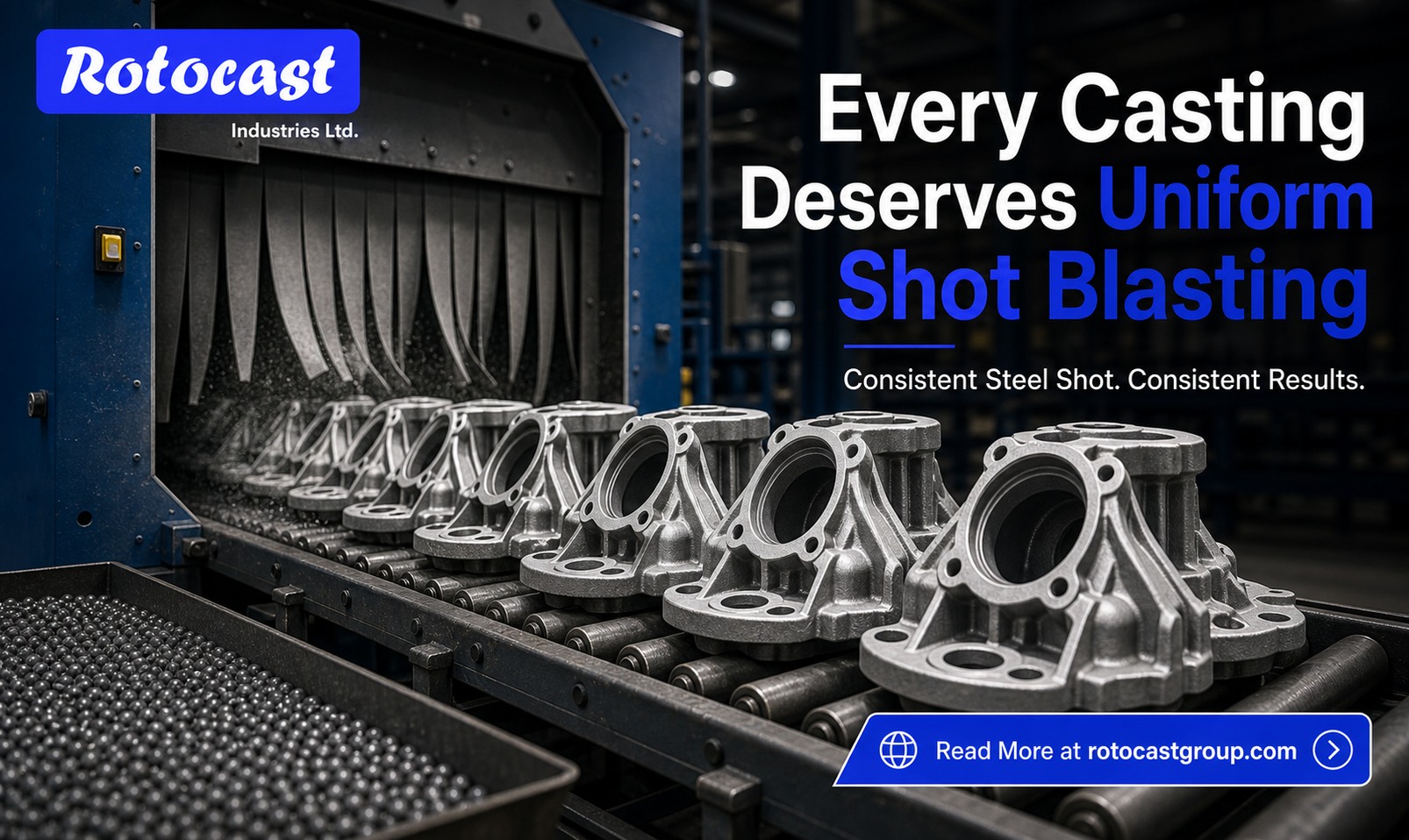
Why Every Casting Deserves a Uniformly Blasted Surface
1. It Makes Surface Defects Easier to Detect
Residual sand, oxidation and scale can hide casting defects during inspection.
A clean and uniformly finished surface can make it easier for quality teams to identify:
- Surface cracks
- Blowholes
- Porosity indications
- Cold shuts
- Sand inclusions
- Shrinkage marks
- Incomplete cleaning around parting lines
- Residual scale after heat treatment
The earlier these conditions are identified, the easier it becomes to prevent defective components from moving into machining, coating, assembly or dispatch.
Uniform blasting should therefore be treated as part of the quality-control process—not simply as a cleaning operation.
2. It Reduces Batch-to-Batch Appearance Variation
Customers expect identical castings to look identical.
When one batch appears clean and evenly finished while another shows dark patches, rough zones or visible scale, confidence in the manufacturing process can decrease—even when the underlying metal composition is unchanged.
A controlled foundry shot-blasting process creates a more consistent visual standard across production batches. It also makes approved samples and inspection standards easier to apply.
3. It Improves Coating and Painting Readiness
Paint and protective coatings perform best when they are applied to a properly prepared substrate.
Residual dust, scale, rust, sand or weak surface layers can interfere with coating contact. Uneven blasting can also create different surface profiles across the same component, producing inconsistent paint coverage.
Uniform blasting helps create a more stable surface before:
- Liquid painting
- Powder coating
- Priming
- Corrosion-protection treatments
- Metallising
- Other protective coating processes
Blasting alone does not guarantee coating performance. Post-blast handling, humidity, contamination control, coating specifications and the time between blasting and painting must also be managed.
4. It Supports More Reliable Machining
Sand and scale left on a casting can interfere with machining operations and accelerate tool wear.
Uniform cleaning helps ensure that machinists receive components in a more predictable condition. This can reduce unexpected interruptions caused by abrasive surface contamination and make locating, clamping and visual checking easier.
Areas that will be machined should not be damaged by excessive blasting. This is why process control matters more than maximum blast intensity.
5. It Reduces Dependence on Manual Touch-Up
When the blasting process leaves uncleaned pockets, operators may need to use:
- Wire brushes
- Hand grinders
- Chipping tools
- Air tools
- Manual abrasive cleaning
- Additional blast cycles
These activities consume labour and can introduce operator-to-operator variation.
Improving abrasive coverage, casting presentation and machine condition can reduce the need for manual correction. It also allows skilled operators to focus on genuine exceptions rather than routinely correcting an unstable process.
6. It Creates a Predictable Starting Point for Downstream Teams
A casting may pass through inspection, machining, coating, assembly and final dispatch.
Variation introduced during blasting can affect all these operations. When the casting surface is consistent, downstream teams can work with clearer acceptance standards and fewer surprises.
Uniform blasting therefore supports coordination between production, quality, maintenance and procurement—not only the finishing department.
What Determines Shot-Blasting Uniformity?
Uniform casting cleaning is the combined result of abrasive quality, machine condition and process discipline.
| Process Variable | Effect on Casting Surface | What the Plant Should Monitor |
|---|---|---|
| Abrasive size | Influences impact energy, coverage and access to smaller areas | Size distribution and fines percentage |
| Abrasive shape | Determines whether the media produces rounded impact or stronger cutting action | Shape retention and fractured particles |
| Abrasive hardness | Affects durability, breakdown and cleaning behaviour | Supplier specification and working-mix condition |
| Blast-wheel condition | Influences abrasive velocity and throwing pattern | Blades, control cage, impeller and liners |
| Casting orientation | Determines which surfaces receive direct exposure | Loading pattern and part positioning |
| Loading density | Excessive loading can create shadowing between components | Number and spacing of castings per load |
| Exposure time | Too little causes incomplete cleaning; too much can increase wear | Cycle time against approved finish |
| Separator performance | Controls removal of dust, fines and contaminants | Airwash, screens and separator settings |
| Dust collection | Influences visibility, contamination and machine performance | Filters, suction and dust loading |
| Abrasive replenishment | Maintains the required operating mix | Addition rate, consumption and sieve analysis |
No single variable can guarantee uniformity. Increasing the cycle time, wheel speed or abrasive feed rate will not correct poor casting orientation, worn blades or a contaminated operating mix.
Why the Abrasive Working Mix Matters
A blast machine does not operate only with newly purchased abrasive.
Inside the machine, the abrasive population normally contains:
- Newly added particles
- Partially worn particles
- Smaller particles created through gradual wear
- Broken or fractured media
- Dust and fines
- Sand or scale removed from castings
- Possible tramp contamination
This combination is known as the working mix.
A stable working mix contains a useful distribution of particle sizes. Larger particles contribute impact energy, while smaller serviceable particles improve coverage and reach areas that coarser media may miss.
Problems begin when the mix contains excessive fines, contamination or an unstable size distribution.
Signs of an Uncontrolled Working Mix
Plant teams may notice:
- Patchy surface cleaning
- Increasing cycle times
- Excessive dust generation
- Higher abrasive consumption
- Dark areas in recessed geometry
- Uneven surface texture
- More abrasive carryover
- Rapid wear of machine components
- Different finishes between shifts
Regular sieve analysis and visual media inspection can help the team understand what is actually circulating inside the machine.
Selecting the Right Steel Abrasive for Castings
The abrasive should be selected according to the casting material, surface contamination, component geometry, machine design and required finish.
| Abrasive Option | Typical Surface Action | Suitable Casting Requirement |
|---|---|---|
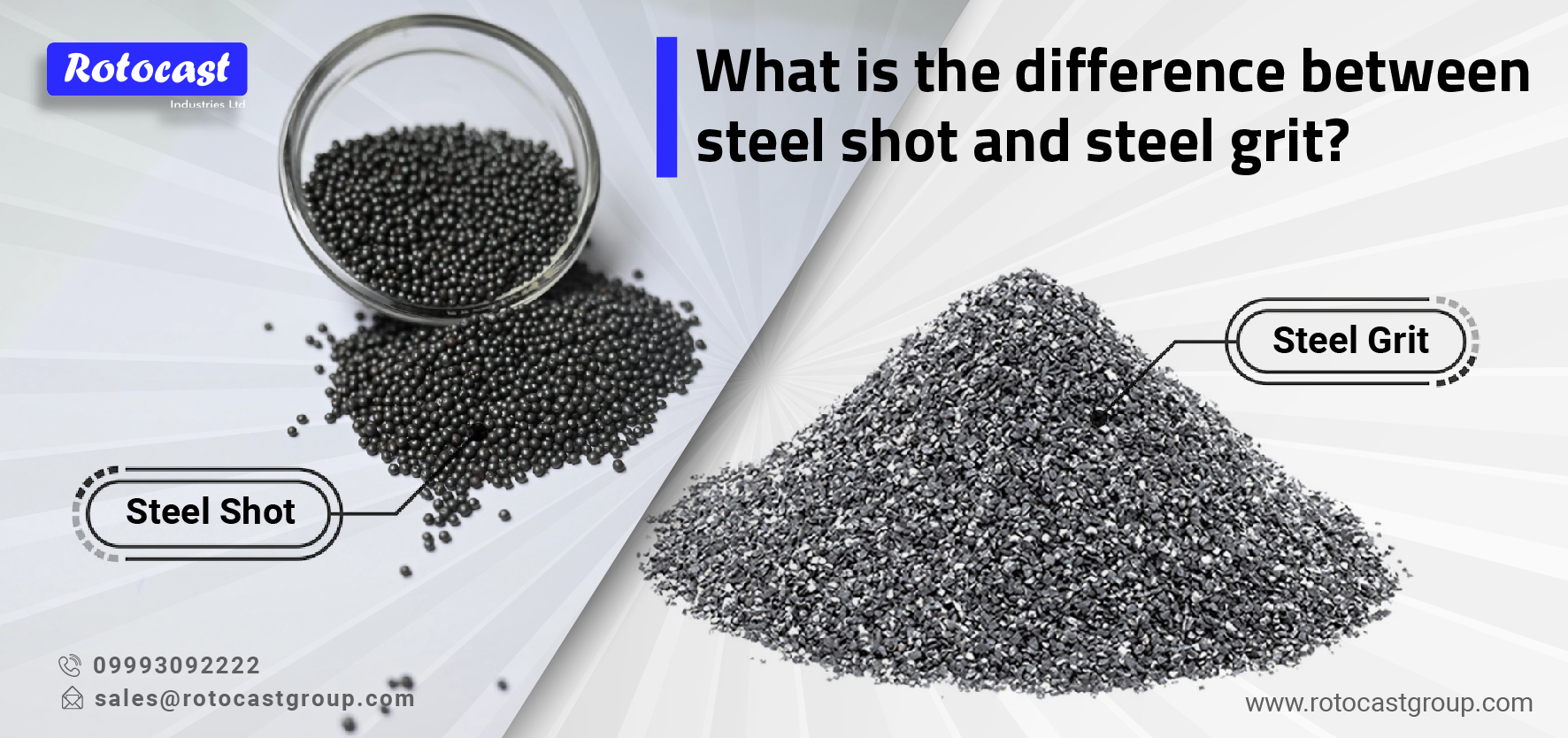
| Steel shot | Rounded impact with comparatively uniform cleaning action | General casting cleaning, sand removal and smoother finish requirements |
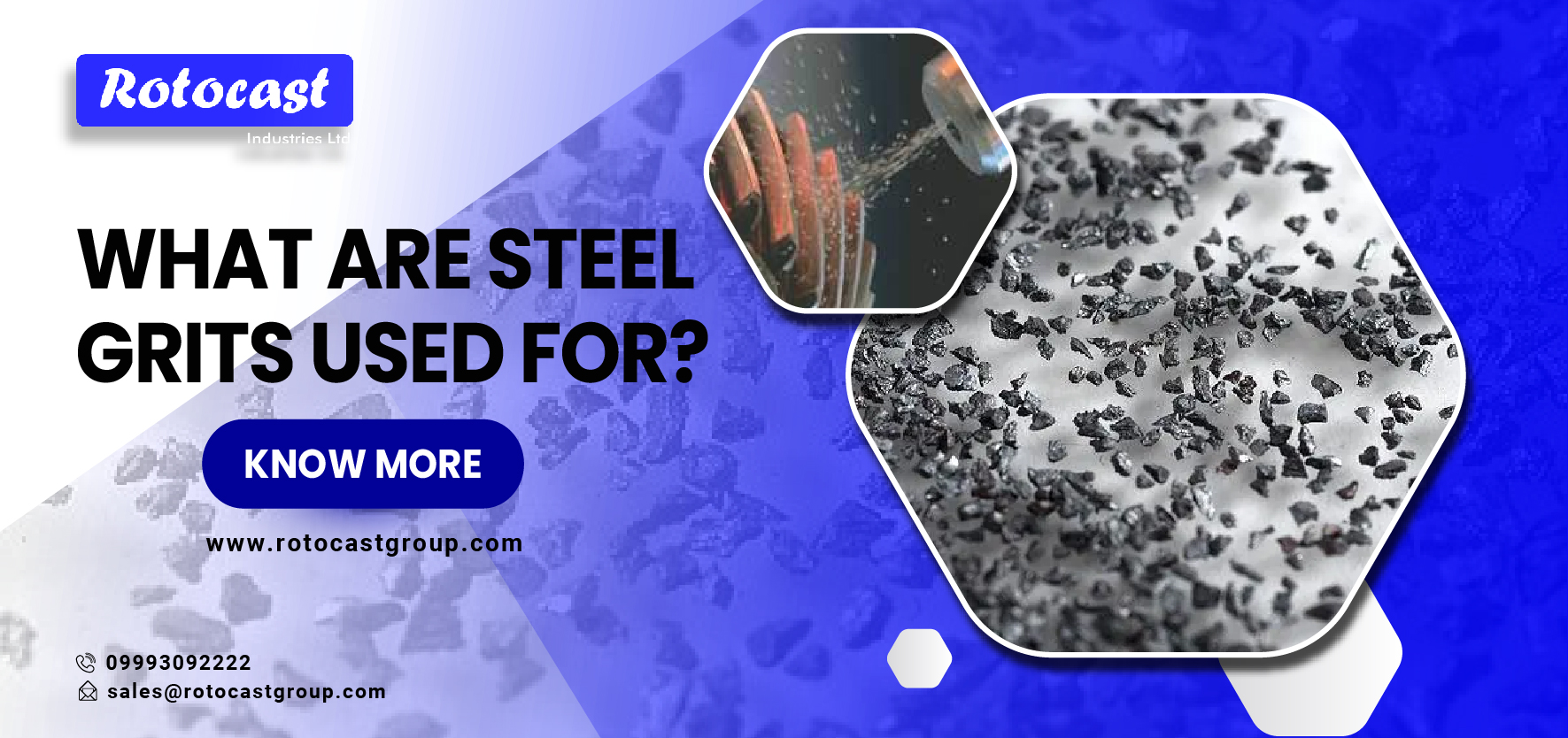
| Steel grit | Angular cutting action | Heavy scale, stubborn contamination or stronger profiling requirements |
| Controlled shot-and-grit mix | Combined impact and cutting behaviour | Applications requiring an engineered balance of cleaning and finish |
| Cut wire shot | Consistent impact and gradual conditioning | Specialised finishing or controlled peening applications |
ISO 11124-3 covers specifications for high-carbon cast-steel shot and grit used as metallic blast-cleaning abrasives. SAE J444 provides standard cast-shot and grit size designations for cleaning and peening. These standards help buyers and manufacturers use a common language for abrasive quality and sizing.
The largest or hardest abrasive is not automatically the best choice. Oversized media may struggle to reach smaller recesses, produce an unnecessarily rough surface or increase equipment wear.
Very fine media may improve coverage but lack the energy required to remove heavy sand or scale within the desired cycle time.
The best selection is the abrasive that produces the required cleanliness and finish with stable consumption, manageable machine wear and repeatable output.
A Seven-Step Framework for Achieving Uniform Shot Blasting
Step 1: Define the Required Surface Standard
Do not ask operators to produce a “properly cleaned” casting without defining what that means.
Create an approved standard using:
- Reference castings
- Photographs
- Surface cleanliness requirements
- Surface roughness limits where applicable
- Areas where minor staining is acceptable
- Areas that must be completely free from sand or scale
- Acceptance criteria for internal pockets and recesses
The standard should be understood by production, quality and maintenance teams.
Step 2: Study the Casting Geometry
Identify areas that are difficult for the abrasive stream to reach.
Pay particular attention to:
- Deep pockets
- Closely spaced ribs
- Internal corners
- Undersides
- Thin walls
- Machined faces
- Threaded sections
- Delicate edges
- Large flat surfaces that may receive excessive impact
A casting map can be created to mark critical inspection zones and common under-blasted areas.
Step 3: Standardise Loading and Orientation
Operators should not load similar castings differently during every cycle.
Define:
- Number of castings per load
- Minimum spacing between components
- Hanging or fixture position
- Orientation toward blast wheels
- Rotation or tumbling requirement
- Maximum load weight
- Rules for mixing different casting geometries
Overloading may appear to improve machine utilisation, but it can create shadowing and increase rework. Throughput should be evaluated using accepted castings per hour—not simply the number loaded into the machine.
Step 4: Validate the Abrasive Throwing Pattern
The blast stream should reach the critical surfaces of the casting.
Check:
- Control-cage position
- Wheel-blade wear
- Impeller condition
- Abrasive feed
- Hot-spot location
- Nozzle alignment in air-blast systems
- Coverage across the complete component
A machine may be running at full motor load while still directing a significant portion of abrasive away from the required area.
Step 5: Control the Abrasive Working Mix
Establish planned checks for:
- Particle-size distribution
- Fines percentage
- Abrasive shape
- Contamination
- Moisture
- Replenishment rate
- Abrasive consumption per production unit
Do not wait until the finish visibly deteriorates. By the time operators notice a major surface change, the process may already have produced a significant quantity of inconsistent castings.
Step 6: Maintain the Recovery and Separation System
The separator is one of the most important parts of a reusable-abrasive system.
Its job is to retain usable abrasive while removing:
- Dust
- Broken particles
- Sand
- Scale
- Oversized contamination
- Unwanted foreign material
Poor separation allows contamination to circulate repeatedly through the machine. This reduces cleaning consistency and can increase dust, wear and surface defects.
Step 7: Record Results and Correct Trends Early
Track process indicators such as:
- Rework percentage
- Abrasive consumption
- Cycle time
- Number of accepted castings per load
- Common under-blasted locations
- Wheel-component replacement frequency
- Dust collector condition
- Media-analysis results
- Customer complaints related to surface finish
Trend-based monitoring is more useful than checking performance only after a rejection occurs.
Common Mistakes That Cause Uneven Casting Blasting
| Common Mistake | Likely Result | Better Practice |
|---|---|---|
| Overloading the machine | Shadowed surfaces and inconsistent cleaning | Set load limits by geometry and exposure requirement |
| Using one abrasive size for every casting | Poor balance between impact and coverage | Match media size to scale, geometry and finish |
| Increasing cycle time without diagnosing the cause | Higher wear and consumption without solving the problem | Check working mix, wheel pattern and loading first |
| Ignoring blast-wheel wear | Uneven abrasive distribution | Inspect blades, impeller and control cage regularly |
| Allowing excessive fines | Dust, weak impact and unstable finish | Monitor operating mix through sieve analysis |
| Adding abrasive without a replenishment plan | Changing working mix and inconsistent results | Use controlled replenishment linked to consumption |
| Mixing different casting types randomly | Different exposure requirements within the same load | Group compatible geometries and surface conditions |
| Evaluating only visible surfaces | Residual sand or scale in hidden areas | Include recesses and critical pockets in inspection |
| Buying only on price per kilogram | Higher total process cost | Evaluate cost per accepted casting |
| Treating blasting as an isolated department | Recurring coating and machining problems | Link blasting controls to downstream requirements |
How to Measure the Real Cost of Casting Shot Blasting
The purchase price of steel shot is only one part of blasting cost.
A more useful calculation considers:
Total blasting cost per accepted casting =
Abrasive consumption
- energy
- machine wear
- maintenance labour
- manual touch-up
- reblasting
- rejected coatings
- production downtime
÷ accepted casting output
A lower-priced abrasive may become expensive if it:
- Breaks down rapidly
- Creates excessive fines
- Produces inconsistent cleaning
- Increases machine wear
- Requires longer cycle times
- Creates more manual rework
- Varies significantly between batches
Procurement teams should therefore evaluate abrasive performance together with production and quality teams.
Questions Procurement Teams Should Ask a Steel Shot Manufacturer
Before approving steel abrasives for a foundry, ask:
- Is the abrasive supplied in a consistent size distribution?
- What hardness range is offered?
- How is particle shape controlled?
- What quality checks are performed on each batch?
- Is batch traceability available?
- Which standards does the product comply with?
- Is the abrasive suitable for the existing blast-machine design?
- Can the supplier recommend a grade based on casting geometry and contamination?
- What packaging is used to protect media from moisture?
- Can consumption and surface performance be evaluated through controlled trials?
The purpose of a plant trial should be to measure output quality and process cost—not simply whether the abrasive can clean the casting.
Why Consistent Steel Shot Quality Matters
Uniform blasting is difficult to maintain when incoming abrasive batches vary in size, hardness, shape or cleanliness.
A consistent steel abrasive helps plants maintain:
- Predictable impact behaviour
- Stable working-mix distribution
- Repeatable surface finish
- Controlled abrasive consumption
- Easier process troubleshooting
- More reliable production planning
Rotocast Industries Ltd. manufactures steel shots, steel grits, cut wire shots and application-oriented steel abrasive solutions. The company reports more than four decades of industry experience, over 1,000 customers and an annual production capacity of 30,000 tonnes. Its listed quality credentials include ISO 9001, ISO 11124, BIS, IS 4606 and relevant SAE standards for steel shot and grit.
Abrasive consistency cannot replace good machine maintenance or correct casting presentation. However, it provides the stable foundation needed to control the remaining process variables.
Practical Uniformity Checklist for Foundries
Before starting the shift:
- Check abrasive level
- Inspect visible contamination
- Confirm separator and dust collector operation
- Review blast-wheel condition
- Verify the approved loading pattern
During production:
- Inspect critical casting areas
- Compare output with the reference sample
- Monitor unusual sound, vibration or abrasive leakage
- Record manual touch-up requirements
- Watch for sudden changes in cycle time
At planned intervals:
- Conduct sieve analysis
- Review abrasive consumption
- Inspect wheel blades and control cage
- Clean separator screens
- Check dust collector performance
- Review rejection and reblasting data
After changing casting type:
- Reconfirm loading orientation
- Review abrasive suitability
- Validate the throwing pattern
- Approve the first processed components
- Adjust process settings only through authorised controls
Frequently Asked Questions
1. Why is uniform shot blasting important for castings?
Uniform shot blasting helps remove sand, scale and surface contamination consistently across the casting. It supports easier inspection, more predictable coating preparation, reduced manual touch-up and improved batch-to-batch appearance.
2. What causes patchy cleaning after shot blasting?
Patchy cleaning may be caused by improper casting orientation, overloading, shadowing, worn blast-wheel components, an incorrect abrasive working mix, excessive fines, poor separation or insufficient exposure of recessed areas.
3. Which abrasive is generally used for cleaning castings?
Steel shot is widely used for general casting cleaning because its rounded particles provide consistent impact and comparatively uniform surface finishing. Steel grit may be selected where stronger cutting action is required for heavy scale or stubborn contamination.
4. Does using larger steel shot improve cleaning speed?
Larger shot can provide greater impact energy, but it may not reach small recesses effectively and can create a rougher surface. The correct size should balance impact, coverage, casting geometry and the required finish.
5. How often should the abrasive working mix be checked?
The frequency depends on production volume, machine type, contamination level and quality requirements. High-volume operations should establish planned media sampling and sieve-analysis intervals rather than waiting for visible blasting problems.
6. Can longer blasting time solve uneven cleaning?
Longer exposure may improve some under-cleaned areas, but it does not correct shadowing, poor wheel patterns, media contamination or worn machine components. It may also increase abrasive consumption and equipment wear.
7. How can a foundry reduce manual cleaning after blasting?
Foundries can reduce manual cleaning by standardising component loading, improving abrasive coverage, maintaining the correct working mix, servicing blast-wheel components and inspecting difficult casting areas against an approved reference standard.
8. What should buyers consider when choosing a steel shot manufacturer?
Buyers should consider abrasive consistency, hardness, size distribution, shape, batch traceability, standards compliance, packaging, delivery reliability and the supplier’s ability to recommend media according to the application.
Final Takeaway
A casting is not uniformly blasted merely because it has completed a machine cycle.
True uniformity requires the correct abrasive, a controlled working mix, proper casting presentation, stable machine performance, effective media separation and clearly defined surface acceptance standards.
When these elements work together, foundries receive cleaner, more inspectable and more predictable castings. Downstream teams face fewer surface-related surprises, while plant managers gain better control over rework, abrasive consumption and total processing cost.
For consistent steel shots, steel grits, cut wire shots and application-specific abrasive guidance, connect with Rotocast Industries Ltd. to discuss your casting geometry, existing blast-machine setup and required surface finish.