- Rotocast
- Nov 17, 2026
- Blogs, Shot Blasting, Steel Abrasives, Surface Preparation
- 0 Comments
Your blasting media might be the smallest item on your purchase order—but it could be responsible for some of your biggest production losses.
Imagine running the same steel casting through a blasting machine twice. The first cycle fails to achieve the required surface finish. The second consumes additional energy, abrasive media, labour, and machine time. Meanwhile, production slows down, deadlines become harder to meet, and operating costs increase.
Now imagine this happening across hundreds of components every week.
What appears to be a minor surface finishing issue can quickly become a serious profitability problem.
For foundries, fabrication units, automotive manufacturers, and heavy engineering companies, choosing high-quality Steel Shot and Steel Grit is not simply about cleaning metal. It is about ensuring consistent surface quality, reducing repeated operations, and improving production efficiency.
At Rotocast Industries Ltd., we understand that every blasting cycle should contribute to productivity—not unnecessary rework.
What Makes Blasting Media Inconsistent?
Industrial blasting performance depends on more than machine power or blasting duration. The quality and properties of the abrasive media play an equally important role.
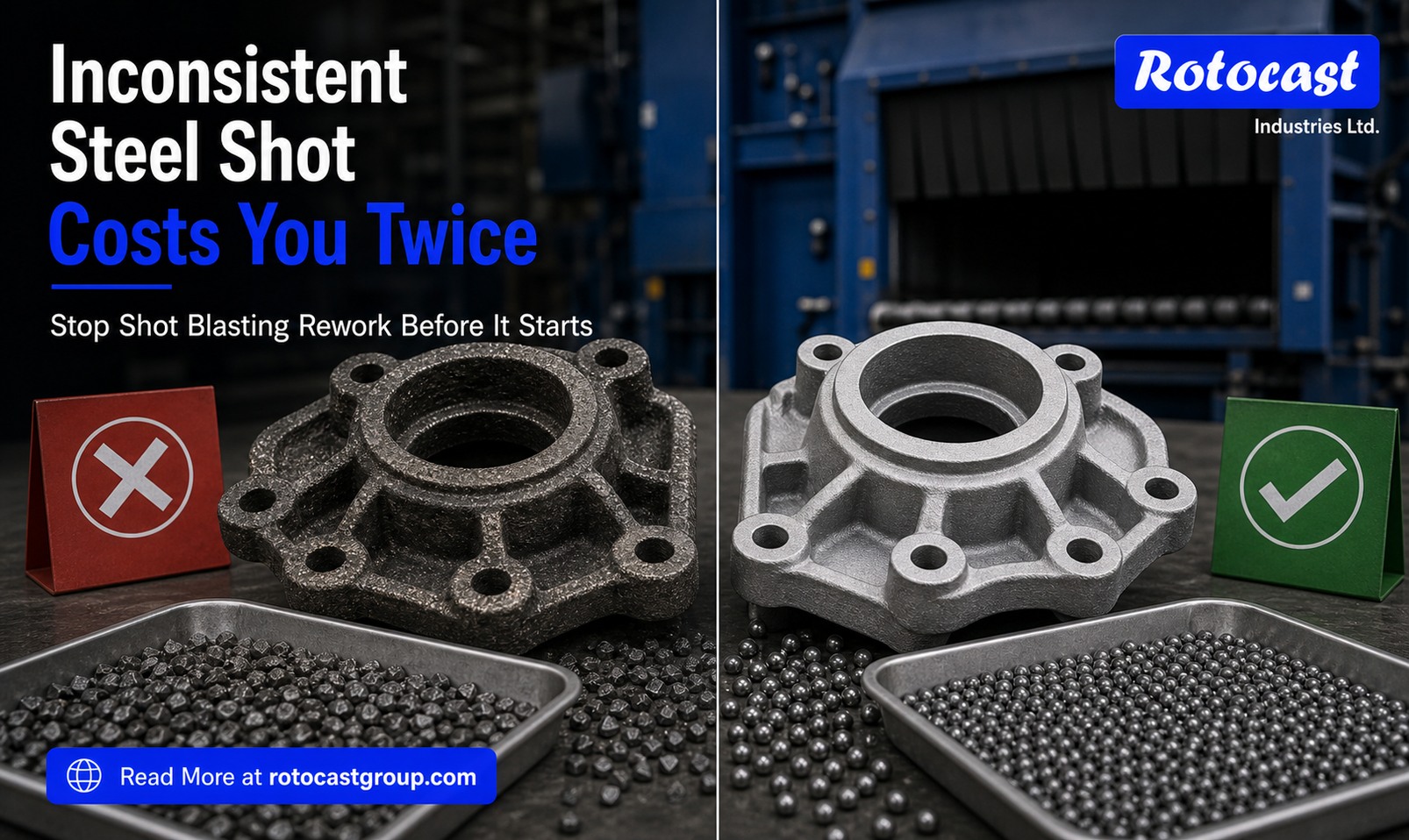
Inconsistent blasting media may contain irregular particle sizes, unsuitable hardness levels, excessive fines, fractured particles, or unwanted contaminants. These variations can affect how effectively the abrasive removes rust, scale, sand, and surface impurities.
During abrasive blasting, high-speed particles strike the metal surface to clean, condition, or texture it. When the media does not behave consistently, the resulting surface condition may also become unpredictable.
Consider two batches of abrasives used under the same machine settings. One produces an acceptable finish within the planned cycle. The other leaves unevenly cleaned areas that require additional blasting.
The difference may not be the equipment—it may be the abrasive.
This is why choosing a dependable Steel Abrasives Manufacturer matters for operations where productivity and finish consistency are essential.
How Inconsistent Steel Shot and Steel Grit Increase Rework Costs
1. Uneven Surface Finishing Leads to Repeat Blasting
A uniform surface finish is essential for castings, forgings, fabricated steel structures, and components requiring further treatment.
Poorly graded or inconsistent Steel Shots may produce irregular cleaning patterns, leaving behind residual sand, scale, or oxidation.
Similarly, unsuitable Steel Grit may fail to create the desired surface profile, resulting in additional preparation before painting or coating.
Manufacturers relying on consistent Steel Shot can improve process control by selecting spherical abrasive media with appropriate hardness, size distribution, and impact characteristics.
When abrasive performance becomes more predictable, operators can better control blasting parameters and reduce avoidable repeat cycles.
2. Excessive Abrasive Breakdown Increases Consumption
Not every abrasive particle survives repeated impact equally well.
Low-quality blasting media may fracture prematurely, generating fines and reducing the proportion of effective abrasive particles in the working mixture.
This can create a cycle of increased media replenishment, greater dust-loading pressure on collection systems, and reduced blasting efficiency.
A high-quality Steel Shot Manufacturer focuses on characteristics such as particle integrity, controlled hardness, and durability to support reliable abrasive performance.
Instead of evaluating media solely by its price per kilogram, manufacturers should consider its useful working life and the quantity required to process an acceptable component.
3. Inconsistent Steel Grit Can Compromise Coating Preparation
Surface cleanliness alone does not guarantee successful coating performance.
Industrial coatings also depend on suitable surface preparation, including an appropriate anchor profile, contamination control, and compliance with coating specifications.
Steel Grit is commonly selected where more aggressive cleaning and surface roughening are required.
However, variations in particle size, angularity, hardness, or operating parameters can create inconsistent profiles.
Too little profile may compromise mechanical anchoring. Excessive profile may require additional coating thickness or create other finishing concerns.
Selecting the appropriate Steel Grit helps manufacturers establish a more controlled surface preparation process.
When supported by correct blasting settings, inspection, and coating practices, this can reduce avoidable touch-ups and coating-related rework.
4. Longer Blasting Cycles Reduce Production Capacity
When blasting efficiency declines, operators may compensate by increasing machine run time.
But every additional minute has a cost.
Longer blasting cycles increase energy usage and machine occupancy while reducing the number of components that can be processed during a shift.
For a high-volume Steel Casting Foundry, even small changes in average blasting cycle time can affect daily throughput.
Consider a production line processing 500 components per day. If inconsistent blasting media adds just one extra minute per component, that represents 500 additional machine-minutes—approximately 8 hours and 20 minutes of processing time.
That is a hypothetical illustration, but the operational lesson is clear: poor abrasive consistency can quietly consume valuable production capacity.
5. Greater Rework Means More Pressure on Equipment
Blasting equipment operates under demanding conditions.
Repeated processing increases cumulative operating time for blast wheels, turbines, nozzles, separators, dust collectors, and associated components.
Although equipment wear depends on several factors, unsuitable abrasive hardness, excessive fines, or poor working-mix control can contribute to operating difficulties and maintenance demands.
The aim should not simply be to blast harder or longer.
The aim is to achieve the required surface condition efficiently through an appropriate combination of media quality, equipment settings, and process monitoring.
Steel Shot vs. Steel Grit: Choosing the Right Media for the Job
One common mistake in industrial surface preparation is treating all steel abrasives as interchangeable.
They are not.
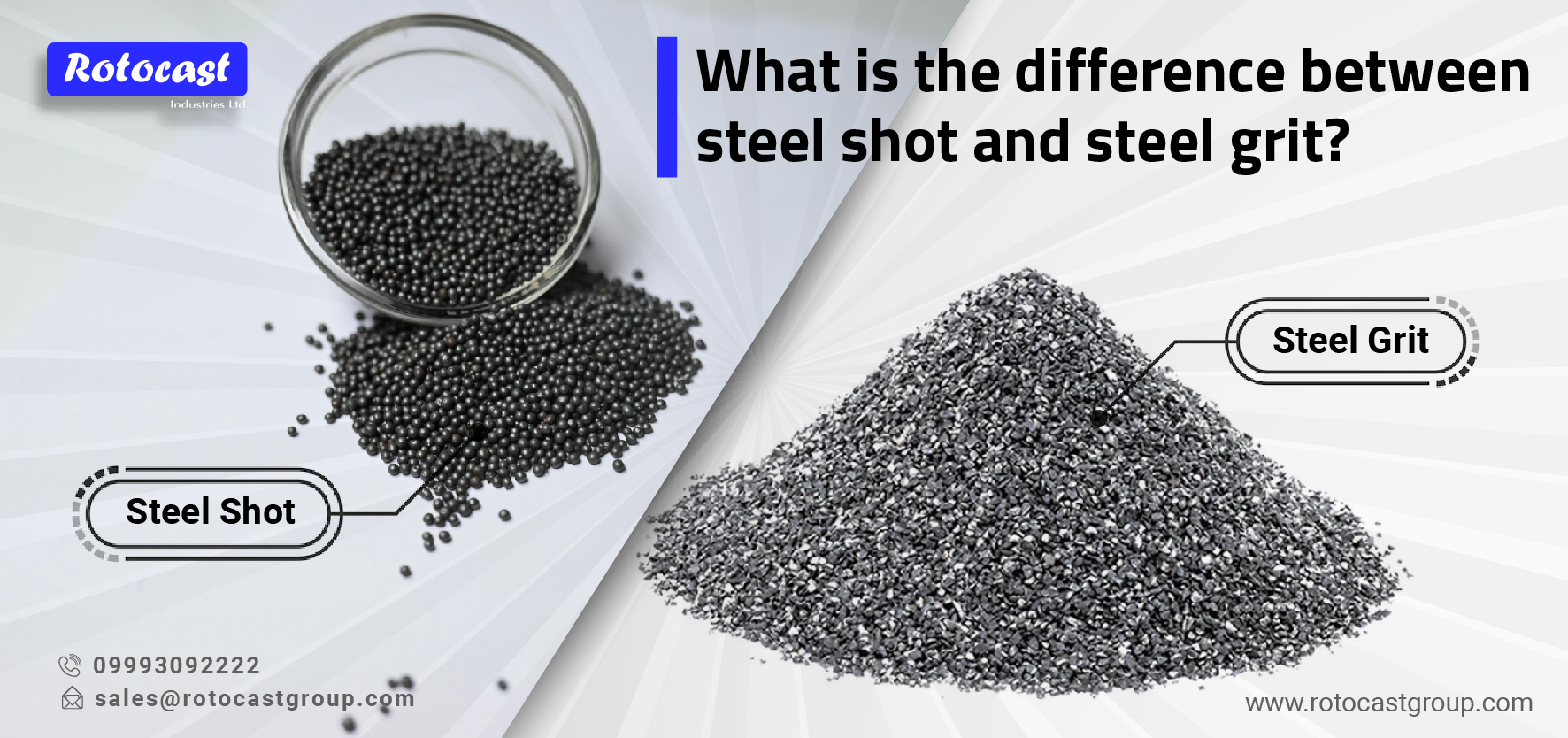
Steel abrasives are generally available as spherical shot and angular grit, with different impact characteristics and applications.
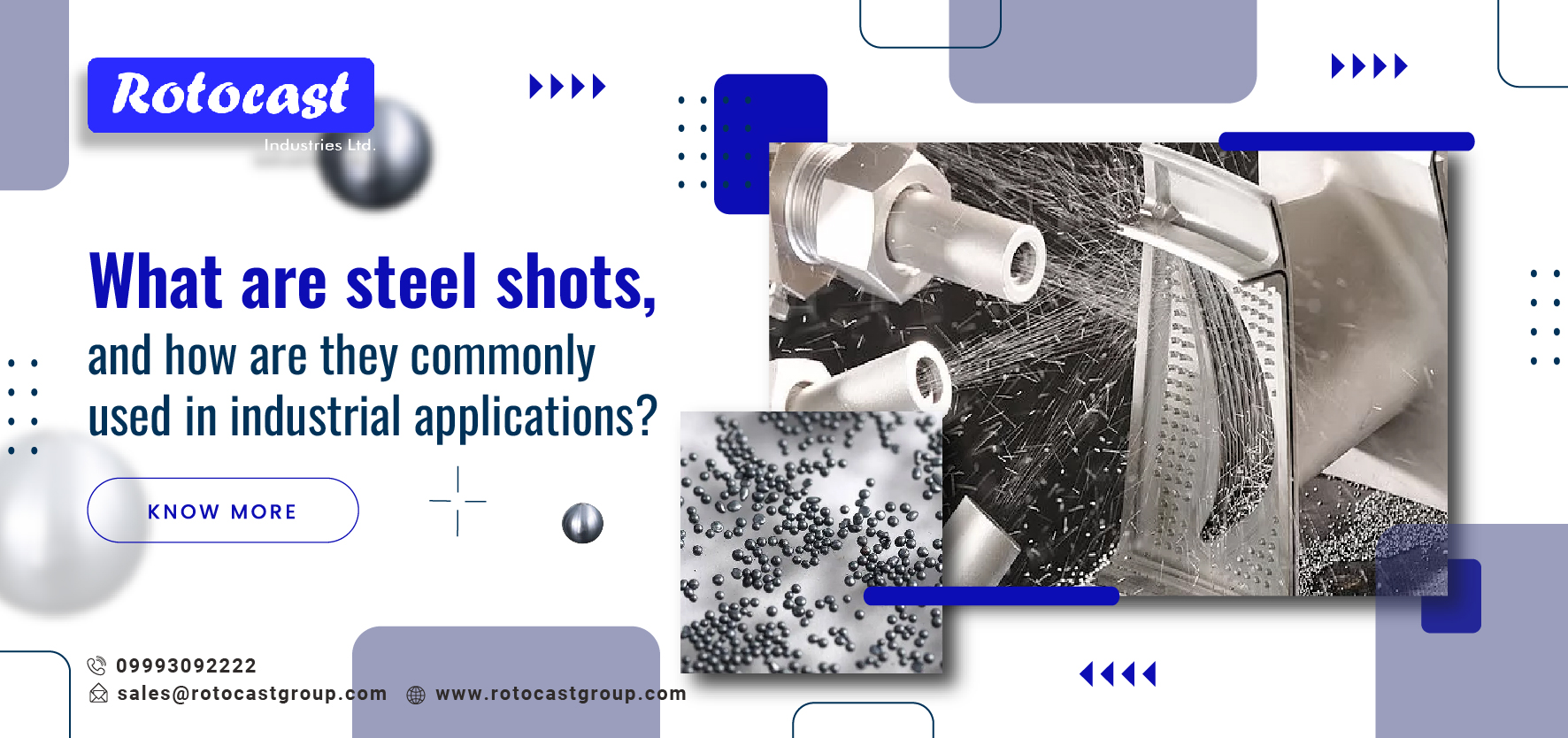
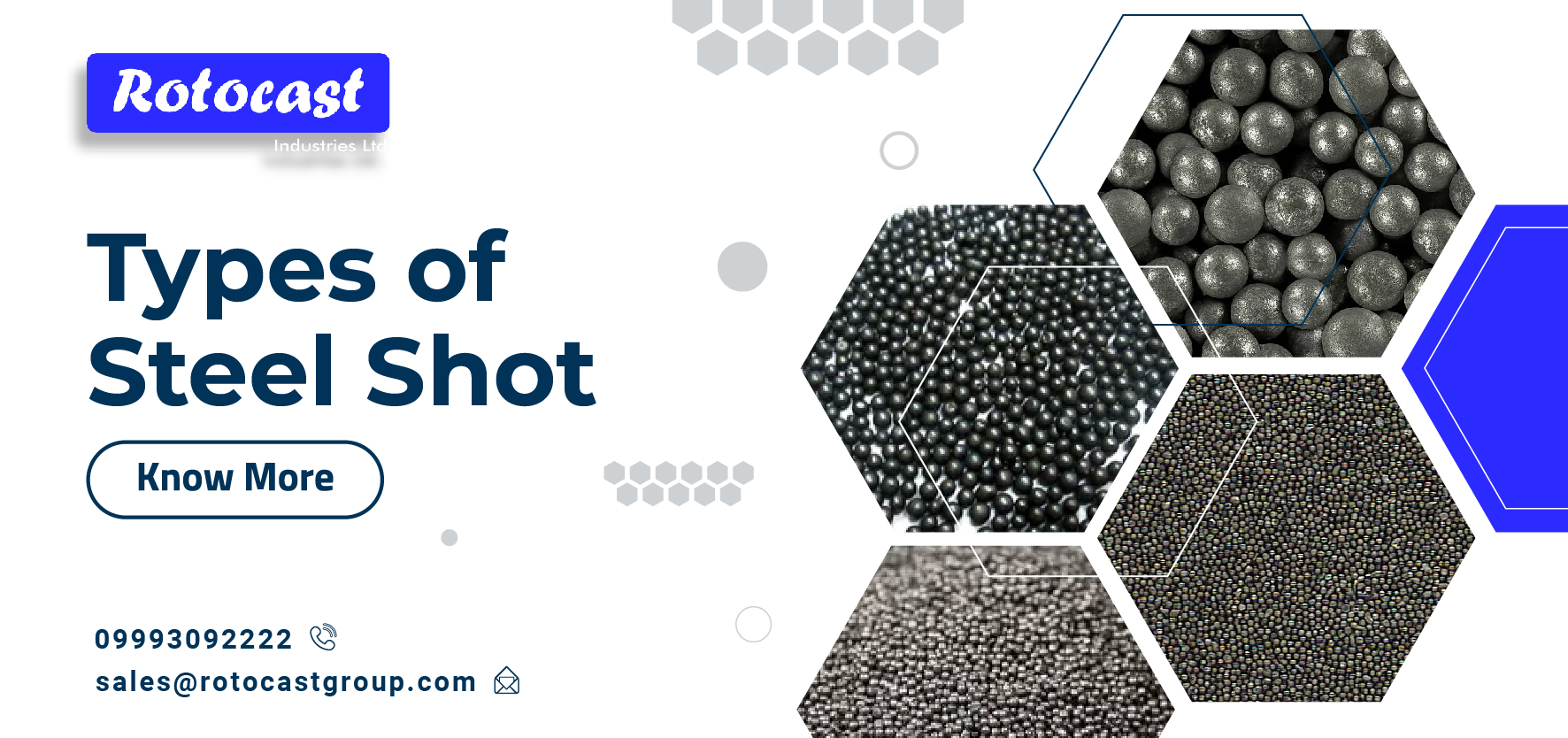
Steel Shot consists of rounded particles commonly used for cleaning, desanding, descaling, and certain finishing or shot-peening operations. Its spherical shape makes it suitable for applications requiring repeated impact and controlled surface treatment.
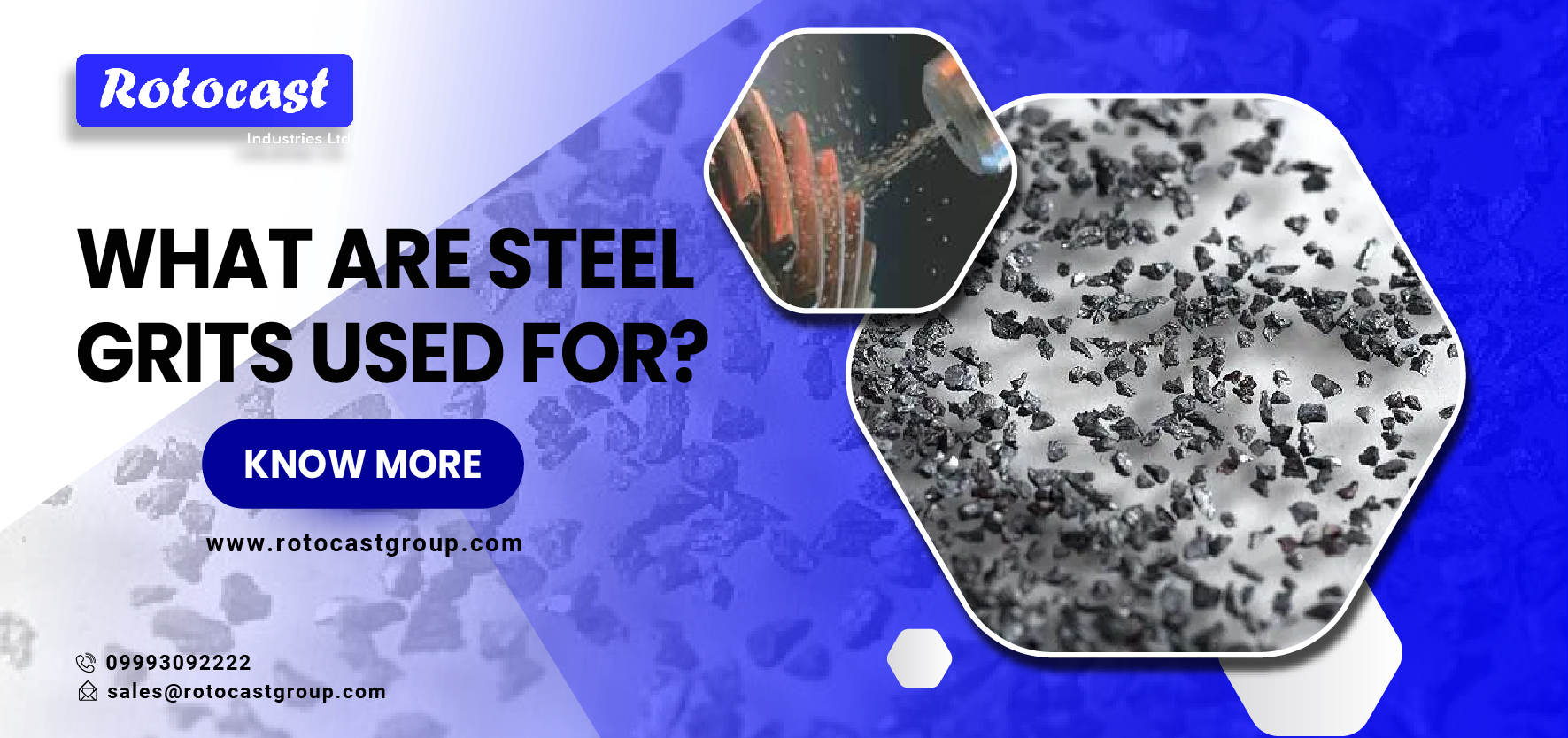
Steel Grit consists of angular particles typically selected for aggressive removal of rust, mill scale, and existing coatings, as well as for creating specified surface roughness.
The correct choice depends on the substrate, machine configuration, target finish, particle size, hardness, and end-use requirements.
For example, a Steel Casting operation focused on removing adhered foundry sand may require different abrasive characteristics from a structural fabrication unit preparing steel for protective coating.
Rotocast Industries Ltd. manufactures both steel shot and steel grit for industrial applications, allowing buyers to explore media suited to their process requirements.
The Real Cost of Blasting Media Is More Than Its Purchase Price
A common procurement question is:
Which abrasive offers the lowest price per kilogram?
A better question is:
Which abrasive delivers the lowest cost per accepted component?
The true cost of blasting includes abrasive consumption, energy use, labour, equipment maintenance, inspection, waste handling, and any rework required to achieve the specified finish.
A lower-priced abrasive may appear attractive during purchasing. But if it breaks down quickly, increases cycle time, or creates inconsistent results, the overall operating cost may be higher.
For example, suppose one abrasive costs less initially but requires more frequent replenishment and additional finishing cycles. Another costs more per kilogram but achieves consistent results with lower consumption.
Only a controlled production trial can establish which option is more economical for the specific application.
This approach is especially relevant for buyers comparing Steel Shot India suppliers or evaluating a Steel Grit Manufacturer in India for long-term procurement.
The smartest purchasing decision is based on measurable operating performance—not quotation price alone.
How to Identify Blasting Media That Is Costing You Money
An inconsistent abrasive mixture rarely announces itself through one dramatic failure. More often, the warning signs appear gradually.
Operators may notice that the same component requires longer blasting despite unchanged machine settings. Surface finish varies between production batches. Media replenishment increases, fine particles accumulate faster, or previously acceptable components require additional cleaning.
These symptoms are worth investigating, but they do not automatically prove that the abrasive supplier is responsible.
Machine condition, wheel alignment, separator efficiency, media feed rate, abrasive velocity, and contamination can also affect performance.
A systematic inspection should compare incoming abrasive properties with the actual working mixture and resulting surface finish.
Manufacturers should pay particular attention to particle-size distribution, hardness, particle shape, breakdown behaviour, and cleanliness.
A reliable Steel Grit Manufacturer should be able to provide relevant product specifications so buyers can evaluate media suitability against their operational needs.
Why Consistent Abrasive Quality Matters for Steel Casting Foundries
Foundry operations face a unique set of surface preparation challenges.
Fresh castings may contain adhered sand, oxide scale, residual moulding material, and complex geometries that are difficult to clean uniformly.
The effectiveness of a blasting operation depends on both abrasive characteristics and how the particles reach different areas of the component.
An unsuitable working mixture can leave recesses inadequately cleaned or require additional processing to achieve an acceptable finish.
For a Steel Casting Foundry, repeated blasting affects more than the finishing department. It can delay inspection, machining, painting, packaging, and dispatch.
Consistent abrasives help establish a repeatable process when properly matched with the casting geometry and blasting equipment.
This is where a manufacturer’s technical understanding becomes valuable.
How Rotocast Industries Ltd. Supports More Efficient Blasting
At Rotocast Industries Ltd., we manufacture Steel Shots, Steel Grits, and other industrial abrasive solutions designed to support reliable surface treatment applications.
Our products serve industries including foundries, forgings, automotive manufacturing, steel fabrication, heavy engineering, and related sectors.
As a Steel Abrasives Manufacturer with decades of industry experience, our focus extends beyond supplying abrasive material. We understand the importance of quality control, appropriate product selection, and consistent performance in demanding production environments.
Our Steel Abrasives Manufacturer quality-control approach emphasizes product inspection and specification-based consistency.
From blast cleaning and descaling to surface preparation and peening, selecting the correct abrasive grade helps manufacturers build more controlled and efficient production processes.
Rotocast also offers premium abrasive ranges designed for demanding applications where durability and performance consistency are important.
Manufacturers comparing Steel Shots India and Steel Grits India suppliers should consider not only product availability but also technical specifications, supply reliability, and performance under actual operating conditions.
Five Practical Steps to Reduce Rework in Your Blasting Operation
Reducing blasting-related rework begins with understanding the relationship between abrasive characteristics, operating conditions, and the required surface finish.
Start by reviewing your current media. Check incoming abrasive specifications, the condition of the working mixture, and whether media size and hardness are appropriate for the application.
Monitor blasting cycle time. If processing time gradually increases, investigate media condition along with equipment performance and separator efficiency.
Inspect the actual surface finish. Use suitable cleanliness and surface-profile measurements rather than relying entirely on visual appearance.
Compare total operating costs. Measure media consumption, processing time, maintenance, and repeat blasting per accepted component.
Work with an experienced supplier. A dependable Steel Shot Manufacturer in India or Steel Grit Manufacturer in India can support the selection of appropriate abrasive grades for specific industrial requirements.
Rotocast’s Surface Blasting solutions highlight the role of steel abrasives in removing contaminants and preparing surfaces for subsequent finishing operations.
These steps help shift blasting decisions from trial-and-error adjustments to measurable process improvements.
Frequently Asked Questions
What causes inconsistent results in shot blasting?
Inconsistent blasting results can be caused by variations in abrasive size, hardness, shape, contamination, or breakdown. Machine settings, separator performance, component geometry, and operating conditions can also contribute.
Can low-quality Steel Shot increase production costs?
Yes. Premature abrasive breakdown, excessive fines, longer blasting cycles, and repeated processing can increase total operating costs. The actual impact should be measured through production trials.
Is Steel Grit better than Steel Shot for surface preparation?
Neither is universally better. Steel Grit is often suitable for aggressive cleaning and surface profiling, while Steel Shot is commonly preferred for cleaning, finishing, and certain peening applications. Selection depends on the required outcome.
How can a foundry reduce repeat blasting?
A foundry can review abrasive specifications, maintain the working mixture, inspect equipment condition, optimize blasting parameters, and measure surface quality consistently.
Why choose an established Steel Abrasives Manufacturer?
An established manufacturer can offer documented product specifications, consistent supply, and guidance on abrasive selection, helping buyers evaluate performance and control process variability.
Conclusion: Stop Paying Twice for the Same Surface Finish
Every additional blasting cycle represents resources that could have been used to produce the next component.
When abrasive media is inconsistent, manufacturers may face higher consumption, unpredictable surface finishes, longer processing times, and unnecessary rework.
But these costs are not always unavoidable.
By selecting suitable Steel Shot and Steel Grit, maintaining the working mixture, and monitoring process performance, industrial operations can improve consistency and make more informed cost decisions.
The right abrasive should help you finish the job correctly – not force you to repeat it.
At Rotocast Industries Ltd., we help manufacturers explore steel abrasive solutions for efficient surface cleaning, finishing, and preparation.