- Rotocast
- Nov 17, 2026
- Blogs, Shot Blasting, Steel Abrasives, Surface Preparation
- 0 Comments
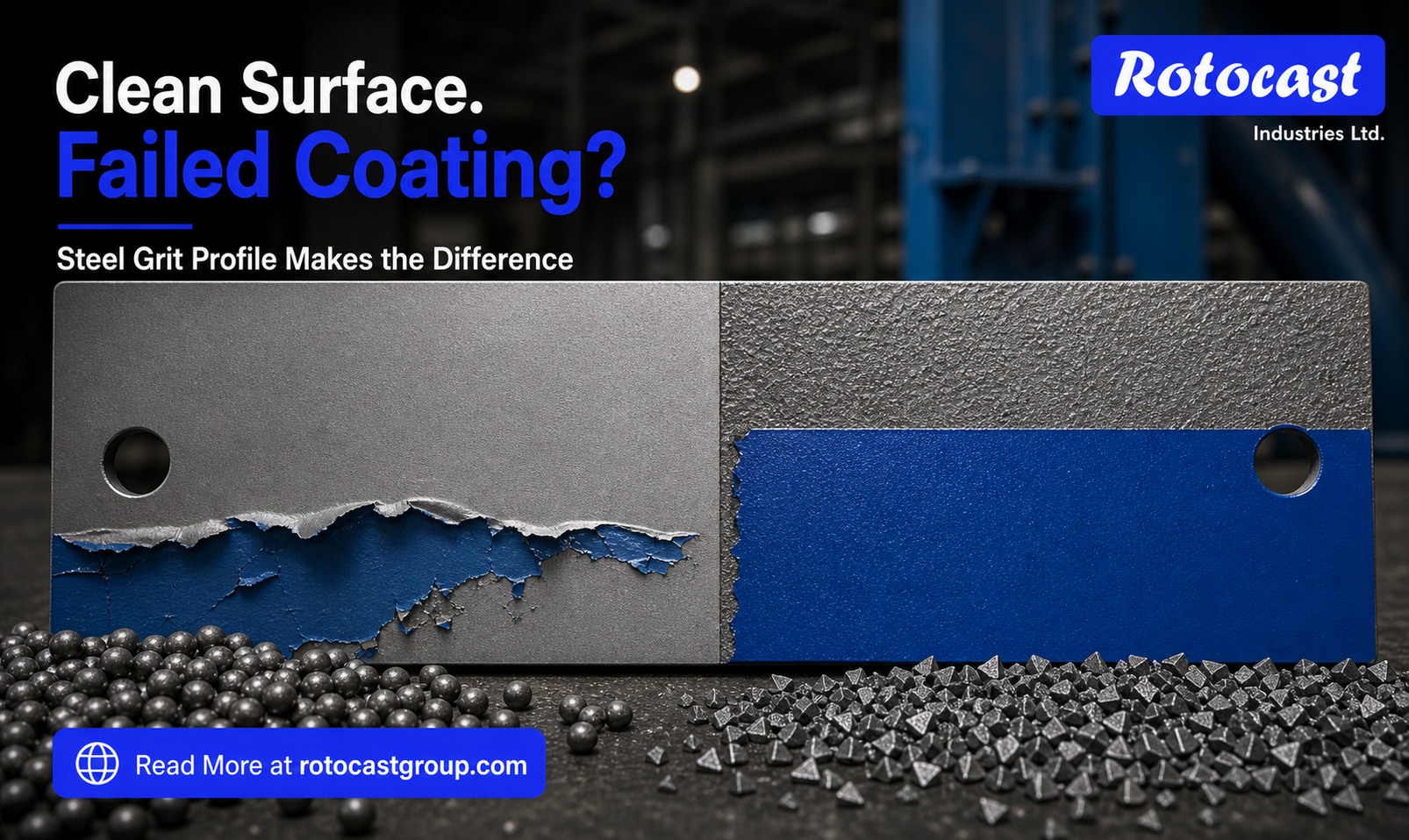
The surface looks perfect. The blasting is complete. The steel is ready for painting. So why does the coating start peeling, blistering, or rusting sooner than expected?
For many manufacturers, this is an expensive and frustrating problem. A steel component may appear clean immediately after blasting, yet the protective coating can fail long before its expected service life.
The reason is surprisingly simple: a visually clean surface is not always a coating-ready surface.
Successful coating performance depends on more than removing visible rust. Surface profile, microscopic contamination, abrasive quality, moisture, and application conditions all influence how effectively a coating bonds with metal.
For foundries, structural steel fabricators, automotive manufacturers, and heavy-engineering industries, understanding these hidden factors can make the difference between durable protection and costly rework.
Let’s explore seven reasons why coatings fail even after blasting—and how proper Steel Shot and Steel Grit selection can help prevent them.
1. The Surface Is Clean, but the Anchor Profile Is Wrong
One of the most overlooked causes of coating failure is an incorrect surface profile.
During abrasive blasting, high-speed abrasive particles strike the metal surface to remove contamination and create a suitable texture.
This texture, commonly called the anchor profile, helps the coating mechanically grip the substrate.
But here’s the problem: a surface can look completely clean while being too smooth or excessively rough.
An insufficient profile may reduce mechanical adhesion, while an excessively deep profile can leave peaks inadequately covered by the specified coating thickness.
The solution: Select abrasive media according to the coating manufacturer’s required profile range. Measure the actual blasted surface rather than judging it only by appearance.
The right Steel Grit can help develop a controlled angular surface profile for applications requiring effective cleaning and coating preparation.
2. Invisible Contaminants Remain After Blasting
What if the real problem is something you cannot see?
Water-soluble salts, oil, grease, and other contaminants may remain on steel even after visible rust and scale have been removed.
Soluble salts are particularly troublesome because they can attract moisture beneath protective coatings and contribute to blistering, underfilm corrosion, and premature coating deterioration.
In demanding environments, such as marine structures, pipelines, and industrial processing facilities, even small amounts of contamination can become a serious concern.
Blasting alone should never be assumed to remove every chemical contaminant.
The solution: Remove oil and grease before blasting, assess soluble salt contamination where required, and use appropriate cleaning and inspection procedures.
Remember, removing visible dirt is not the same as achieving the cleanliness required for protective coating application.
3. Incorrect Steel Shot or Steel Grit Selection
Not all abrasives produce the same results.
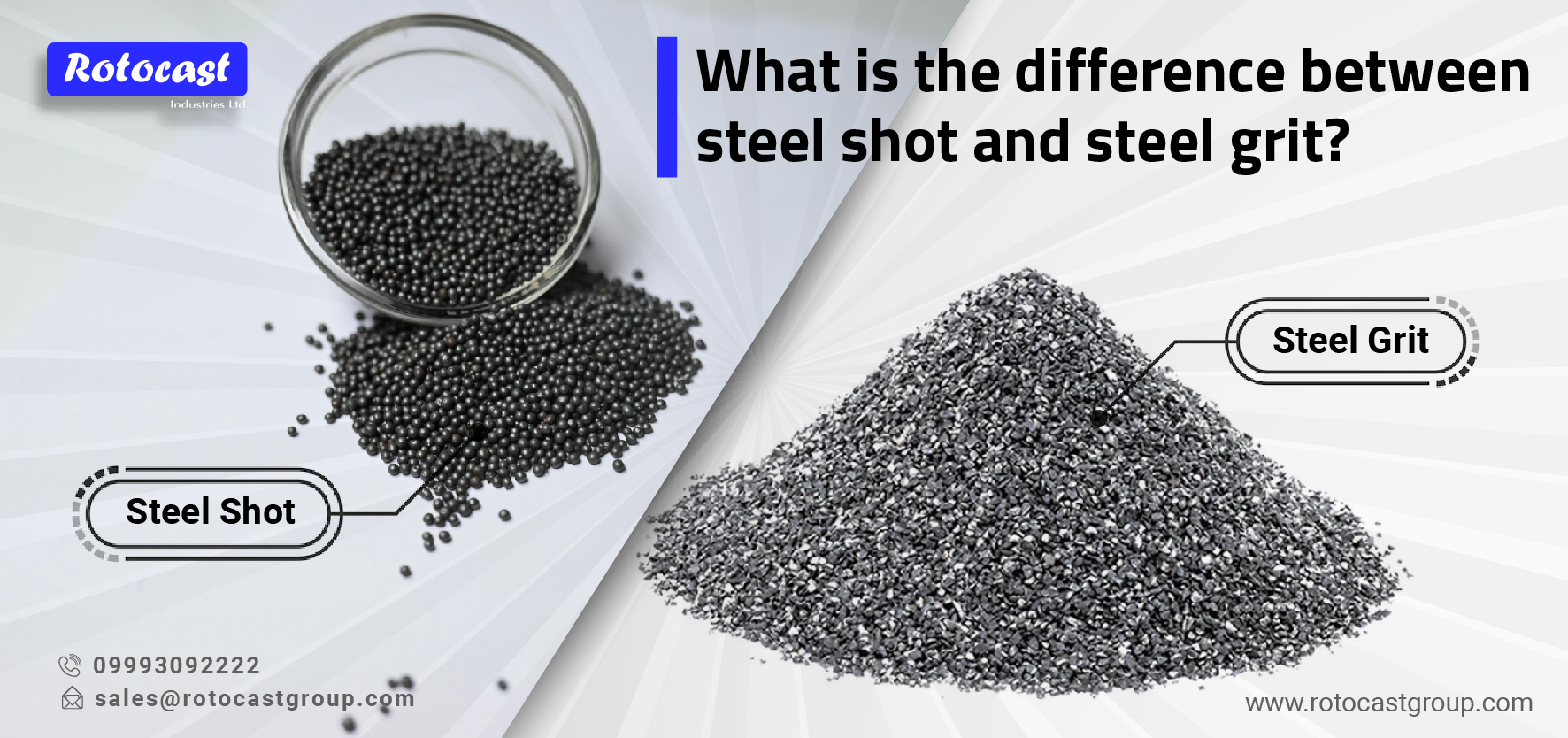
The difference between spherical and angular abrasive media can significantly influence surface cleaning and profile development.
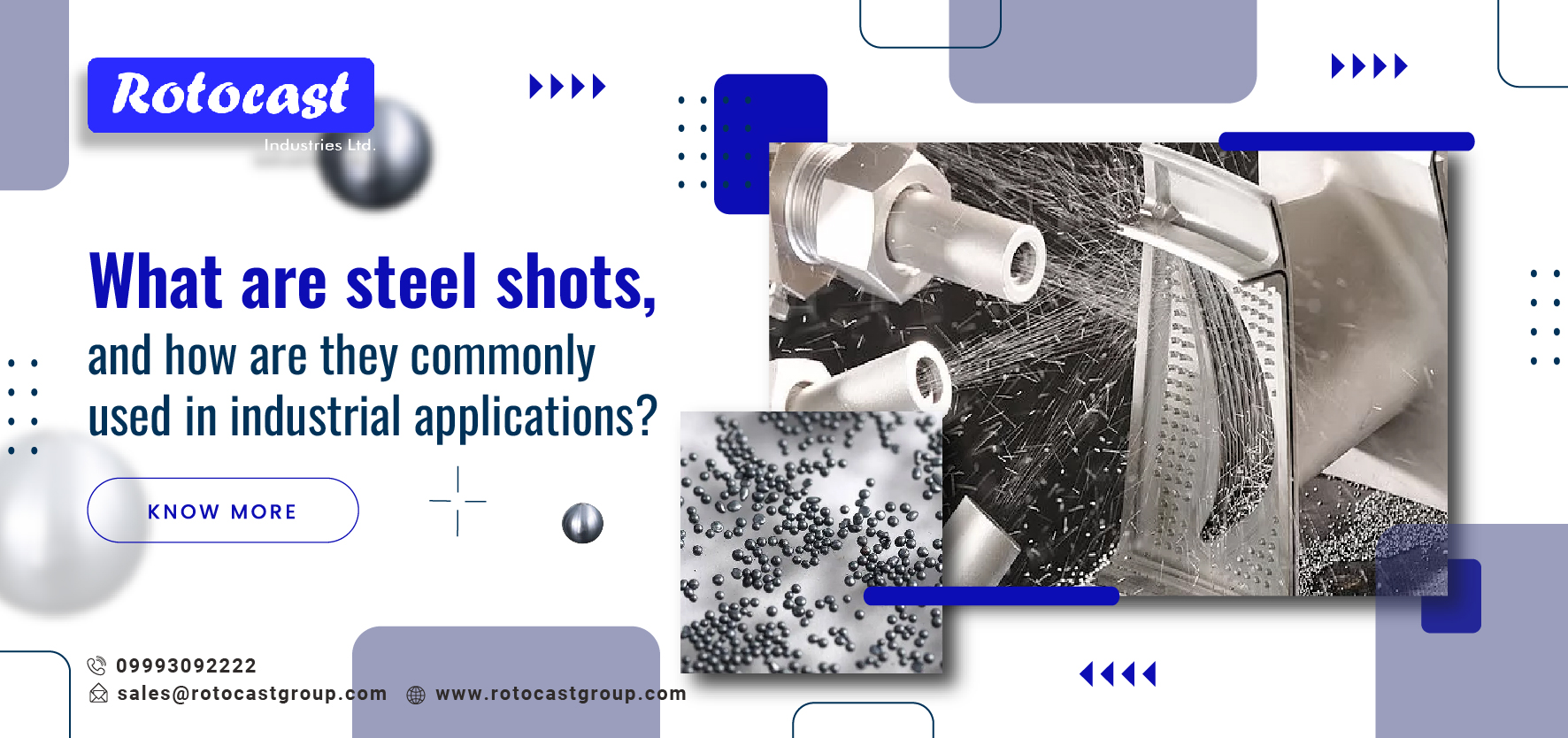
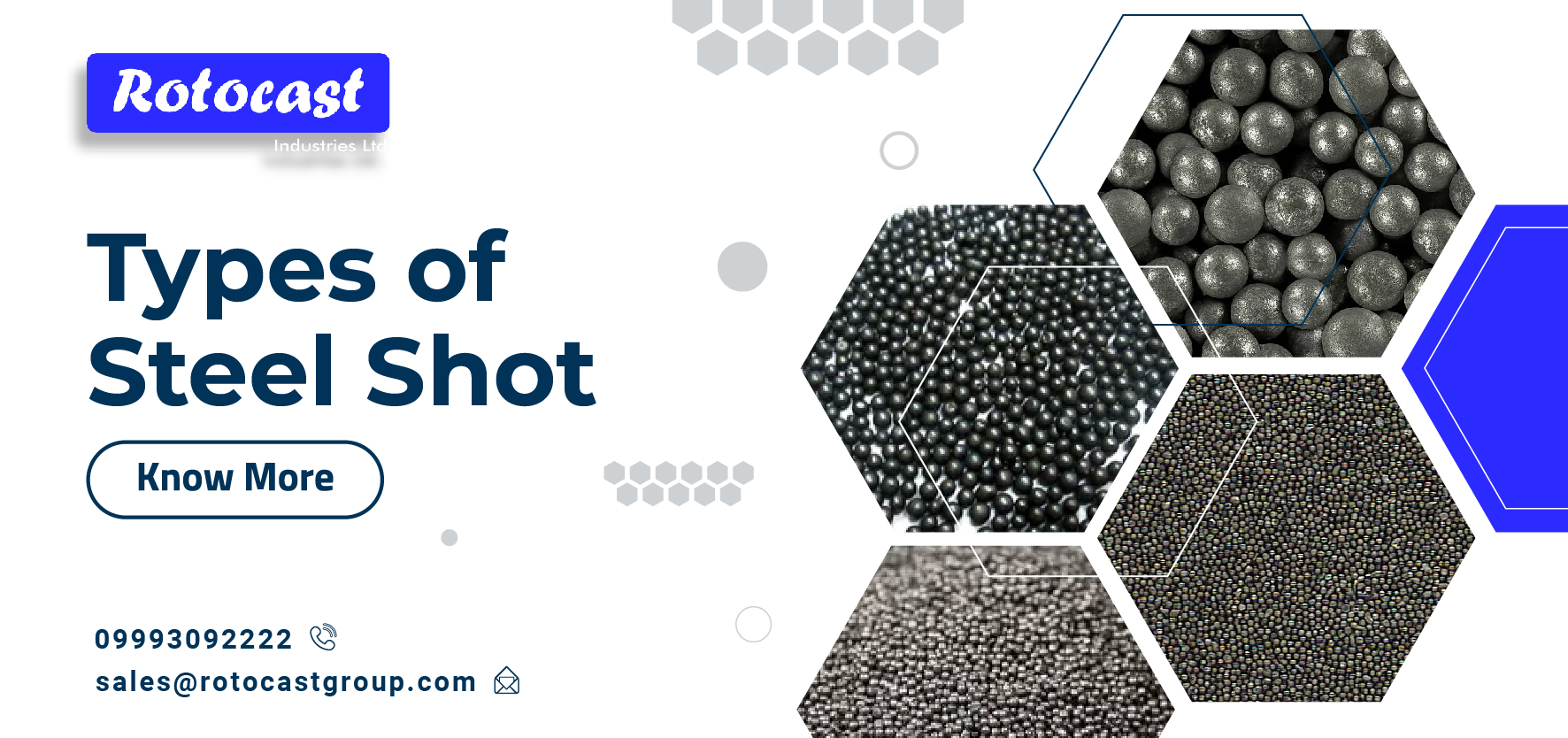
Steel Shot consists of rounded particles that deliver repeated impact, making it suitable for cleaning, descaling, surface finishing, and shot peening.
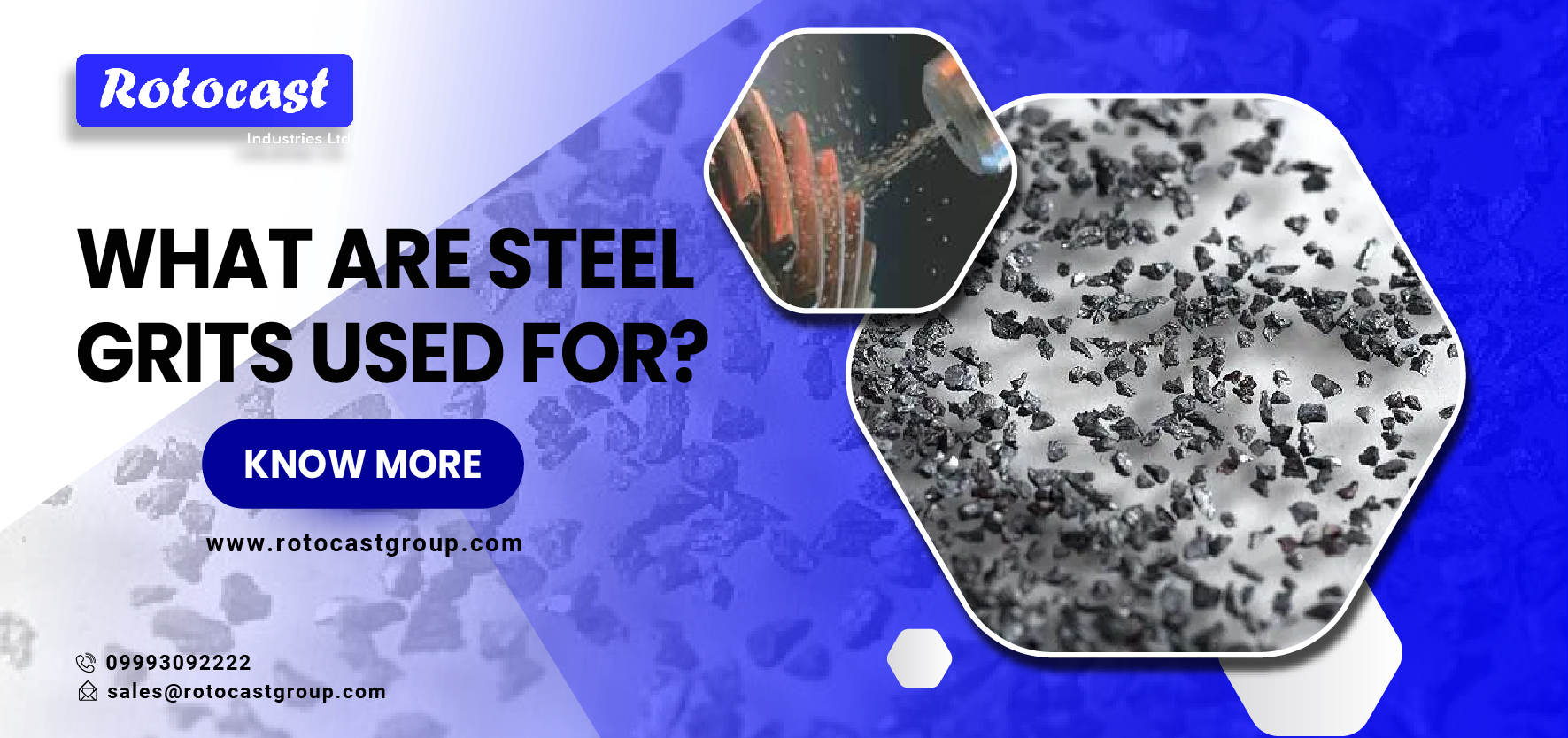
Steel Grit consists of angular particles that provide more aggressive cutting action, making it useful for removing stubborn scale and developing the surface roughness required for certain protective coatings.
However, selecting Steel Shot when a sharper profile is required—or using overly aggressive Steel Grit on a sensitive component—can lead to undesirable results.
Even within the same abrasive category, particle size, hardness, blasting velocity, and working-mix condition influence the final surface.
The solution: Match the abrasive type, grade, and operating parameters with the substrate, equipment, coating specification, and desired surface profile.
For industrial buyers comparing a Steel Shot Manufacturer and a Steel Grit Manufacturer in India, consistent abrasive performance should be a key purchasing consideration.
4. Fine Dust and Embedded Residues Are Still Present
A blasted surface may have a bright metallic appearance while carrying fine dust, fragmented abrasive particles, or residual contamination.
These particles can interfere with coating adhesion and create weak areas between the substrate and the protective layer.
The problem becomes more serious when blasting equipment contains an excessive concentration of broken-down abrasive media.
An ineffective separator or poorly maintained dust-collection system can allow excessive fines to remain in circulation.
Such conditions may affect cleaning consistency, increase abrasive consumption, and create additional preparation work.
The solution: Maintain effective abrasive separation, inspect the working mix, and verify surface dust cleanliness before painting.
Consistent Steel Shots and Steel Grits, combined with proper equipment maintenance, help operators achieve more predictable blasting results.
5. Moisture and Flash Rust Develop Before Coating
A component can leave the blasting chamber in acceptable condition and become unsuitable for coating before it reaches the painting station.
How?
Humidity, condensation, and prolonged exposure can allow freshly blasted steel to develop flash rust.
Freshly exposed steel is particularly vulnerable to environmental conditions.
When surface temperature approaches the dew point, moisture may condense on the metal. Even without visible water droplets, unfavorable application conditions can compromise coating performance.
The consequences may include poor adhesion, premature corrosion, and reduced coating durability.
The solution: Monitor steel temperature, ambient temperature, relative humidity, and dew point.
Apply the coating within the period permitted by the project specification and coating manufacturer, while ensuring the surface remains clean and dry.
A properly blasted surface should not be allowed to deteriorate before coating begins.
6. Inconsistent Abrasive Quality Creates Uneven Surface Preparation
Imagine two identical steel components passing through the same blasting machine.
Both appear clean, yet their measured surface profiles are different.
This can happen when abrasive size distribution, hardness, durability, or the working mix varies during production.
Poorly controlled abrasive media can produce inconsistent impact and uneven surface treatment.
As a result, one component may meet the coating specification while another requires additional preparation.
For high-volume foundries and fabrication units, this variation can increase inspection failures, repeat blasting, processing time, and production costs.
The solution: Use quality-controlled abrasive media, monitor the operating mix, and regularly verify blasting parameters.
Choosing an established Steel Abrasives Manufacturer can help industrial buyers maintain greater consistency in abrasive selection and supply.
Reliable surface preparation begins with controlled inputs, not simply longer blasting cycles.
7. The Coating Process Fails After Proper Blasting
Sometimes the blasting process is not the primary cause of failure.
Even a clean, properly profiled steel surface can experience coating defects when paint application or curing conditions are incorrect.
Improper coating thickness, unsuitable mixing ratios, incorrect recoat intervals, inadequate curing, or application outside the specified environmental limits may compromise performance.
For example, coating thickness that is too low may leave insufficient protection, while excessive thickness can create curing or application defects depending on the coating system.
This is especially important for heavy steel structures, fabricated components, and products operating in corrosive environments.
The solution: Treat surface preparation and coating application as one connected quality-control process.
Follow the coating manufacturer’s technical data sheet and inspect surface cleanliness, profile, environmental conditions, coating thickness, and curing requirements.
A successful coating system requires every stage to meet the specified conditions.
How Steel Grit Helps Improve Coating Readiness
For many industrial coating applications, the right Steel Grit is an important part of achieving a properly prepared surface.
Its angular shape helps remove tightly adherent rust, mill scale, and existing coating residue while creating a controlled surface texture.
When paired with suitable blasting parameters, Steel Grit can support more consistent surface profiling, effective cleaning, and improved preparation for protective coatings.
However, abrasive selection must be based on actual process requirements.
A stronger or harder abrasive is not automatically better. The objective is to achieve the specified cleanliness and anchor profile without unnecessary surface damage or excessive abrasive consumption.
Whether the application involves structural fabrication, heavy machinery, pipelines, or components manufactured in a Steel Casting facility, dependable surface preparation can help reduce defects and improve downstream processing.
Why Rotocast Industries Ltd. Is a Reliable Surface Preparation Partner
At Rotocast Industries Ltd., we understand that industrial blasting is not simply about making metal look clean.
It is about achieving predictable results that support coating readiness, manufacturing efficiency, and component quality.
As a Steel Shot Manufacturer and Steel Grit Manufacturer, Rotocast provides high-performance steel abrasives for demanding industrial applications.
Our Steel Shot and Steel Grit solutions support cleaning, descaling, shot blasting, surface preparation, and shot peening across foundries, forging units, automotive manufacturing, and heavy-engineering industries.
Our application-focused approach also helps customers assess abrasive selection, blasting performance, equipment settings, and operational efficiency.
For manufacturers looking for a Shot Manufacturer in India or a dependable Steel Grit Manufacturer in India, the right partnership should go beyond supplying abrasive media.
It should help make the entire surface-treatment process more consistent and cost-effective.
Final Thoughts: A Clean Surface Is Only the Beginning
The next time a freshly blasted steel component looks perfect, ask one more question:
Is the surface actually ready for the coating—or does it only appear ready?
Visual cleanliness is important, but it cannot replace proper inspection of surface profile, contamination, abrasive condition, environmental exposure, and coating application requirements.
Addressing these factors before painting can help manufacturers reduce premature coating failures, unnecessary rework, and avoidable production costs.
Because the quality of a protective coating begins long before the first layer of paint is applied.
Need Better Blasting Consistency and Coating Preparation?
Partner with Rotocast Industries Ltd. for Steel Shot, Steel Grit, and application-focused steel abrasive solutions engineered for demanding industrial operations.
Whether you need improved cleaning consistency, controlled surface profiling, or guidance on abrasive selection, our team can help you evaluate the right solution for your application.
Watch: How Steel Abrasives Improve Industrial Surface Finishing
Want to understand how steel abrasives contribute to cleaner, more consistent industrial surfaces?
Watch this related video to explore the role of Steel Shot in surface finishing and why the right abrasive selection matters for manufacturing quality and coating preparation.