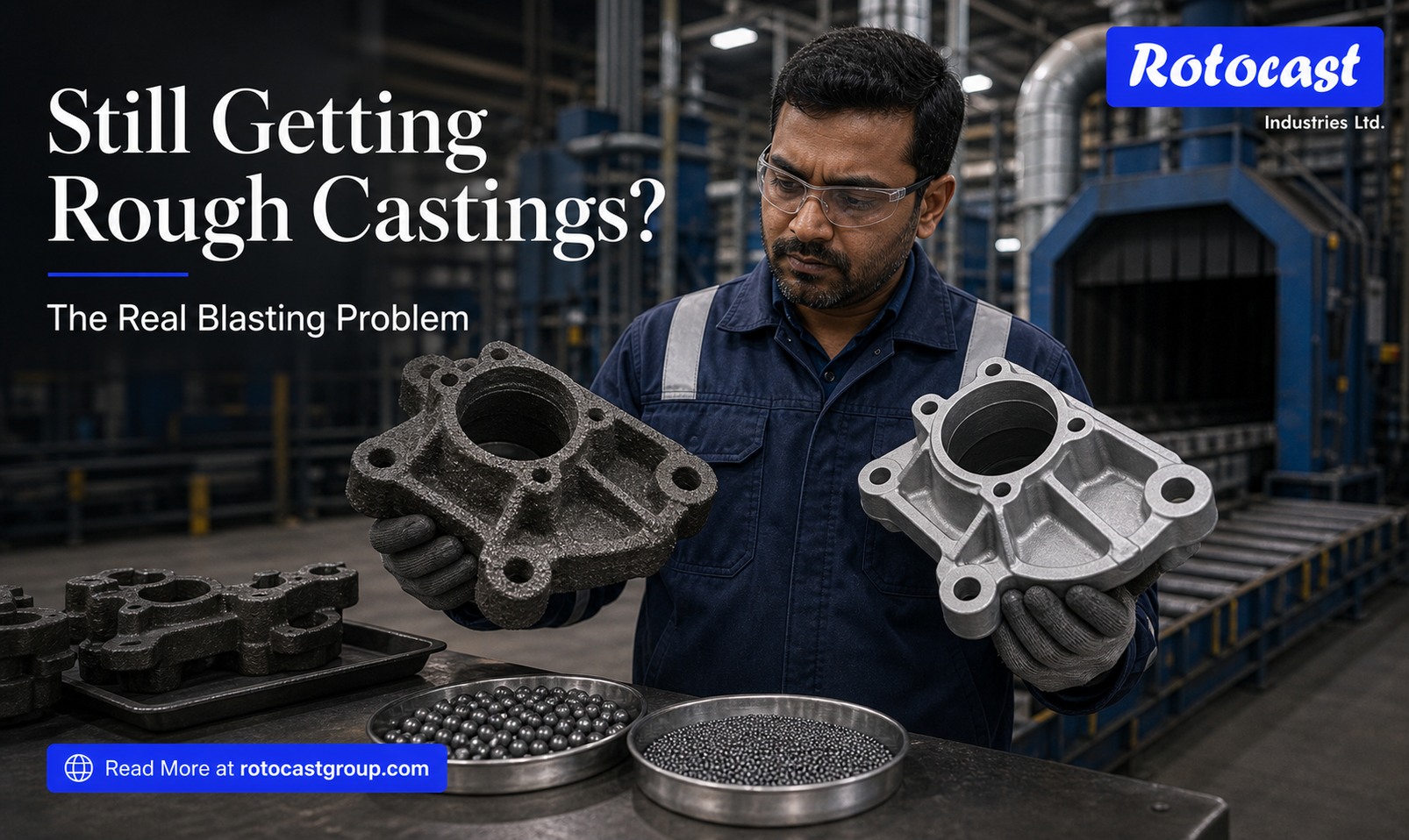
Why Your Castings Still Look Rough After Blasting
If your castings come out of the blasting cabinet looking patchy, pitted, or inconsistently cleaned, the instinct is usually to blame the machine. Check the nozzles, check the wheel, check the air pressure. But in most foundries, the real culprit is sitting in the media hopper — the abrasive itself.
Surface finish quality after blasting depends almost entirely on media selection, shape, and hardness. Get any one of these wrong for your casting alloy, and no amount of machine tuning will fix the result.
The Three Reasons Behind Rough Finishes
1. Wrong Abrasive Type for the Alloy Not all castings respond the same way to the same media. A grey iron casting and a steel casting have different surface hardness and porosity. Using a generic or low-grade abrasive across all jobs often leaves residual scale, embedded particles, or uneven texture — especially on castings with complex geometries.
2. Degraded or Contaminated Media Reused abrasive that’s been cycled too many times breaks down into irregular, sharp fragments. Instead of cleaning the surface uniformly, these worn particles gouge unevenly, leaving a rough, inconsistent profile. Regular media screening and replenishment with fresh steel shot or steel grit is non-negotiable for consistent output.
3. Mismatched Shot-to-Grit Ratio Many foundries use a blend of round steel shot (for peening and smoothing) and angular steel grit (for aggressive scale removal) — but get the ratio wrong. Too much grit and the surface turns rough and pitted; too much shot and scale doesn’t lift cleanly. Balancing this mix based on casting condition is critical.
Steel Shot vs. Steel Grit: Choosing Correctly
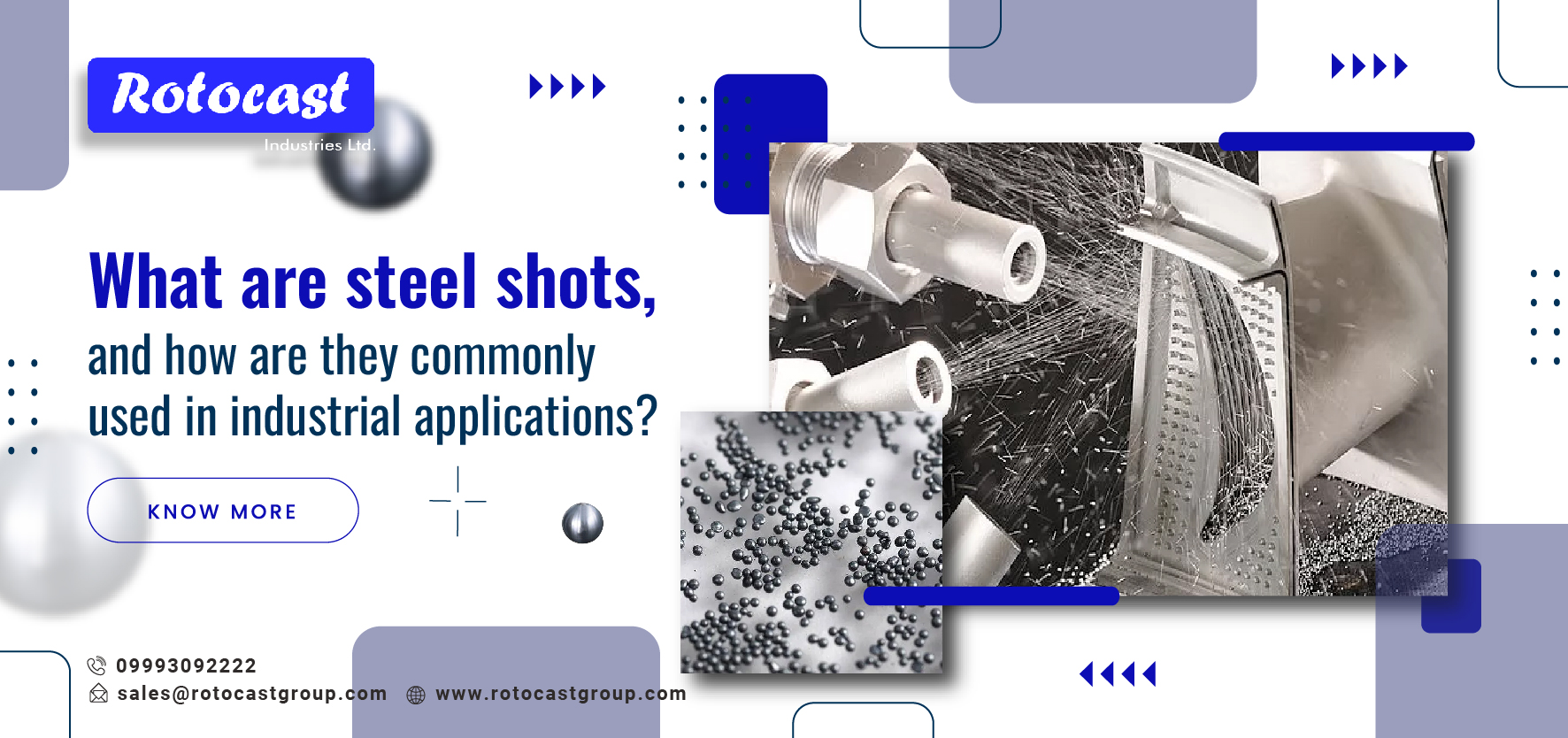
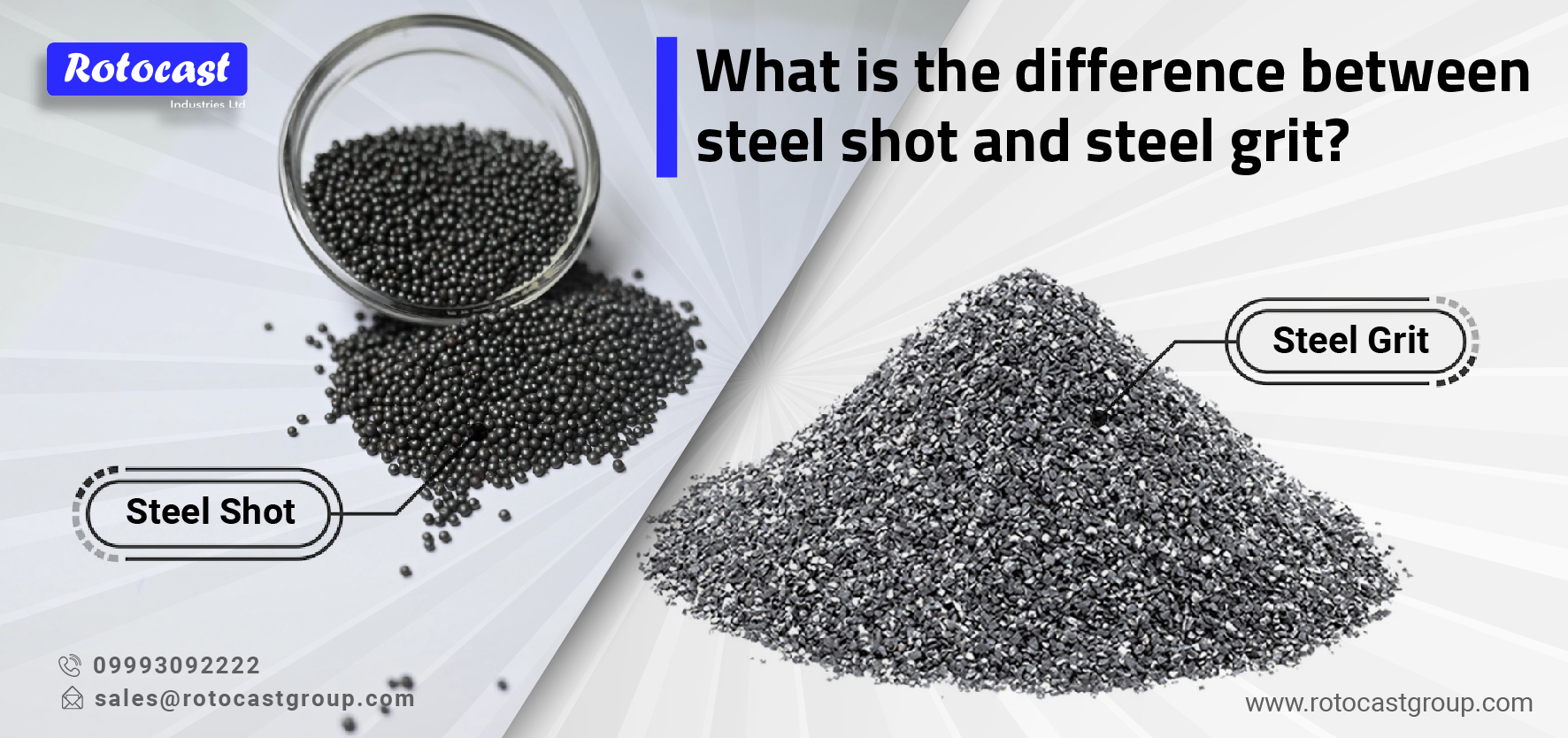
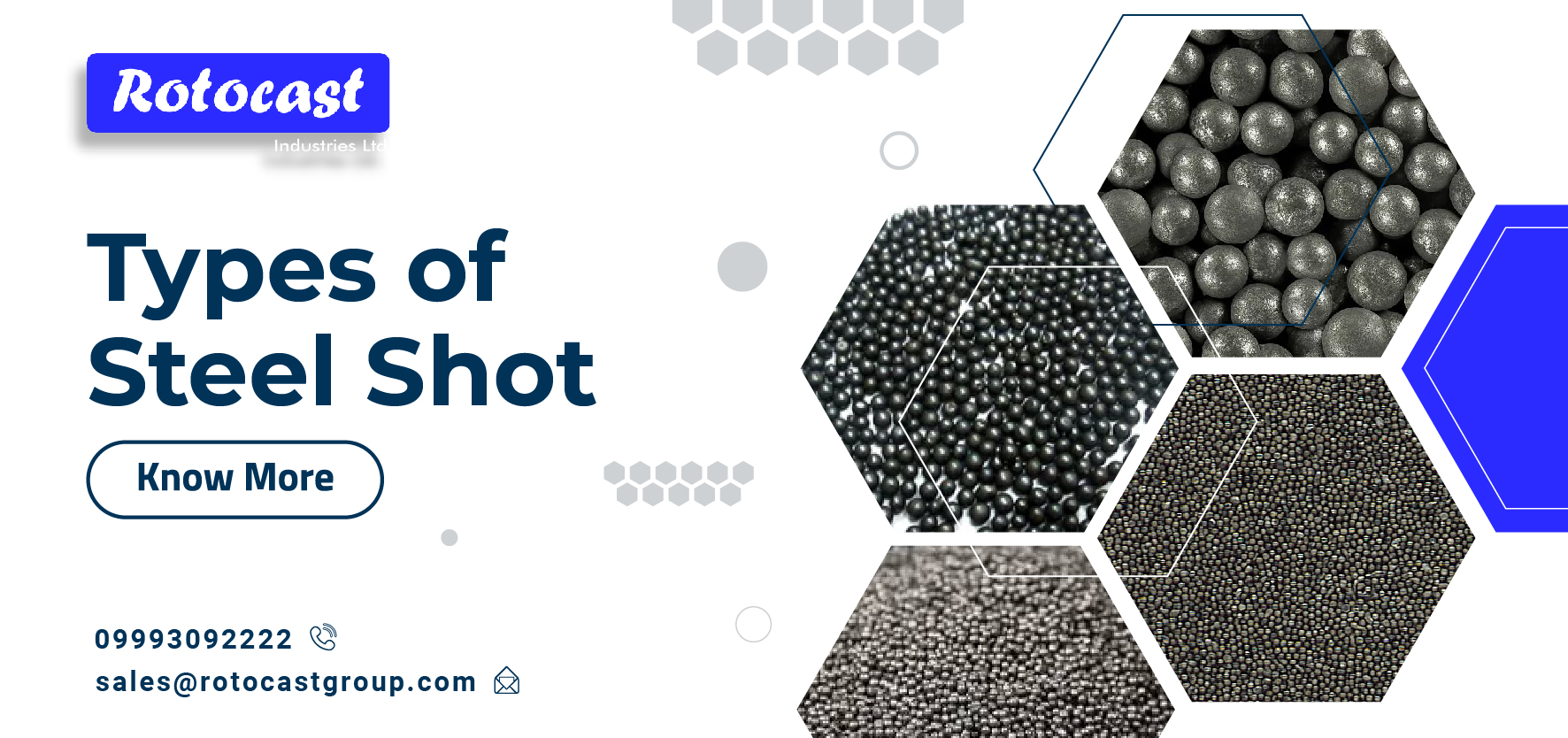
- Steel Shot — Round, spherical particles ideal for peening, polishing, and achieving a smoother, more uniform surface finish. Best suited for finishing passes and stress-relief applications.
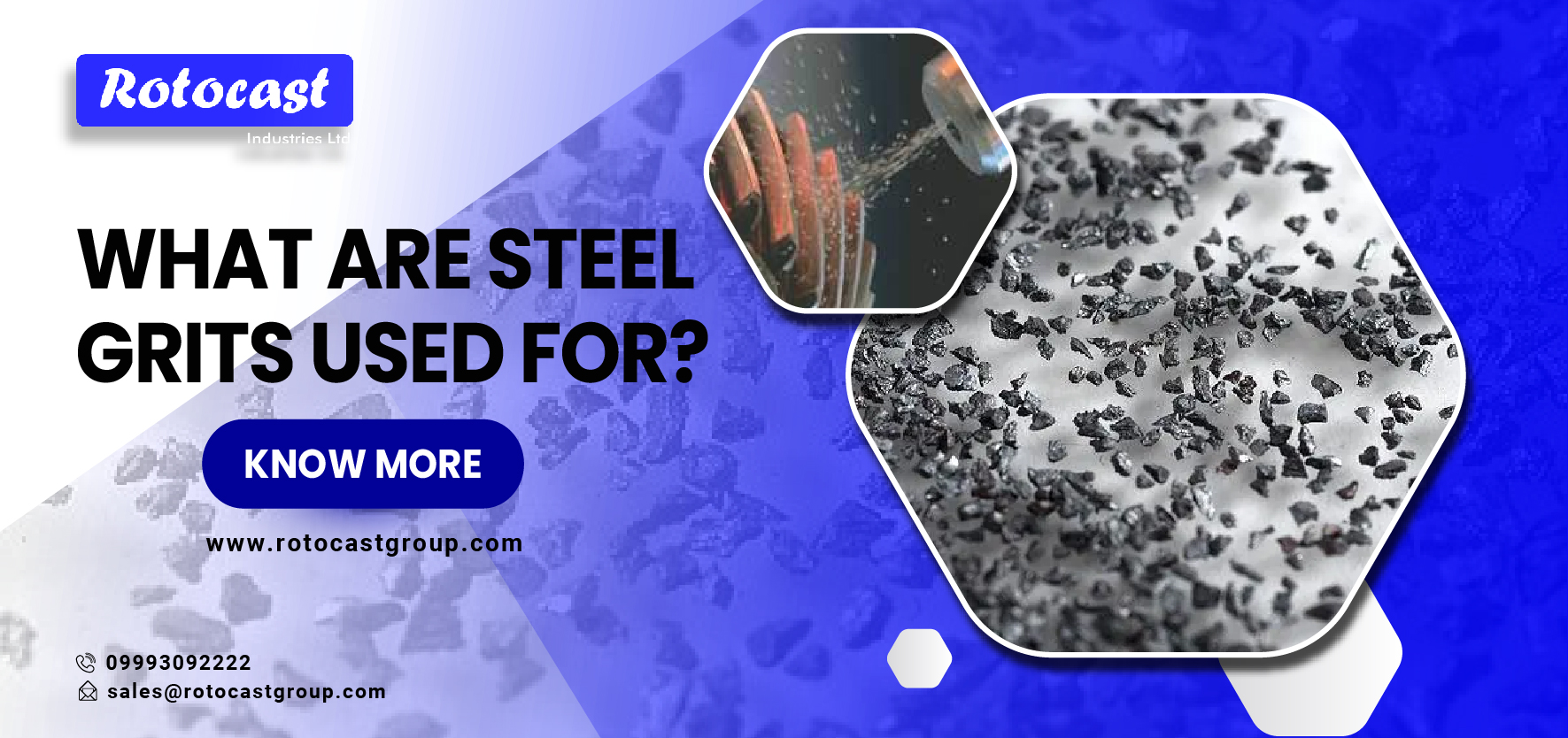
- Steel Grit — Angular particles designed for aggressive scale, rust, and sand removal. Best suited for initial cleaning passes on rough or heavily oxidized castings.
Using both in the right sequence — grit first for cleaning, shot second for finishing — is a standard practice among experienced steel casting foundry operations aiming for export-grade surface quality.
Why Media Quality Makes the Difference
Not all steel abrasives are manufactured to the same specification. Inconsistent hardness (measured on the Rockwell C scale) or poor micro-structure control leads to premature media breakdown, which directly translates to rough, unpredictable finishes.
This is where working with an established steel abrasives manufacturer matters. Rotocast produces steel shot and steel grit engineered for consistent hardness, controlled particle size distribution, and extended operational life — helping foundries reduce rework, cut media consumption, and maintain a uniform finish batch after batch.
Practical Checklist for Foundries
Before blaming your blasting equipment, review:
- Is the abrasive matched to your casting alloy and surface condition?
- Are you screening and replenishing media regularly?
- Is your shot-to-grit ratio calibrated for the job type?
- Is your supplier providing abrasives that meet recognized hardness and durability standards, such as those outlined by SAE International’s shot peening specifications?
Getting these fundamentals right often resolves rough-finish complaints without any equipment changes at all.
Rotocast: Consistent Abrasives, Consistent Finishes
As a trusted steel shot manufacturer and steel grit manufacturer in India, Rotocast supplies foundries and surface preparation units across domestic and export markets with abrasives built for predictable, repeatable performance. Whether you’re running high-volume casting cleaning or precision finishing, using the right grade of media — sourced from a reliable steel grit exporter — is the single biggest factor in solving persistent rough-finish issues.
Rough castings after blasting usually point back to one thing: the abrasive doing the work. Before troubleshooting your equipment further, evaluate your media quality, mix ratio, and supplier consistency.
Explore Rotocast’s full range of steel abrasives and casting solutions, or request a product quote today to get a finish that meets export-grade standards.