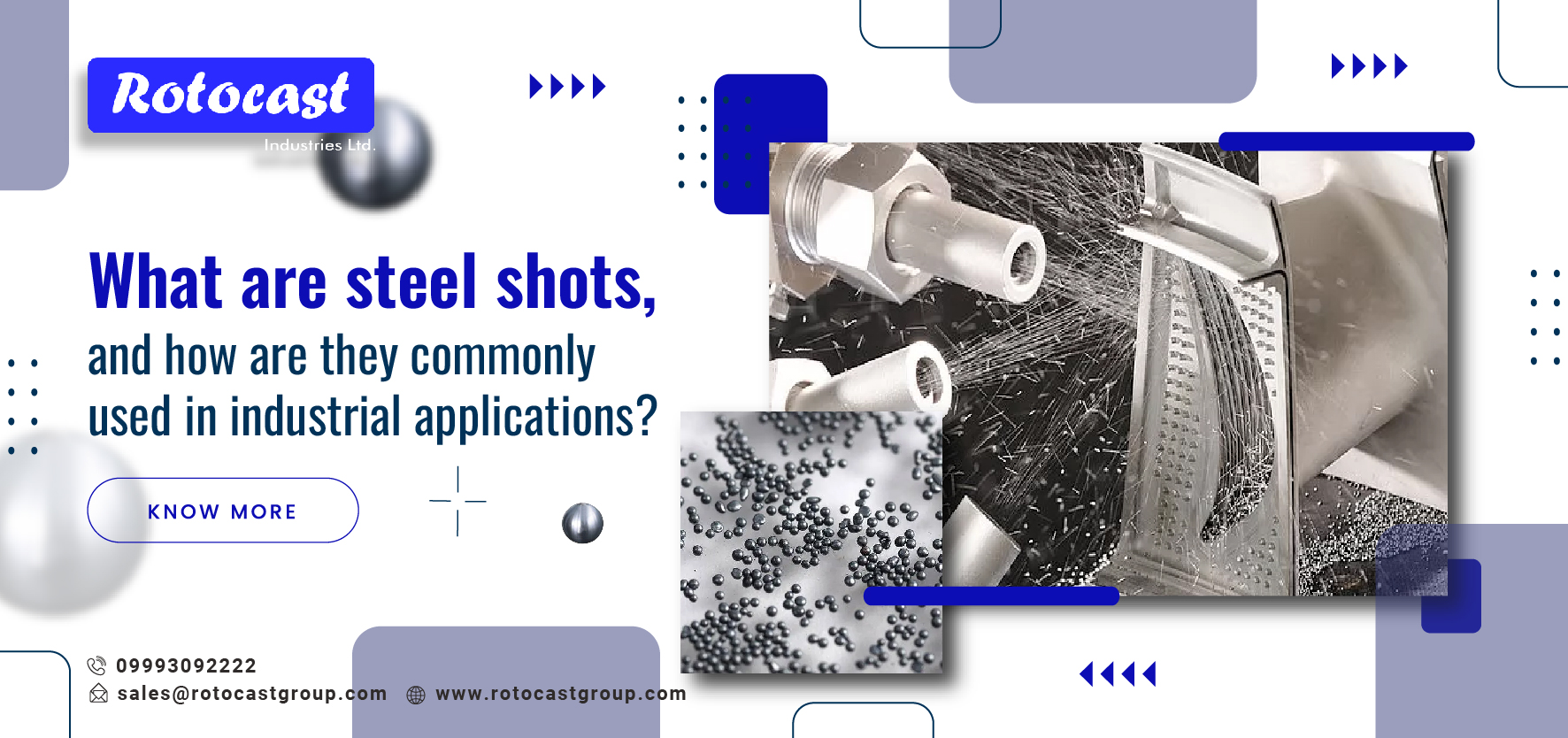
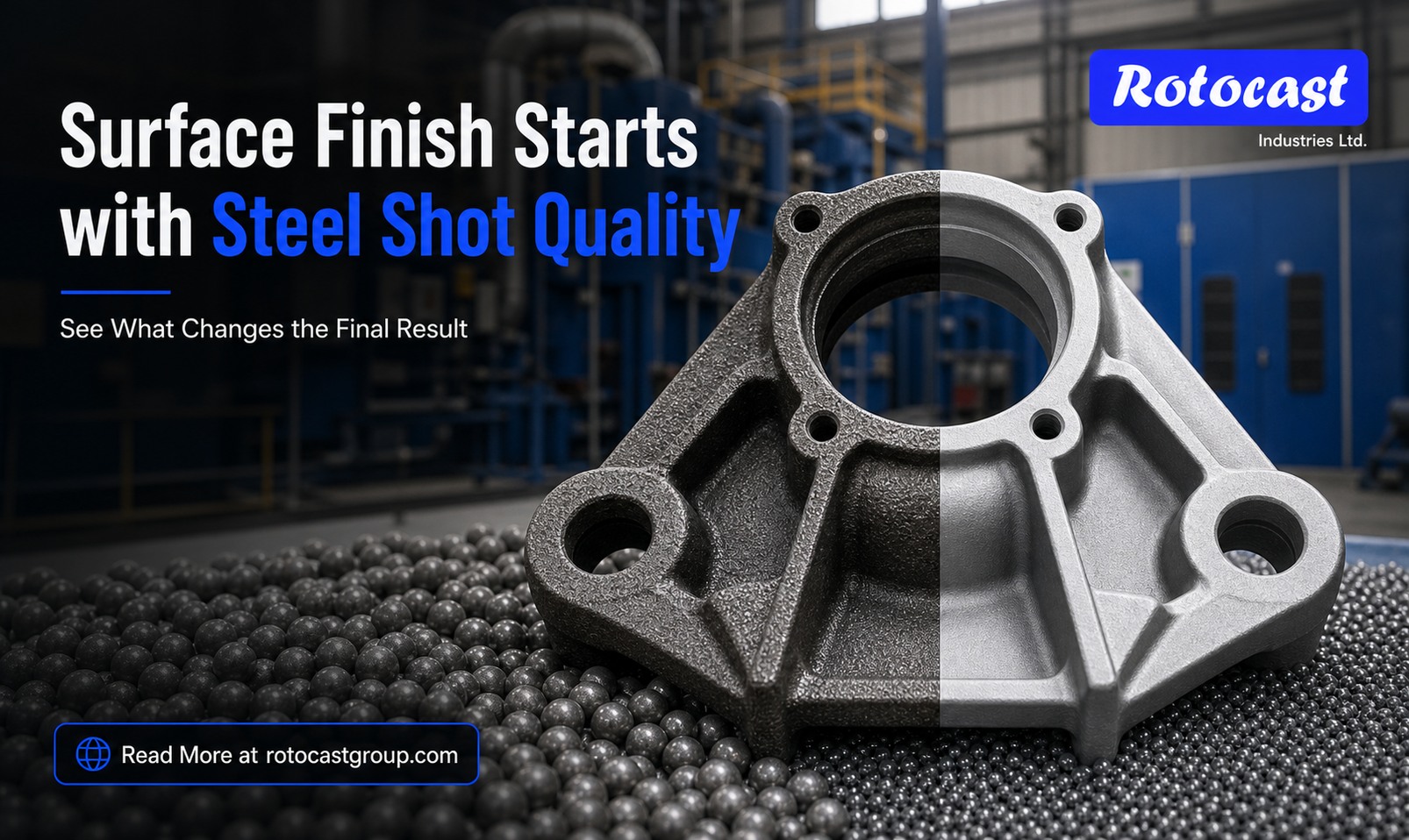
Surface preparation is the backbone of industrial coating, painting, and finishing operations. Whether you are running a shipyard, automotive plant, structural steel fabricator, or a heavy engineering foundry — the quality of your steel shot directly controls the quality of the surface profile you produce. Yet procurement teams often treat steel abrasives as a commodity, choosing the cheapest option available. This is a costly mistake.
What Makes Steel Shot “High Quality”?
High-quality steel shot is defined by a precise combination of four critical attributes:
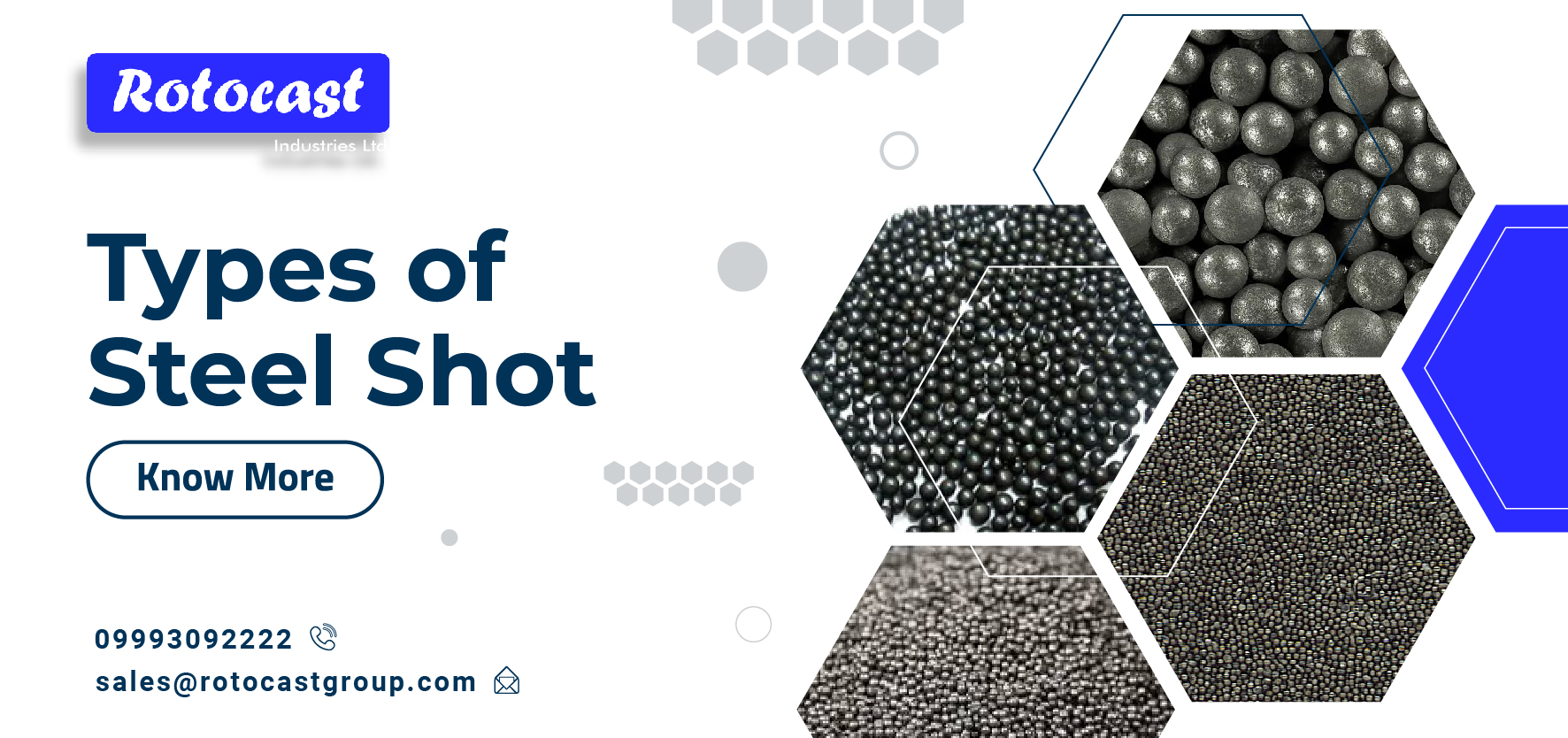
- Hardness (HRC 40–51): Hardness governs the abrasive life of each shot pellet. Under-hardened shot deforms quickly, reducing its cutting efficiency and increasing dust generation. Over-hardened shot shatters prematurely, creating excessive fines and inconsistent surface profiles.
- Spherical Shape & Roundness: Truly spherical shot pellets peen the surface uniformly, delivering a consistent anchor profile ideal for paint adhesion. Irregular or broken shot leaves uneven peaks and valleys — a direct cause of coating failures.
- Chemical Composition: Carbon content between 0.85%–1.20% and controlled Manganese and Silicon levels ensure the right balance of toughness and hardness. Poor chemistry leads to cracking, fragmentation, and rapid media breakdown.
- Microstructure (Tempered Martensite): A fine, uniform tempered martensitic microstructure — verified under metallurgical inspection — is the hallmark of a premium-grade product and ensures superior fatigue resistance over thousands of blast cycles.
How Steel Shot Quality Affects Surface Profile
When steel shot strikes a metal surface at high velocity, it creates a series of overlapping indentations — producing what is known as the anchor profile or surface roughness (measured in Ra or Rz values). The paint or coating that adheres to this surface relies entirely on the depth, uniformity, and cleanliness of this profile.
Low-quality abrasive produces:
- Inconsistent surface profiles, leading to variable coating thickness
- Higher breakdown rate, generating metallic fines that contaminate the surface
- Increased blasting time per component, raising energy and labor costs
- Premature media depletion, requiring frequent top-ups and increased media consumption
Premium steel shot — manufactured to SAE J827 standards — consistently delivers the correct anchor profile, maximizes blast cycles per kilogram, and reduces overall cost-per-part.
Industry Applications: Where Steel Shot Quality Is Non-Negotiable
- Shipbuilding & Marine: Hull blasting requires Sa 2.5 cleanliness levels (ISO 8501-1). Inferior shot leads to flash rusting and paint delamination — extremely expensive to remediate at scale.
- Automotive & Aerospace: Shot peening for fatigue life improvement demands tight hardness tolerances and zero contamination. A deviation in HRC range can compromise component integrity.
- Oil & Gas Pipelines: Internal pipe blasting must deliver repeatable anchor profiles to ensure epoxy lining adhesion. Media failure mid-operation causes costly shutdowns.
- Structural Fabrication: Steel bridges, storage tanks, and industrial structures coated for long-term corrosion protection depend on consistent preparation to meet coating warranties.
- Foundry & Casting: Steel casting cleaning using shot blasting media must balance surface cleaning with dimensional accuracy. High-quality media minimizes cycle time and protects casting geometry.
Steel Shot vs. Steel Grit: Choosing the Right Media
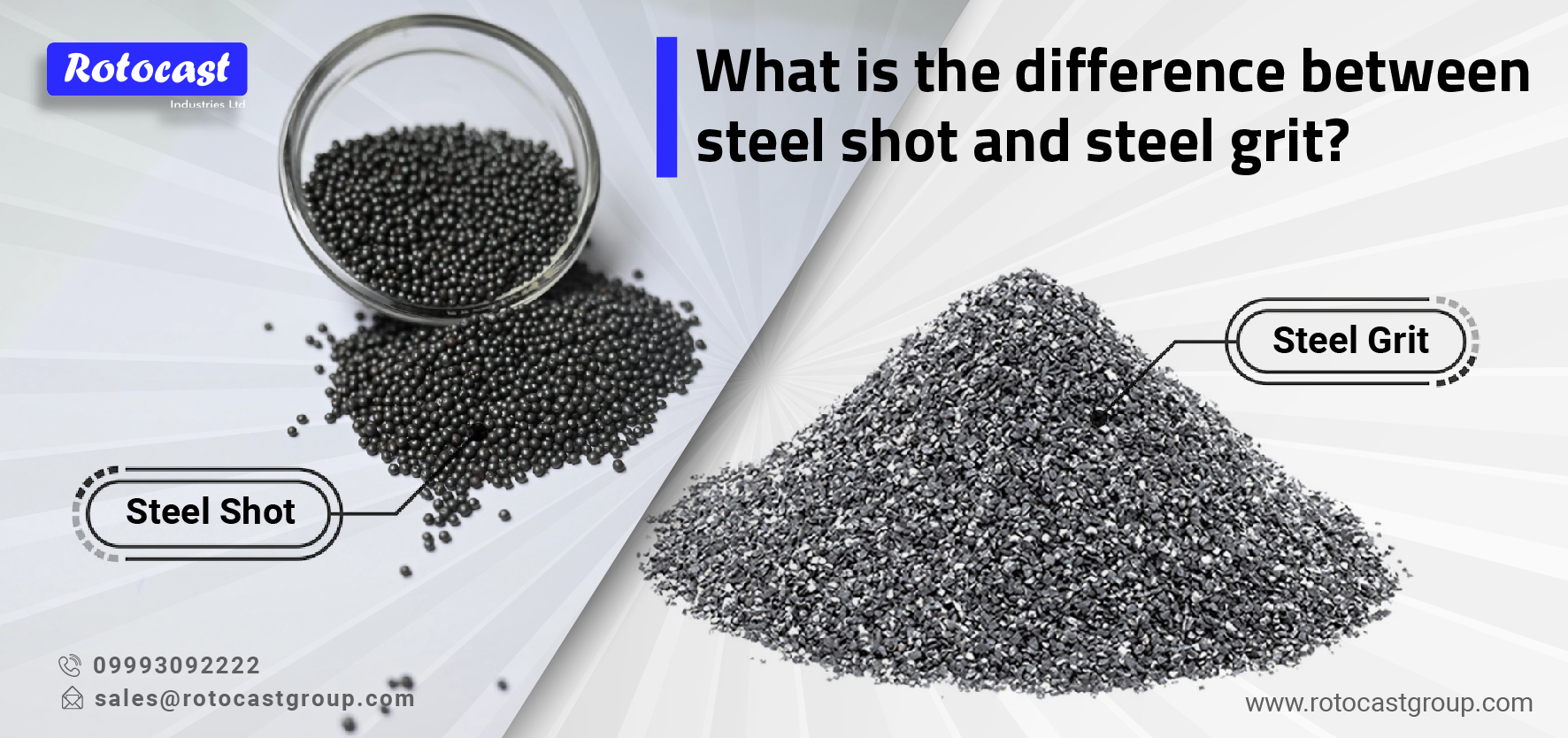
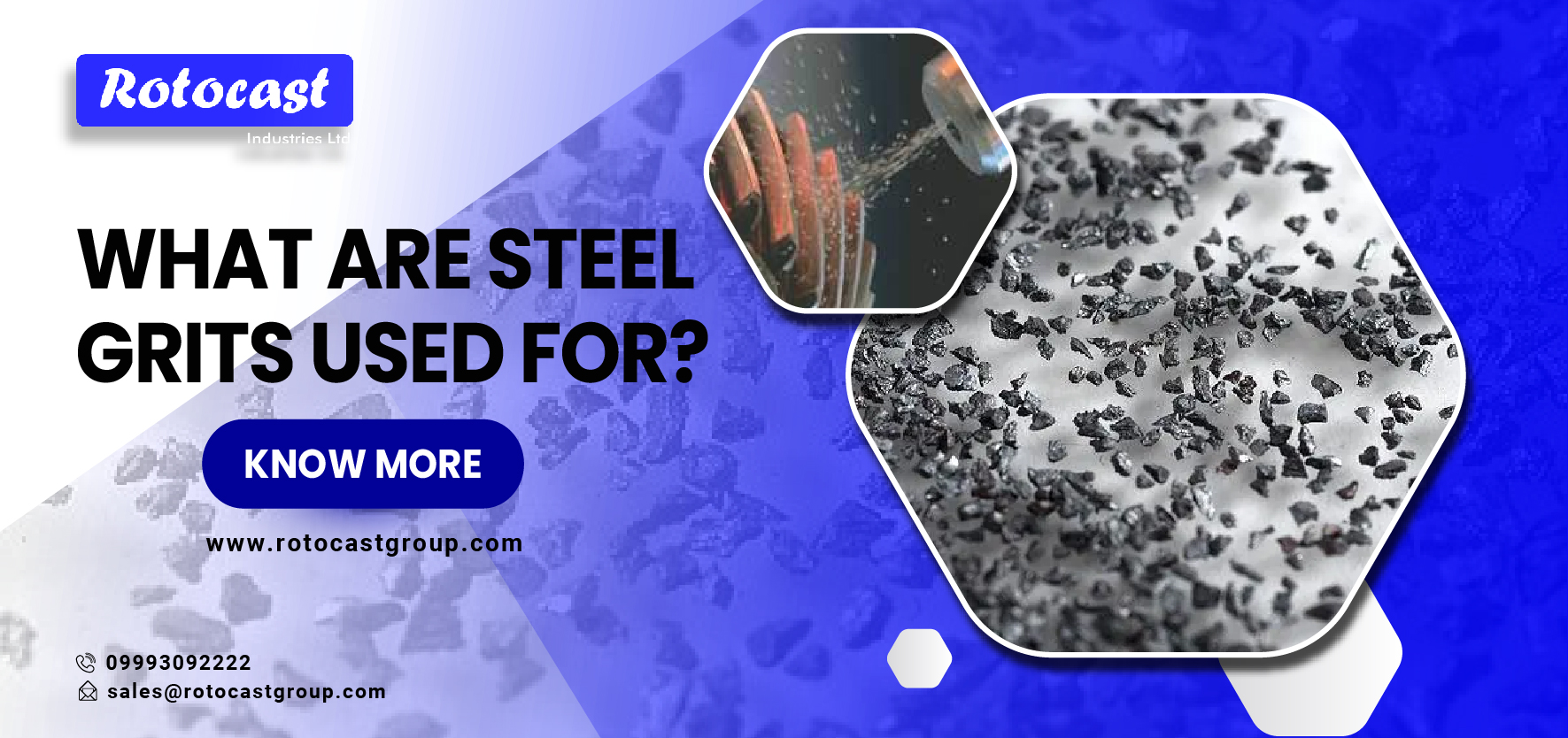
While steel shot is optimal for peening, descaling, and producing smooth anchor profiles, steel grit is the preferred choice when aggressive surface cleaning or etching is required. Grit’s angular particle shape cuts into the surface, producing a higher surface roughness (Rz) that benefits thick-film coatings or thermal spray applications.
The table below summarizes key differences:
| Particle Shape | Spherical | Angular / Irregular |
| Surface Profile | Smooth to medium | Medium to high (aggressive) |
| Best For | Peening, descaling | Etching, aggressive cleaning |
| Typical HRC | 40–51 | 54–65 |
| Industries | Auto, Marine, Foundry | Structural, Pipeline, Heavy Fabrication |
The Rotocast Commitment to Steel Abrasive Excellence
As a leading steel abrasives manufacturer and exporter based in India, Rotocast Industries manufactures its full range of steel shot and steel grit in compliance with international standards including SAE J827, SAE J1461, and ISO 11124. Each batch undergoes rigorous quality control – hardness testing, sieve analysis, chemical composition verification, and microstructural inspection – before dispatch.
With products exported to markets across the Middle East, Southeast Asia, Europe, and Africa, Rotocast’s steel abrasives are trusted by foundries, shipyards, fabricators, and surface treatment plants that cannot afford inconsistency in their blasting media.
Key Takeaways for Industrial Buyers
- Never compromise on hardness specification – always verify HRC range from your supplier.
- Request sieve analysis certificates to ensure the correct size distribution for your blast system.
- A higher initial cost per ton for premium steel shot is almost always lower cost-per-part due to extended media life.
- Specify media that meets SAE J827 or equivalent international standards for reliable, repeatable outcomes.
- Partner with a certified steel shot manufacturer with documented QC processes and metallurgical traceability.
Ready to Upgrade Your Surface Preparation Results?
Explore Rotocast’s full range of steel abrasives and casting solutions – from Steel Shot and Steel Grit to custom media specifications for your industry. Our technical team is ready to help you select the right grade, size, and hardness for your specific application.